Find us on Google+ Gastroparesis: digestion

Copyright

“You agree that you will not modify, copy, reproduce, sell, or distribute any content in any manner or medium without permission."
Showing posts with label digestion. Show all posts

Saturday, August 17, 2019

How and Why does Temperature Affect Chronic Illness?

I have wondered why temperature has affected chronic illnesses for a while.  I have a few chronic illnesses (Ehlers Danlos Syndrome, Gastroparesis, Complex Regional Pain Syndrome, Endometriosis, Poly-cystic Ovaries, etc.) and I have noticed that when I am in extreme heat or extreme cold that I become dizzy, nauseated, and feel like I am about to pass out.  Additionally, I have noticed that pressure changes and storms effect me in the same ways. I can always tell when it is going to rain before it actually does. I wanted to research why this happens and what a person with a chronic illness can do about temperature changes and how it affects their illness.


CVS Speaks,  an organization that, "We are social media outreach organization. We are all volunteer run. We seek to raise awareness of Cyclic Vomiting Syndrome. We seek to help all people of CVS find a support group that fits their needs. We also support and assist admin of a variety of groups maintain the highest quality groups on FACEBOOK," sent me an article on this topic that I found interesting and wanted to share.


According to Just Another Moment,


"Temperature – rapid changes in temperature can either trigger fibromyalgia/chronic pain flare-ups or help ease them. Cold weather is known to contract and tense up your muscles, and this undoubtedly affects your nerves, leading to more aggravation of existing chronic pain.
Wind – whether it’s a full force storm or a light wind, it’s been found to trigger both headaches and muscle pain, again associated with tense muscles and colder air.  
Pressure – barometric pressure is a measurement of the weight that’s exerted by the air around us. A drastic change in this pressure, for example, a sunny day to a sudden storm, can trigger muscle pain and cause flare-ups."
"TEMPERATURE SENSITIVITY EXPLAINED
Temperature sensitivity is thought to be caused by hormonal imbalances, that’s the short answer. 
The longer answer is that our body temperature is regulated by the hypothalamus. What’s the hypothalamus? It’s a section of your brain that’s responsible for hormone production. The hypothalamus isn’t the only thing responsible for controlling body temperature though, so is your thyroid. 
An overactive thyroid can cause you to feel too hot, and an underactive thyroid can cause you to feel too cold. Interestingly your thyroid gland is actually controlled by the pituitary gland, and I bet you can guess what I’m about to say next. Your pituitary gland is regulated by the hypothalamus, and anything that disrupts this will disrupt your thyroid function. 
It can be a bit confusing, and you might be asking why this is even connected to explaining why you struggle with temperature sensitivity. Well, it seems that most fibromyalgia symptoms are triggered by imbalances in your hormone levels, and we’ve just explained how these hormones are responsible for regulating your body temperature… 
So, the result is the inability to regulate your body temperature, meaning you’re either too hot or too cold most of the time.


TIPS FOR MANAGING TEMPERATURE SENSITIVITY  
Everyone is different when it comes to temperature sensitivity. Some people will feel too hot, others will feel too cold, and if you’re like me, then you’ll struggle with both throughout the day. Whether you struggle to warm up or struggle to cool down, here are some tips for both. 


HEAT SENSITIVITY 
Make sure you have a way to cool down your home, whether it’s through an air conditioning unit or a powerful fan. The first thing to do is to control the heat within your surroundings. 
Wear lightweight clothing fits loosely, you don’t want to wear tight clothes when you’re too hot as it will increase your body temperature. Also make sure to avoid dark colored clothing as these absorb heat! 
You can cool down your body temperature quickly by placing your wrists in a sink filled with cold water, or by running them under the cold tap. An ever quicker method is to apply an ice pack on your wrists. 
Another way to quickly cool down your body temperature is to have a cool bath or shower, make sure that it isn’t too cold for your body to cope with though as this can cause symptoms to flare. 
It’s incredibly important to stay hydrated as if you are overheating and sweating you can quickly become dehydrated.


COLD SENSITIVITY 
Keeping your home warm will obviously be at the top of the list for cold sensitivity. This isn’t always as easy as it sounds though, whether it’s because you can’t financially afford to keep your heating on or whether it’s because your house doesn’t heat well because of age or size. Choosing one room to spend most of your time in can help with this, choose one with a fireplace in or turn up the radiator in just that room, as well as keeping the door closed to keep in the heat you build up. 
Make sure you dress warmer, especially when it’s colder weather. Wearing thicker clothes and knitted jumpers are an easy way to keep warm. Make sure you also keep your feet warm as it’s known that if you have cold feet your body is usually cold too! 
Using a blanket to keep your body covered will keep in your body heat, and using a heatpad can provide even more warmth. 
Drink warm liquids, like tea or coffee throughout the day. Having hot meals are also a great way to warm up your body. 
Finally, taking a hot bath is an incredibly good way to warm up, as well as relaxing!"
If you would like to read more regarding winter and how temperature affects chronic pain, please check out her other articles below:

https://justanothermoment.co.uk/how-to-survive-winter-when-youre-chronically-ill/


According to Synapse, 


"Temperature Control and Dysautonomia - Fact Sheet


Cold-blooded creatures take on the temperature of their surroundings. They are hot when their environment is hot and cold when their environment is cold. Cold-blooded animals are much more active in warm environments and are very sluggish in cold environments. These animals are very dependent on their environment when compared to warm blooded animals like ourselves.
Warm-blooded creatures, like mammals and birds, try to keep the inside of their bodies at a constant temperature. They do this by generating their own heat when they are in a cooler environment, and by cooling themselves when they are in a hotter environment. This independence from our environment allows warm blooded animals to live in a much broader variety of climates.


Homeostasis

It takes a lot of fuel to generate body heat and indeed a lot of fuel is needed to keep cool. Most of the food we eat is used to keep our bodies at a stable temperature with a stable amount of fluid of a stable composition.
Our bodies actually put a lot of effort into staying the same. The medical term for this process is homeostasis.
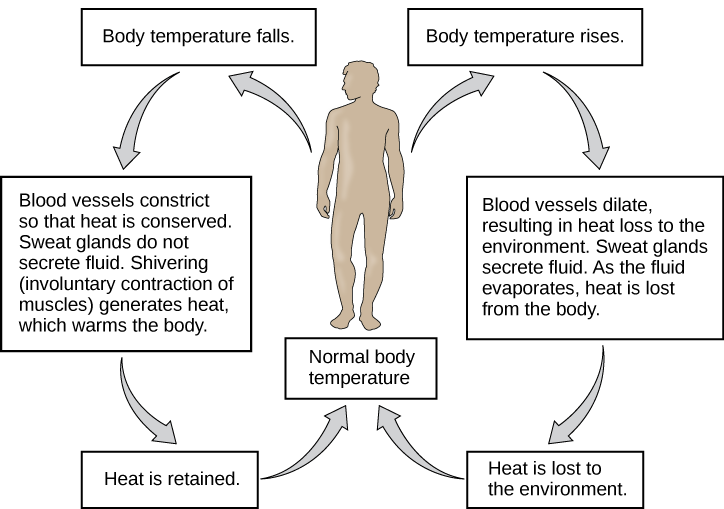
In human beings, the homeostatic regulation of body temperature involves such mechanisms as sweating when the internal temperature becomes excessive and shivering to produce heat, as well as the generation of heat through metabolic processes when the internal temperature falls too low.


          The Autonomic Nervous System (ANS)

These aspects of homeostasis are regulated through the autonomic nervous system.


The autonomic nervous system manages most of our bodily systems, including the cardiovascular system, gastrointestinal, urinary and bowel functions, temperature regulation, reproduction and our metabolic and endocrine systems. Additionally, this system is responsible for our reaction to stress - the flight or fight response.


          Sympathetic and Parasympathetic


The autonomic nervous system consists of two parts: the sympathetic system and the parasympathetic system. The sympathetic system can best be thought of as controlling the 'fight or flight' reactions of the body; producing the rapid heart rates, increased breathing and increased blood flow to the muscles that are necessary when an individual is in danger or under stress. The parasympathetic system controls the 'quiet' body functions, for instance the digestive system. In short, the sympathetic system gets the body ready for action, while the parasympathetic system gets the body ready for rest. And in most individuals the parasympathetic and sympathetic components of the autonomic nervous systems are in perfect balance, from moment to moment, depending on the body's instantaneous needs.


Dysautonomia

Brain disorders such as traumatic brain injury can affect the autonomic nerve system and result in Dysautonomia: The autonomic nervous system loses that balance and at various times the parasympathetic or sympathetic systems inappropriately predominate.


Symptoms

Symptoms can include frequent, vague but disturbing aches and pains, faintness (or even actual fainting spells), fatigue and inertia, severe anxiety attacks, tachycardia, hypotension, poor exercise tolerance, gastrointestinal symptoms such as irritable bowel syndrome, sweating, dizziness, blurred vision, numbness and tingling, anxiety and (quite understandably), depression.


A person suffering from Dysautonomia may exhibit all these symptoms and more or only one or two. It can be an acute, short lived problem or a chronic problem that will last a lifetime. There is no cure for Dysautonomia but some medications and strategies can help alleviate the symptoms.


          Management Strategies


The homeostatic regulation of body temperature may be severely impaired in a person suffering from dysautonomia and they may develop excessively high body temperatures and consequent irritability, confusion and disorientation. The treatment for a high temperature as a result of a damaged autonomic nervous system is entirely symptomatic and supportive. That is: the fever is treated but not the cause. Remember the cause is unfortunately incurable.
Essentially the treatment is to cool the person down
A wet towel across the neck can be of help as most of our body heat is lost through the head and the external carotid arteries carry large amounts of blood to the brain. Cooling this area will effectively cool the whole body from the inside out.


Drink plenty of fluids, preferably water. Other fluids, particularly alcohol or caffeine, can reduce the fluid levels in the body by increasing fluid loss through sweating or urination.


It is essential to seek medical assistance if any fever is severe or prolonged as the fever itself may damage organs including the brain, heart and kidneys.
A host of medications have been tried in patients with dysautonomia. Those most commonly felt to be useful include:
  • Tricyclic antidepressants
  • Anti-anxiety medications
  • Medications affecting high or low blood pressure and
  • Non steroidal anti-inflammatory medications.  The most effective medications will vary from person to person depending on the particular symptoms that Dysautonomia produce in them.

As with any long-term health condition, it is highly recommended that a relationship be maintained with a GP or other suitable medical professional.
References and further information
Biology Online: http://www.biology-online.org/4/1_physiological_homeostasis.htm•Dysautonomia Network: http://www.dinet.org/•The Children's Hospital at Westmead: http://www.dinet.org/"


Image Source: On Image


How and Why Does Temperature Affect Chronic Illness? 

I found some wonderful information on The Autoimmune Mom's website regarding temperature changes and chronic illnesses.  I did not realize how tough of a subject this would be to research.  It has been a real challenge. However, this website offers some wonderful information.

"Cold Weather’s Impact on Autoimmune Disease Flares + Tips For Being Outside in Fall and Winter
By: Gary Rothbard, MD, MS in Environment 


Changes in or extreme climates can often have an effect on disease conditions.  In some cases, there are certain types of weather that can be helpful in controlling or improving a condition; other times, climate can impact disorders negatively in terms of symptoms and disease progression.  Here we consider the effects of cold weather and temperatures on autoimmune disease.
Why does cold air (dry or wet) affect pain and flares in autoimmune disease?
The first thing to mention here is that autoimmune conditions come in all shapes and sizes, and as such are affected by many factors.  Some conditions, such as rheumatoid arthritis, are greatly impacted by the weather (especially cold and/or rainy), while others are minimally affected, if at all.  In contrast, other disorders show an improvement in symptoms with cooler weather and may flare on warmer days.  There is no hard and fast rule as to how weather will affect individual patients.  Having said this, the short answer is we’re not entirely sure why autoimmune flares tend to worsen in cold weather, but we do know a few things regarding this phenomenon. 
In general, weather extremes of any kind will place additional stress upon the body, which is usually not helpful for those suffering from a host of conditions, autoimmune and otherwise.  Thus, generalized stress can increase the incidence and severity of autoimmune conditions in a non-specific way, simply by adding to the heightened physiological demands of the body during such periods.  For instance, in very cold weather, bodily heat escapes quickly, leaving less energy and fewer resources available to deal with basic and enhanced requirements.  Other conditions such as cold agglutinin disease, which is a variant of autoimmune hemolytic anemia, only occur during periods of lowered body temperature.  
This emotional and/or physical stress can leave an autoimmune sufferer more susceptible to flares, which might be better controlled in more temperate weather (though sometimes the opposite is true; it is a very individualized presentation). 
More specifically, it seems that one likely cause of cold-induced pain in many cases is the fact that smaller blood vessels tend to spasm in low temperatures, which leads to a restriction of blood flow to the associated areas.  This is known as Raynaud’s phenomenon when it is secondary to an established autoimmune disease (or Raynaud’s disease when it appears on its own) and it is something that many autoimmune patients know all too well, as it often occurs in conjunction with various autoimmune conditions.  The spasms can cause extreme pain, swelling, numbness and discoloration, and they occur most prominently in the fingers, toes, ears and nose (because these are all areas with very small vessels and therefore less blood flow and adaptive ability).  It is possible, though not certain, that similar problems in larger joints (and therefore vessels) are related in terms of pathology.
Another potential but controversial explanation for joint inflammation during certain types of weather involves the postulation that lower barometric pressure leads to increased swelling in the joint spaces.
Are there any studies done on brief breaks from cold weather, e.g., beach vacation in winter, and helping to reduce joint pain and other symptoms from the cold? 
Unfortunately, the literature is fairly sparse in this area, and it appears that there hasn’t been a great deal of research or investigation into the causes of or remedies for such flares.  There is one unofficial site, written by a doctor, that does a decent job of collecting most of the available research on the topic and providing brief summaries. 
  Another brief response from a different physician (not a study, just clinical advice) advises that in most cases the best weather for autoimmune patients is warm and dry, such as in the Southwest.  But again, this will vary from patient to patient, and what works for one may be detrimental to another.  Otherwise, not much else was found upon literature review. 
What is the best way to combat cold weather effects on pain and inflammation?
There is unfortunately no secret weapon used to combat such effects in those diagnosed with autoimmune disease.  That is, there is really nothing special one can do in cases of autoimmune conditions, other than the normal measures anyone would take in extreme cold to prevent complications.  Still, there are several effective ways to prevent or at least mitigate the negative impact cold weather has on some autoimmune sufferers. 
Just as is the case in people without autoimmune conditions, extreme cold requires some contemplation and preparation.  On particularly cold days, one should dress in layers, being sure to wear gloves and a hat; this serves the dual purposes of keeping joints warm and more flexible, and reducing overall cold stress.  If it is absolutely necessary to remain outside for long periods, it is crucial that one plans to take breaks and go inside occasionally, preferably before symptoms can begin to flare. 
And while patients should consider exercising indoors during these temperature extremes, it is important, when doing so outdoors, to remain active for the duration, in order to keep joints and muscles warm and more flexible, making them less prone to pain and inflammation.  Finally, in extreme autoimmune cases, some people have found that changing climates (by moving) is quite helpful, though clinicians and researchers are divided on the issue, and it is, once again, very personalized as to the benefits. 
Questions for your doctor: 
  • What is the best climate, if there is one, for my condition(s)?  Is it worth considering moving?
  • What are the recommended protective/preventive measures I should take when out in extreme cold temperatures?
  • Can you provide me with any resources or information regarding the effects of cold weather on autoimmune disease, or disease in general?
  • What is your opinion of the barometric pressure theory of joint pain and swelling?
  • Are there other causes of cold weather complications in autoimmune disease, besides vessel spasms and those mentioned above?

About the Author
Dr. Rothbard is a professional medical writer and consultant based in New York City, specializing in medical education articles targeted at a variety of audiences, from children through clinicians.  After leaving medicine, he worked as a biology and medical science educator for several years, before deciding to pursue writing full-time.  He may be reached at grothbard@hotmail.com."


Image Source: HERE


Does Temperature Affect Your Digestion?

According to Everyday Health,


"Your Digestion Could Be A Matter of Degree

By  
Medically Reviewed by Last Updated:  8/7/2013 
Your tongue may crave the icy temperature of an ice pop on a steamy summer day, but your digestion may rebel. 
'Some people perspire after drinking cold liquids,' says Mark Mattar MD, a clinician and assistant professor of medicine at MedStar Georgetown University Hospital, Washington, D.C. 
The body likes to keep its core temperature steady at about 100° F., which is when the best digestion occurs. If cold temperatures — such as ice water or cold food in the diet — enter the stomach, the body works quickly to warm it.

          A Centuries-Old Science

Temperature — of the body, weather, or the foods you eat — and its effects on digestion has intrigued physicians and scientists for at least 100 years. A well-regarded professor of several New York hospitals at the turn of the last century, the late William Gilman Thompson MD, included a chapter on the topic in his 1905 book, Practical Dietetics With Special Reference to Diet in Disease.
In it, he writes: 'One may begin a dinner with iced raw oysters, then take hot soup, and later conclude the meal with ice cream, followed by hot coffee,' he said of a proposed diet. 'And yet throughout, the temperature of the stomach contents does not vary so much as half a degree.' 
Dr. Thompson came to his conclusions based on the outcomes of 'many experiments which I have made upon patients…to whom I have given fluids at different temperatures, which were immediately siphoned out of the stomach and tested for heat loss or gain.'

Warm Is Better 
Even on a hot day, warm liquids generally soothe the system, Mattar said. Colonoscopy patients find warm liquids infused in the colon help alleviate pain or spasms. And anecdotally, he said, the wisdom from our grandmothers was to drink warm liquids — the belief being that warmth caused the muscles to relax — even the minuscule muscles that support the blood vessels. 
It’s also likely that the body’s preference for warmth has to do with the latest frontier in biology, the microbiome — those trillions of microscopic bugs that live in the gut, he said.
In the lab, these microorganisms thrive in incubation. Although these bugs like a warm host, even they have their limit. While hot cocoa on a hot day probably would be fine, Mattar said, 'if it’s hotter than 100 degrees, your body will try to cool it down.'
Air Temperature 
In warm climates, the blood vessels open and more hormones circulate to aid in all systems, including digestion, Mattar said. In cold climates, everything slows down, but not too much. 
In fact, the change is so subtle, the effects of air temperature on digestion usually goes unnoticed — except in extreme cases when the core temperature drops and hypothermia sets in. Treatment generally includes blankets and possibly intravenous fluids that are a little warmer than room temperature. 'You don’t want to shock the system,' he said.

Illness and Diseases 
In the opposite extreme, when hotter becomes the new normal, there is no real consensus on treatment, Mattar said. Some people recommend blankets and warm drinks, despite the discomfort, while others report the body should be kept cool to let the fever take its course. 
Thompson added that while 'cooling drinks have long been used [to treat] fevers…to this day one occasionally meets with opposition from mothers to giving a child with high fever anything really cold.' 
Ice also can be effective in relieving nausea, and hot liquids aid in 'cleansing the mucous membrane,' Thompson said. Likewise 'hot-air baths…are of undoubted service' in treating kidney disease. 
And despite the body’s quick response to cold drinks, the cold still can irritate the bowel, possibly causing diarrhea, constipation or abdominal pain, Mattar said, but that’s not true for everyone. 
'I myself love freezing cold water,' he said. 'But if my wife drinks it, her stomach will hurt.'"


From what I have read, stomach acid plays an essential role in the immune system by killing harmful bacteria and parasites that are ingested with food, so temperature would play a part in that.  Stomach acid activates the enzyme pepsin needed for protein digestion. The stomach acid will send signals to the pancreas to produce digestive juices and enzymes to further break down food.   I put the link above so that you can read more about the enzyme pepsin, and what it does in the digestive system. 

According to Women's Health Magazine, the weather can affect the body in so many different ways, in addition to what has already been discussed in the sources I have found.  It can cause headaches and migraines, dry skin, low energy and changes in mood, vitamin D deficiencies, breathing problems, colds, joint pain, and weakened hair and nails.  The weather can even affect your blood pressure.  According to The Mayo Clinic, your blood pressure is higher in the winter and lower in the summer. 
Image Source: On Image


Monday, February 1, 2016

Gastric Stimulator Research & Personal Experiences From Patients

A lot of people have had a lot of questions about the gastric stimulator. What is surgery like? What is the prep before the surgery? How long does it take to heal? What will it be like after surgery? Will I be able to eat?

I haven't had the surgery done myself, although I do have a spinal cord stimulator, so I asked several people for their stories of having the gastric stimulator placed. I wanted to share these stories with you in case you were thinking of getting the gastric stimulator and had questions about it. There is also a Facebook group, composed of members who have had this surgery done and can answer any questions you might have. It's important to ask questions and do your own research before having a major surgery like this one. Additionally, remember that everyone's GP (Gastroparesis) is different. The link to the group can be found here: LIFE WITH A GASTRIC STIMULATOR.


UPDATE: I wanted to add this video into the article because it is an interview with Dr. Tom Abell, who revolutionized this technology:


The first story comes from Donna:


The second story comes from a patient who wanted to remain anonymous:


This is what it looked like after the doctors placed the gastric stimulator:


GASTRIC PACEMAKER OR NOT: MY EXPERIENCE
BY: Christina T

I know there are so many decisions to be made when you are faced with a chronic illness. You may often question certain decisions whether it be tweaking your medication regimen, deciding to enroll in a new clinical trial, or the basic question which seems so hard to answer: how do I control my symptoms? It seems easy for those around you to just simply say “All you have to do is take a pill a couple times a day” or “ Haven’t they figured out how to fix you yet?” But as we know chronic illnesses are not that simple to treat, that’s why they are called “chronic”.

One of the decisions you may be faced with is “Should I get a gastric pacemaker?” or “Is this the right treatment for me?” Most of us will begin meeting with our doctors and our care team to come up with a plan that discusses the pros/cons of the procedure, the actual surgery, and the recovery period including the dos and don’ts after surgery, any follow-up appointments, and how you will need to take care of yourself afterwards. All of this can seem very overwhelming but it’s important to remember to make the best decision for YOU! Our team can flood us with information but you have to be your own voice and be comfortable with the decision you are making.

Once my treatment plan wasn’t working, I faced the question “Do I get a gastric pacemaker or not?” After deciding to consider the pacemaker, my GI referred me to a surgeon who would implant the Enterra device. I went in to the appointment ready to hear what he had to say, but had a nervous feeling in my stomach. On the first visit he went over my symptoms, how long I had felt this way, what had I tried, etc. It was a very thorough exam in terms of him asking me questions and going over my long, detailed medical history. He asked me how often I got nauseous, how I was controlling it, and if I felt the treatment was successful in dealing with my symptoms. I answered him and told him that I was NOT nauseous but did throw up after most meals. He continued on with the appointment and gave me my packet of information on all of my pre-op appointments for the next week and my surgery was scheduled for 2 weeks from then.


I then left and had a follow-up scheduled for the next week. First, I was supposed to have a meeting with him, and then go over to the hospital to have my blood work, EKG, and other routine tests performed to give me the green light for my procedure. I showed up for my appointment and he again reviewed my symptoms and a “light bulb” moment went off in his head. He finally registered that I did NOT have nausea. Additionally, he realized I was a patient who needed to have MRI’s on a yearly basis for other medical issues. He then began getting upset with me and calling my GI and getting very angry for why she sent a patient who was not a good candidate for the procedure. I felt so uncomfortable as a patient because I was sitting in his exam, room and he was right next door calling my GI during a procedure, made her step out of the OR because he was so infuriated that I had wasted his time and how could she send me to him when I was not a candidate. I remember sitting there and feeling so embarrassed for him. He was so angry that I don’t know if he realized the whole office could hear him basically chewing out my GI. He then came back into the room and it was decided we would cancel the procedure. After we made this decision, he was still pretty heated and made me feel very badly that he had to call everybody and cancel everything. After all, it was more or less the 11th hour but I didn’t care. He kept saying things like, “Now I have to find someone to take your place because we already have the device here, I have to call the hospital now and take you off the schedule and get a hold of so and so, etc.” But, I knew in my heart no matter what he said, I had to do what was right for me! That gut feeling I had felt all along was becoming harder and harder to ignore. I felt the writing was truly on the wall at this point.

So, in conclusion, the lessons I’ve learned that I hope you will gain wisdom from is this:

1) Listen to your gut- if something doesn’t feel right to you whether it be in your healthcare or your job or some other aspect of your life, trust your intuition. Don’t hope that in time you’ll become comfortable with the situation or decision.
2) Do your research- I always find it helpful to talk to others who have gone through the same thing. Ask friends, family members, and coworkers about their experiences, who they have used, and if they would recommend him/her. Talk with your doctors and ask for referrals from them. Seek second and third opinions, don’t just settle- -your health and life depend on it!
3) Always go in with an open mind- Go into every situation with an open mind and then make your judgments after. Whether it is an important appointment like mine, a job interview, or something else, never let your judgment be clouded by preconceived ideas or thoughts. Doors are always opening and closing throughout our journey, be open to what life has in store for you.
4) Allow for reflection time- Very rarely in life, unless it’s an emergency, do you have to make a decision right then and there. Being able to walk away from important decisions and come back to them after having time to think things through often allows people to make better decisions.
5) Know and understand exactly what’s involved in your recovery- Make sure you understand your restrictions such as diet, activity limits (i.e., heavy lifting, when you can resume working, etc.) and how to properly care for yourself after to ensure you have the best chance possible for a smooth and successful surgery.


This is a picture of the gastric stimulator, taken from: http://www.implantable-device.com/wp-content/uploads/2011/12/Tantalus-II.jpg?94fb22


This story is Stephie O.'s personal experience:

My story is a long one of constant misdiagnosis and long time searching for a doctor who could help once I found out what I had and suffered for over 15 years. So on that note my doctor who given me the surgery would only except me is my percent was low enough on the gastric empty scan 15% or less and had the symptoms needed to fit into what he felt were acceptable to risk the surgery. I threw up many times a day sometime so many I would end up in the hospital. The pain i had sometimes was not bearable I was a complete mess. So I was a go ahead for the surgery. The doctor had me take a xray to look for good placement then did surgery soon after. I had mine on my left side a few inches from my ribs. There is about a 2 inch scar.

When I woke the pain was worse than expected and the breathing! Every time I took a breath it got to a horrible pain scale! But as the days went on that pain was completely gone. I stayed in the hospital 4 days but he said the average is 3 day's[sic].

On the pain relief scale and nausea scale things were better almost instantly. I was not 100% but things were livable. When I seen the doctor less than a week after discharge he was able to turn up and change the frequencies. When he did that I was aware of a small pinch right where my pacemaker was which as quickly as it came ...gone. I was about 99% better only here and there had I had very small episodes of pain. The nausea came and went but the intensity with decreased on such a scale that my life is so much better with the device then without it. About a year and a half later I notice things were going downhill an extremely fast. I went to see the doctor and he turned up the device which helps for a very short time and the same thing would happen I would get extremely sick and in lots of pain he turned it up to the max that he could. things got so bad I weigh 98 pounds at 5'10" ghe doctor quickly put a feeding tube in my stomach and left the pacemaker in. We tried to make things better for months after that and nothing was working. If I continued at this rate they said I could die soon. So we got aggressive and took the feeding tube the gastric pacemaker out and removed about 3/4 of my stomach like a cancer patent would have done . I am about 60 sometimes 70 better now. It was all a long road. I can say the pacemaker make my life livable for a long time and I was amazed at how well it worked! Would not change a thing about that surgery ND would do it again!


This story is from Julie:

I got it on April 20th. Reason [sic] I made the decision to get it was because I couldn't handle the throwing up and nausea anymore. I first had to get approval through my insurance. Once they approved [it] I got the temporary which is for 5 days and had an endoscopy. It worked so I went ahead and talked to the surgeon to get the permanent one. Surgery was very painful. I have a high tolerance when it comes to pain meds but the gas pains where the worst. I still have pain where the pacemaker is located but its not as bad as it was before. I did stay over night in the hospital because they wanted to make sure anesthesia wouldn't make me sick and [also wanted to see if] I could tolerate food. I am still getting use to it and I already had my settings changed because I am still getting nauseous but was nausea free for the first 2 weeks. It has helped because I have had less nausea and vomiting. I would definitely recommend to anyone who throws up a lot and is very nauseated like I was. Being scared is a natural reaction to have when it comes to having surgery but just try to think positive. I was walking that next day. They wanna make sure you are able to use the bathroom (peeing). Doesn't help the GP pain at all. It is only for nausea and vomiting that's all. Yes I do notice a big difference between before and after the pacer. Less days of being nausea than before.


This is how the gastric stimulator is inserted, photo taken from: http://image.slidesharecdn.com/stomachpacemakerforweightloss-111109000052-phpapp01/95/stomach-pacemaker-for-weight-loss-8-728.jpg?cb=1341455043


This story is from Kathleen:

I've had my gastric pacer for 1&1/2 years. I was terribly sick and had exhausted all other avenues. Getting authorization from the insurance company was pure hell. I finally received news that I was authorized. I had lost 84lbs. I jumped at the chance for help. I didn't have to do a temporary. The surgery went well. I had a few complications so I ended up with a 4 day stay. I traveled 9 hours round trip every 3 months for adjustments. With each adjustment I felt better. For a whole year I got great relief. I put weight on and avoided hospital stays. Then I started throwing up again. I'm losing weight like crazy again. I had a GES study and CT Scan. They showed hyper digestion. I've had 6 ER visits the last month to get stabilized. I am now sick again almost daily. This by all means isn't a cure. I have an endoscopy with baristate on the 27th of this month. I don't know what my future holds but at this point I'm willing to try anything. I say if you're sick to at least give a pacer a try. 💚


This is Melissa's story:

I'm Melissa. I have a gastric pacemaker and wanted to give you an idea of how mine is going and etc. First of all, it took me a long time, over a year, to get to the place where a doctor agreed to give me a pacemaker. Because of my intestinal dysmotility [sic], both the Cleveland Clinic in Ohio and Piedmont in Atlanta didn't want to put it in. They thought it wouldn't help because they thought my intestinal dysmotility [sic] played too major of a part in my symptoms of nausea, vomiting, weight loss, malnutrition, dehydration, bloating, pain, and more. However, I wanted to try the pacemaker before any of their options. The CC wanted to do major surgery and was even talking transplants and Piedmont just wanted to give me a bunch of tubes which I believed wouldn't help all of my symptoms. So I opted to go with a doctor in Augusts at Georgia Regents Medical who wanted to try the pacemaker. His name is Dr. Rao.

Surprisingly once we put in the paperwork with the insurance company it was approved within a month or so. Once it was approved, surgery was set. Getting ready for surgery wasn't difficult, just the typical don't eat after midnight (which I couldn't eat anyways), and washing the surgical sight several times with special antiseptic soap. I did have to do an extra pre-op appt because I have tachycardia so they had to do an extra EKG and such to double check to make sure my heart was good.

The day of surgery was nerve racking to say the least. My sister, nephew, and best friend went with me. It was scheduled early so as to give me more time in the hospital to recover. They had already planned for me to stay overnight. My particular surgeon had all his pacemaker patients stay overnight. Not all surgeons do that. If you are given the choice, stay overnight. It was nice to have nurses help you get up and around. Not to mention, the pain meds in an IV are much easier to take then the pills they give you when you go home. Anyhow, once at the hospital it was the normal check in and probably within an hour of being there I was getting anesthesia. The surgery itself was about 3 hours.

I honestly don't know how long I was in the recovery room. Several friends drove down to Augusta to see me while in recovery and I don't remember it at all. Once moved up to a room I was more coherent and definitely started to feel the pain. It was done laparoscopically however where they put the pacemaker in had a large incision. Plus my entire abdomen was just sore. I was thankful though that I didn't throw up. I usually throw up after anesthesia but apparently they double dosed me with nausea stuff before I went in and put a patch behind my ear that stayed on during surgery and for a couple days after.

Anyhow, I learned quickly to let your nurse know you are in pain. There is no point in toughing it out when they can give you the good stuff in your IV. Because of the pain medicine and alternating giving me zofran and phenegran in my IV I actually slept ok, for someone who had just had surgery anyways. It was painful to get up and use the restroom and walk around but that's why staying overnight is also helpful. The nurses helped me, as well as my awesome sister who spent the night. I would recommend someone trustworthy spending the night with you.

I started to get really flushed and hot and when the nurse didn't come to check it out, my sister totally went out and got that nurse. The day after surgery they had me walk around some and then said I could go home. Because we were 3 hours away from home, we opted to stay in a hotel nearby for another day or two. That was a good call too because without the pain meds through the IV I was super sore. They gave me percocet to take, but I opted not to take it.

My stomach never did well with pain meds and I wasn't about to risk it right after abdominal surgery. So I crushed up tylenol and used that for my pain medication. Not as effective as the hospital pain meds by any means but enough for me to be able to grin and bear through it. The ride home was rough. Every little bump made me hurt.

I also had to put a pillow between me and the seat belt bc of where my pacemaker was placed. Different doctors place them a little differently but mine was placed right where the seat belt goes across. So rough 3 hour ride home. But once home, or rather at my sister's house to recover, I was able to relax a little bit. I won't lie. The first week after surgery is painful. I was really sore and moving around too much really smarted. Getting into a good sleeping position was hard.

The worst though was when I finally had to have a bowel movement. Pushing down was very painful but once it was over with I was so relieved. Anyhow the pain subsided some after the first week, and then continued to subside as the weeks went on. By my post-op appt a month after surgery my abdomen was only hurting when I stretched it the wrong way.

Now at my post-op I had my pacemaker adjusted up. I had been trying some soft foods like jello and noodles but wasn't always keeping them down so they adjusted my pacemaker up. After my adjustment, for a couple weeks I was able to have some more soft foods and stuff like crackers but only a few bites before I got extremely nauseous or even sick. So I was still having to supplement with Ensure Plus.

After another month of this I went to get it adjusted again. Unfortunately, I got really sick about that time of the adjustment with a UTI and sinus infection. This set me back big time. My gastroparesis flared and the antibiotics they gave me made it even worse. After trying to keep down 3 different rounds of antibiotics my stomach completely revolted and I couldn't keep anything down. I ended up in the hospital with a critically low BUN level and had to get fluids and a banana bag over the course of 3 days there. That was last weekend.

So now I am waiting to see the doctor in Augusta tomorrow to see what we can do to get everything on track. I will say this... the pacemaker seemed to help for a couple of weeks. However once my stomach started to flare, it became useless even after several adjustments. I know everyone has different stories but mine has been a struggle so far. I will say this too though. I have not completely given up on my pacemaker. My surgeon says that sometimes it takes people up to 6 months for their pacemaker to really 'kick in' and I am really hoping this is true for me. I am hoping that it was just the infections and the antibiotics that messed with my pacemaker's success. I will know more tomorrow when I go see my doctor in Augusta.


The gastric stimulator, photo taken from: http://diatribe.org/sites/default/files/diabetes-tech.png


This is ReggieKay's Story:

In 2005 I had a neck surgery on C/5-6, two months after that is when my symptoms started and of course no one would admit that my vagus nerve was damaged, but I believed it was. I had nothing wrong with my digestive system before this.

I went through so much before even being diagnosed, even an ERCP and I got pancreatitis, from it, almost losing my life. They even tried Botox, reglan, domperidone, and finally, put me on tube feedings. I was down to 98 lbs, showing the tube feedings had became unsuccessful, then I was put on TPN and sent to a long term care facility, eventually at the end of 2008 sent home to die.

In 2009 a doctor in New Orleans, Dr James Smith, agreed to see me. I went from the first office visit with him to ICU for long time, and my only hope was a gastric stimulator. I was the worst case he had seen and at the time he had about 6-8 patients. He pushed for the stimulator, thinking it would be only thing to really save my life.

I was on TPN until 2012 and after many adjustments and many septic infections, the last one about did me in & the doctors said I would not survive another one, so we finally put the stimulator on the highest setting and I was able to get off TPN and have my picc line removed. I also, decided to remove myself from all stress & an emotionally abusive relationship. I got off all of my prescriptions, except Marinol, another life saving drug for me. I believe stress makes GP much worse.

The gastric stimulator batteries usually last 4-5 yrs, but mine went out earlier due to being on the highest setting. I am to replace it every 2 yrs. This year it went out, it was my fault because I was going through a divorce, went off grid and lost down to 119 pounds before having my batteries replace again. Since October of this year I have gained 10 lbs. I still have a G-tube for drainage and having it replaced at the end of this month.

Now, the surgery for gastric stimulator was not easy for me, now I think they can do it better. My doctor had not done many [of these surgeries] at the time... they cut me in two places up & down my stomach and on my right side. I woke up in a lot of a pain and my bladder was traumatized, so I had to be on a catheter for a few weeks.

Scary as this may seem I would do it all over again. I really believe it saved my life & opened a new world to me. I did not prepare for the surgery itself , just regular no food or drink after midnight, and recovery I would say was 4-6 weeks.

Normally, you go home in a couple of days. The hardest part was figuring out what the settings should be, because every one is different. That was the most frustrating part to me and the doctors. I was so dependant on TPN and everything was shut down for so long my body was in bad shape and I think that's why it was a slow process for me. I totally would think the sooner the better. I support the gastric stimulator and do believe it can save lives. I hope this helps! ~ ReggieKaye


This is Christine R.'s Story:

What made you decide to get the gastric pacemaker?
AFTER FOUR AND A HALF YEARS OF STRUGGLE AND FAILING ALL MEDICATIONS, THE PACEMAKER WAS MY LAST OPTION.

What was the process that you had to go through to get the pacer?
I HAD TO KEEP A WEEK LONG JOURNAL ABOUT VOMITING, PAIN, EARLY SATIETY, AND NAUSEA; DO A 4 HOUR GASTRIC EMPTYING TEST AND MEET WITH THE SURGEON TO DISCUSS THE OUTCOME OF IT ALL.

How long did it take you to get used to the pacer?
PHYSICALLY BEING THERE, IT DOES'NT TAKE that LONG...MAYBE A WEEK OR SO. ONCE ITS ON AND RUNNING YOU DONT EVEN NOTICE IT.

Did it help you?
AT FIRST IT DID AND THEN IT'S EFFECTS STARTED TO WEAR OFF. IT IS CURRENTLY TURNED OFF AND IM QUITE MISERABLE.

Would you recommend it to others?
IF YOU HAVE THE OPTION TO GET IT, GO FOR IT! WE HAVE SO LITTLE AVAILABLE FOR US, ANYTHING IS WORTH A SHOT.

Do you have any advice for those who are scared of the surgery but are considering getting the surgery?
JUST KNOW YOU'LL HAVE PAIN, BUT ITS NOT HORRID. TAKE THE PAIN MEDS AS OFTEN AS YOU'RE ALLOWED AND GET REST AS MUCH AS POSSIBLE.

How soon were you walking around after the surgery?
THEY WANTED ME WALKING AROUND THAT EVENING, BUT I SUFFER FROM MILD POTS SYNDROME AND WAS HAVING LOW BLOOD PRESSURE, SO I COULDN'T WALK AROUND UNTIL THE NEXT MORNING.

Did it help the GP Pain any?
ITS ONLY HELPED VERY MINORLY.

Do you notice a difference from before the pacer and after the pacer?
NOT PARTICULARLY, BUT I FONT REGRET IT. HOW WOULD I KNOW ONE WAY OR THE OTHER IF IT WOULD HELP IF I HADNT OF TRIED.

My story with Gastroparesis starts in 2010. One day I was fine and the next day I wasn't. I was close to turning 30 and my life completely changed. I woke up feeling sick and didn't know what was going on. I ended up throwing up for hours on end and being taken to urgent care. That was the beginning of GP for me--except they didn't know that. I also had symptoms of vertigo and a migraine, both of which I had never had before. Everything continued for MONTHS before they diagnosed me. I was wheelchair-bound, vitamin-B deficient, not driving, not working, and losing weight and hair by this time. Over the course of four and a half years I lost 115 pounds and tried several medications that didn't work. When I started looking pretty bad and my hair dying, that's when my GI doctor suggested the pacemaker and I started the process. Even though it's not been this BIG miracle, I don't regret it. We GPers have so few options offered to us, so why not take those given, you know?! I do have some secondary disease as a result of Gastroparesis. I now also have (mild) Postural Orthostatic Tachycardia Syndrome (POTS) and neuropathy in my legs, but I don't let any of my diseases slow me down!


This is Diane S.'s story:

I got mine Feb 2011. It took me 2 years of weight loss and being on liquids to get it. Even though I was down to an average intake between 400-700 calories daily, I wasn't a candidate for tubes because my weight had more or less stabilized and my labs had compensated. Surgery was no joke. I spent over 8 hours in the recovery room because they couldn't get my pain under control and the irritation from the surgery had kicked off severe vomiting that they couldn't get under control either. But, once they gave me a pain pump and got me up to my room, I was able to stop using the pump after about 5 hours. I was sent home about 36 hours after surgery, about 11 pm...the delay was due to the on call surgeon (not my usual one) writing for the wrong pain medication for me to take home. Only took those for about 3 days once I got home. Was out for 3 weeks, but was able to return to work at almost full duty. I only had to get help if holding a large patient, or holding a patient up for an extended period (I worked in an ICU). The stimulator helped right away with the nausea, but there was noticeable changes after the 3rd setting change at about 5 months. So far, the battery is holding its' own.


This is Micki F.'s Story:

They [the doctors] believe I had the symptoms of GP for a long time but didn't get diagnosed until 2010. That is when the decision was made that if I didn't quit work I would be dead before the end of the year. The down side of that is I was left with no insurance.

By the time I became eligible for insurance and went through multiple appeals to get the pacer approved in May of 2012, I had lost from 122 pounds down to 83 pounds. I really had gotten so tired of fighting at that point they were afraid I might not survive the surgery. Dr. Abel placed my pacer with the help of Dr. Lahr at UMMC in Jackson, MS.

The constant 24/7 nausea was all but gone when I woke up. It's not a cure all but it has been a life saver in that I am more functional. A nurse taught me that sometimes, not all the time, the difference is those who give up, those that have been let get too far into the illness, and those who want to strive to thrive. So I spent a week in the hospital being one that was almost too far into it, then I went home and we started the long recovery.

In this three year time I have gained from 83 to 109, I have gone from not able to eat anything to getting down about 1000 calories a day of soft foods. I have gone from taking phenergan (liquid works best for me) 4-6 times a day down to twice and the most. There are still problems the gastric stimulator can't fix. My bowels don't move at all by themselves so I am totally laxative dependent. I can't drive or work because of the sudden syncope episodes and sudden bowel explosions with no warning from the unpredictable laxatives.

I still have to get 2 multivitamin drips a week. But with the gastric stimulator I am alive. My nausea is limited to none if I am careful. I gain weight on a limited diet.I have been able to return to church 90% of the time. I am able to enjoy time with my grandchildren when they visit me at my home instead of a hospital room or ER as before. I have learned that my life will never be the same again, but thanks to the gastric stimulator I have a life to live. Day by day, but I have a life to live. I hope this helps anyone trying to decide. It's an extensive surgery; not for quitters. But as you heal and get adjustments the quality of life returns to quality.


This is Bridgett K.'s Story:

To fully recover was probably about two months. I had pain on my right side where they implanted every time I got bloated or when I stood up straight. Still get pain in that spot if I am stupid with what I eat. There wasn't much prep to the surgery. They called me two weeks before surgery to say I had been approved. They wanted to put it in one week from that date but my insurance wouldn't let them. So I met with the surgeon a week before add he explained to me the procedure. The night before I wasn't allowed to eat(not a problem) :). I was super excited because my picc had to be pulled about a month prior because I got sepsis from it getting infected so I wasn't getting much nutrition.

My husband has video of when I first woke up. They have you pretty doped up so I don't remember much except worrying about imaginary cupcakes. That night I had a liquid dinner and the great day they turned it on. No significant improvement from turning it on the first time. Maybe a little improvement in nausea. I believe the surgery took about two hours. So it was pretty quick. I was terrified. Partly because it was a surgery but mostly because if this didn't work then I would be tube fed for the rest of my life. Not that there is anything wrong with that. I have had a picc line twice and got sepsis twice and the idea of a tube directly into my intestines just scared the heck out of me. If that's how I would have to live I'm sure I'd adjust but I was really hoping the outset a would work. My gi isn't exactly a people person and he's a little weird but I'm glad I found him. He gave me a new lease on life. I got down to 94 pounds and at 5'3 I had lost 40 pounds and was emaciated. No one seemed to help except this guy. I was allowed to eat after surgery as soon as I could but I spent most of the day of surgery sleeping.

They monitor the gastric stimulator through a handheld device that tells them my settings and they can adjust the settings through that device. The newer machine that just came out will even tell your doctor when it's time to replace the machine. I would say for anyone who had exhausted all other options this is worth a try. They can take it out if it doesn't help. I don't even mind the two three inch scars. I have plenty of other surgery scars from fusions and other surgeries but I'm proud of these scars.


Gastric Stimulator with handheld device that the doctor holds, photo taken from: https://i.ytimg.com/vi/6MB72kTHLrU/maxresdefault.jpg