I have wondered why temperature has affected chronic illnesses for a while. I have a few chronic illnesses (Ehlers Danlos Syndrome, Gastroparesis, Complex Regional Pain Syndrome, Endometriosis, Poly-cystic Ovaries, etc.) and I have noticed that when I am in extreme heat or extreme cold that I become dizzy, nauseated, and feel like I am about to pass out. Additionally, I have noticed that pressure changes and storms effect me in the same ways. I can always tell when it is going to rain before it actually does. I wanted to research why this happens and what a person with a chronic illness can do about temperature changes and how it affects their illness.
CVS Speaks, an organization that, "We are social media outreach organization. We are all volunteer run. We seek to raise awareness of Cyclic Vomiting Syndrome. We seek to help all people of CVS find a support group that fits their needs. We also support and assist admin of a variety of groups maintain the highest quality groups on FACEBOOK," sent me an article on this topic that I found interesting and wanted to share.

According to Just Another Moment,
According to Synapse,

CVS Speaks, an organization that, "We are social media outreach organization. We are all volunteer run. We seek to raise awareness of Cyclic Vomiting Syndrome. We seek to help all people of CVS find a support group that fits their needs. We also support and assist admin of a variety of groups maintain the highest quality groups on FACEBOOK," sent me an article on this topic that I found interesting and wanted to share.

Image Source: https://www.ncbi.nlm.nih.gov/pmc/articles/PMC4629728/
According to Just Another Moment,
"Temperature – rapid changes in temperature can either trigger fibromyalgia/chronic pain flare-ups or help ease them. Cold weather is known to contract and tense up your muscles, and this undoubtedly affects your nerves, leading to more aggravation of existing chronic pain.Wind – whether it’s a full force storm or a light wind, it’s been found to trigger both headaches and muscle pain, again associated with tense muscles and colder air.
Pressure – barometric pressure is a measurement of the weight that’s exerted by the air around us. A drastic change in this pressure, for example, a sunny day to a sudden storm, can trigger muscle pain and cause flare-ups."
"TEMPERATURE SENSITIVITY EXPLAINED
Temperature sensitivity is thought to be caused by hormonal imbalances, that’s the short answer.
The longer answer is that our body temperature is regulated by the hypothalamus. What’s the hypothalamus? It’s a section of your brain that’s responsible for hormone production. The hypothalamus isn’t the only thing responsible for controlling body temperature though, so is your thyroid.
An overactive thyroid can cause you to feel too hot, and an underactive thyroid can cause you to feel too cold. Interestingly your thyroid gland is actually controlled by the pituitary gland, and I bet you can guess what I’m about to say next. Your pituitary gland is regulated by the hypothalamus, and anything that disrupts this will disrupt your thyroid function.
It can be a bit confusing, and you might be asking why this is even connected to explaining why you struggle with temperature sensitivity. Well, it seems that most fibromyalgia symptoms are triggered by imbalances in your hormone levels, and we’ve just explained how these hormones are responsible for regulating your body temperature…
So, the result is the inability to regulate your body temperature, meaning you’re either too hot or too cold most of the time.
TIPS FOR MANAGING TEMPERATURE SENSITIVITY
Everyone is different when it comes to temperature sensitivity. Some people will feel too hot, others will feel too cold, and if you’re like me, then you’ll struggle with both throughout the day. Whether you struggle to warm up or struggle to cool down, here are some tips for both.
HEAT SENSITIVITY
Make sure you have a way to cool down your home, whether it’s through an air conditioning unit or a powerful fan. The first thing to do is to control the heat within your surroundings.
Wear lightweight clothing fits loosely, you don’t want to wear tight clothes when you’re too hot as it will increase your body temperature.Also make sure to avoid dark colored clothing as these absorb heat!
You can cool down your body temperature quickly by placing your wrists in a sink filled with cold water, or by running them under the cold tap. Anever quicker method is to apply an ice pack on your wrists.
Another way to quickly cool down your body temperature is to have a cool bath or shower, make sure that it isn’t too cold for your body to cope with though as this can cause symptoms to flare.
It’s incredibly important to stay hydrated as if you are overheating and sweating you can quickly become dehydrated.
COLD SENSITIVITY
Keeping your home warm will obviously be at the top of the list for cold sensitivity. This isn’t always as easy as it sounds though, whether it’s because you can’t financially afford to keep your heating on or whether it’s because your house doesn’t heat well because of age or size. Choosing one room to spend most of your time in can help with this, choose one with a fireplace in or turn up the radiator in just that room, as well as keeping the door closed to keep in the heat you build up.
Make sure you dress warmer, especially when it’s colder weather. Wearing thicker clothes and knitted jumpers are an easy way to keep warm. Make sure you also keep your feet warm as it’s known that if you have cold feet your body is usually cold too!
Using a blanket to keep your body covered will keep in your body heat, and using a heatpad can provide even more warmth.
Drink warm liquids, like tea or coffee throughout the day. Having hot meals are also a great way to warm up your body.
Finally, taking a hot bath is an incredibly good way to warm up, as well as relaxing!"
If you would like to read more regarding winter and how temperature affects chronic pain, please check out her other articles below:
https://justanothermoment.co.uk/how-to-survive-winter-when-youre-chronically-ill/
https://justanothermoment.co.uk/how-to-survive-winter-when-youre-chronically-ill/

According to Synapse,
"Temperature Control and Dysautonomia - Fact Sheet
Cold-blooded creatures take on the temperature of their surroundings. They are hot when their environment is hot and cold when their environment is cold. Cold-blooded animals are much more active in warm environments and are very sluggish in cold environments. These animals are very dependent on their environment when compared to warm blooded animals like ourselves.
Warm-blooded creatures, like mammals and birds, try to keep the inside of their bodies at a constant temperature. They do this by generating their own heat when they are in a cooler environment, and by cooling themselves when they are in a hotter environment. This independence from our environment allows warm blooded animals to live in a much broader variety of climates.
Homeostasis
It takes a lot of fuel to generate body heat and indeed a lot of fuel is needed to keep cool. Most of the food we eat is used to keep our bodies at a stable temperature with a stable amount of fluid of a stable composition.
Our bodies actually put a lot of effort into staying the same. The medical term for this process is homeostasis.
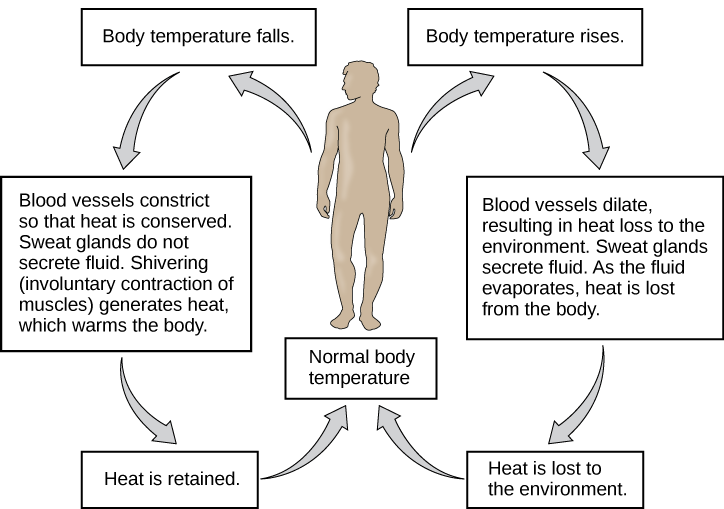
In human beings, the homeostatic regulation of body temperature involves such mechanisms as sweating when the internal temperature becomes excessive and shivering to produce heat, as well as the generation of heat through metabolic processes when the internal temperature falls too low.
The Autonomic Nervous System (ANS)
These aspects of homeostasis are regulated through the autonomic nervous system.
The autonomic nervous system manages most of our bodily systems, including the cardiovascular system, gastrointestinal, urinary and bowel functions, temperature regulation, reproduction and our metabolic and endocrine systems. Additionally, this system is responsible for our reaction to stress - the flight or fight response.
Sympathetic and Parasympathetic
The autonomic nervous system consists of two parts: the sympathetic system and the parasympathetic system. The sympathetic system can best be thought of as controlling the 'fight or flight' reactions of the body; producing the rapid heart rates, increased breathing and increased blood flow to the muscles that are necessary when an individual is in danger or under stress. The parasympathetic system controls the 'quiet' body functions, for instance the digestive system. In short, the sympathetic system gets the body ready for action, while the parasympathetic system gets the body ready for rest. And in most individuals the parasympathetic and sympathetic components of the autonomic nervous systems are in perfect balance, from moment to moment, depending on the body's instantaneous needs.
Dysautonomia
Brain disorders such as traumatic brain injury can affect the autonomic nerve system and result in Dysautonomia: The autonomic nervous system loses that balance and at various times the parasympathetic or sympathetic systems inappropriately predominate.
Symptoms
Symptoms can include frequent, vague but disturbing aches and pains, faintness (or even actual fainting spells), fatigue and inertia, severe anxiety attacks, tachycardia, hypotension, poor exercise tolerance, gastrointestinal symptoms such as irritable bowel syndrome, sweating, dizziness, blurred vision, numbness and tingling, anxiety and (quite understandably), depression.
A person suffering from Dysautonomia may exhibit all these symptoms and more or only one or two. It can be an acute, short lived problem or a chronic problem that will last a lifetime. There is no cure for Dysautonomia but some medications and strategies can help alleviate the symptoms.
Management Strategies
The homeostatic regulation of body temperature may be severely impaired in a person suffering from dysautonomia and they may develop excessively high body temperatures and consequent irritability, confusion and disorientation. The treatment for a high temperature as a result of a damaged autonomic nervous system is entirely symptomatic and supportive. That is: the fever is treated but not the cause. Remember the cause is unfortunately incurable.
Essentially the treatment is to cool the person down
A wet towel across the neck can be of help as most of our body heat is lost through the head and the external carotid arteries carry large amounts of blood to the brain. Cooling this area will effectively cool the whole body from the inside out.
Drink plenty of fluids, preferably water. Other fluids, particularly alcohol or caffeine, can reduce the fluid levels in the body by increasing fluid loss through sweating or urination.
It is essential to seek medical assistance if any fever is severe or prolonged as the fever itself may damage organs including the brain, heart and kidneys.
A host of medications have been tried in patients with dysautonomia. Those most commonly felt to be useful include:
- Tricyclic antidepressants
- Anti-anxiety medications
- Medications affecting high or low blood pressure and
- Non steroidal anti-inflammatory medications. The most effective medications will vary from person to person depending on the particular symptoms that Dysautonomia produce in them.
As with any long-term health condition, it is highly recommended that a relationship be maintained with a GP or other suitable medical professional.
References and further information
Biology Online: http://www.biology-online.org/4/1_physiological_homeostasis.htm•Dysautonomia Network: http://www.dinet.org/•The Children's Hospital at Westmead: http://www.dinet.org/"

Image Source: On Image
How and Why Does Temperature Affect Chronic Illness?
I found some wonderful information on The Autoimmune Mom's website regarding temperature changes and chronic illnesses. I did not realize how tough of a subject this would be to research. It has been a real challenge. However, this website offers some wonderful information.

"Cold Weather’s Impact on Autoimmune Disease Flares + Tips For Being Outside in Fall and Winter
By: in Environment
Changes in or extreme climates can often have an effect on disease conditions. In some cases, there are certain types of weather that can be helpful in controlling or improving a condition; other times, climate can impact disorders negatively in terms of symptoms and disease progression. Here we consider the effects of cold weather and temperatures on autoimmune disease.
Why does cold air (dry or wet) affect pain and flares in autoimmune disease?
The first thing to mention here is that autoimmune conditions come in all shapes and sizes, and as such are affected by many factors. Some conditions, such as rheumatoid arthritis, are greatly impacted by the weather (especially cold and/or rainy), while others are minimally affected, if at all. In contrast, other disorders show an improvement in symptoms with cooler weather and may flare on warmer days. There is no hard and fast rule as to how weather will affect individual patients. Having said this, the short answer is we’re not entirely sure why autoimmune flares tend to worsen in cold weather, but we do know a few things regarding this phenomenon.
In general, weather extremes of any kind will place additional stress upon the body, which is usually not helpful for those suffering from a host of conditions, autoimmune and otherwise. Thus, generalized stress can increase the incidence and severity of autoimmune conditions in a non-specific way, simply by adding to the heightened physiological demands of the body during such periods. For instance, in very cold weather, bodily heat escapes quickly, leaving less energy and fewer resources available to deal with basic and enhanced requirements. Other conditions such as cold agglutinin disease, which is a variant of autoimmune hemolytic anemia, only occur during periods of lowered body temperature.
This emotional and/or physical stress can leave an autoimmune sufferer more susceptible to flares, which might be better controlled in more temperate weather (though sometimes the opposite is true; it is a very individualized presentation).
More specifically, it seems that one likely cause of cold-induced pain in many cases is the fact that smaller blood vessels tend to spasm in low temperatures, which leads to a restriction of blood flow to the associated areas. This is known as Raynaud’s phenomenon when it is secondary to an established autoimmune disease (or Raynaud’s disease when it appears on its own) and it is something that many autoimmune patients know all too well, as it often occurs in conjunction with various autoimmune conditions. The spasms can cause extreme pain, swelling, numbness and discoloration, and they occur most prominently in the fingers, toes, ears and nose (because these are all areas with very small vessels and therefore less blood flow and adaptive ability). It is possible, though not certain, that similar problems in larger joints (and therefore vessels) are related in terms of pathology.
Another potential but controversial explanation for joint inflammation during certain types of weather involves the postulation that lower barometric pressure leads to increased swelling in the joint spaces.
Are there any studies done on brief breaks from cold weather, e.g., beach vacation in winter, and helping to reduce joint pain and other symptoms from the cold?
Unfortunately, the literature is fairly sparse in this area, and it appears that there hasn’t been a great deal of research or investigation into the causes of or remedies for such flares. There is one unofficial site, written by a doctor, that does a decent job of collecting most of the available research on the topic and providing brief summaries.
Another brief response from a different physician (not a study, just clinical advice) advises that in most cases the best weather for autoimmune patients is warm and dry, such as in the Southwest. But again, this will vary from patient to patient, and what works for one may be detrimental to another. Otherwise, not much else was found upon literature review.
What is the best way to combat cold weather effects on pain and inflammation?
There is unfortunately no secret weapon used to combat such effects in those diagnosed with autoimmune disease. That is, there is really nothing special one can do in cases of autoimmune conditions, other than the normal measures anyone would take in extreme cold to prevent complications. Still, there are several effective ways to prevent or at least mitigate the negative impact cold weather has on some autoimmune sufferers.
Just as is the case in people without autoimmune conditions, extreme cold requires some contemplation and preparation. On particularly cold days, one should dress in layers, being sure to wear gloves and a hat; this serves the dual purposes of keeping joints warm and more flexible, and reducing overall cold stress. If it is absolutely necessary to remain outside for long periods, it is crucial that one plans to take breaks and go inside occasionally, preferably before symptoms can begin to flare.
And while patients should consider exercising indoors during these temperature extremes, it is important, when doing so outdoors, to remain active for the duration, in order to keep joints and muscles warm and more flexible, making them less prone to pain and inflammation. Finally, in extreme autoimmune cases, some people have found that changing climates (by moving) is quite helpful, though clinicians and researchers are divided on the issue, and it is, once again, very personalized as to the benefits.
Questions for your doctor:
- What is the best climate, if there is one, for my condition(s)? Is it worth considering moving?
- What are the recommended protective/preventive measures I should take when out in extreme cold temperatures?
- Can you provide me with any resources or information regarding the effects of cold weather on autoimmune disease, or disease in general?
- What is your opinion of the barometric pressure theory of joint pain and swelling?
- Are there other causes of cold weather complications in autoimmune disease, besides vessel spasms and those mentioned above?
About the Author
Dr. Rothbard is a professional medical writer and consultant based in New York City, specializing in medical education articles targeted at a variety of audiences, from children through clinicians. After leaving medicine, he worked as a biology and medical science educator for several years, before deciding to pursue writing full-time. He may be reached at grothbard@hotmail.com."
 |
| Image Source: HERE |
Does Temperature Affect Your Digestion?
According to Everyday Health,
"Your Digestion Could Be A Matter of Degree
By Jennifer Anderson
Medically Reviewed by Pat F. Bass III, MD, MPHLast Updated: 8/7/2013
Your tongue may crave the icy temperature of an ice pop on a steamy summer day, but your digestion may rebel.
'Some people perspire after drinking cold liquids,' says Mark Mattar MD, a clinician and assistant professor of medicine at MedStar Georgetown University Hospital, Washington, D.C.
The body likes to keep its core temperature steady at about 100° F., which is when the best digestion occurs. If cold temperatures — such as ice water or cold food in the diet — enter the stomach, the body works quickly to warm it.
A Centuries-Old Science
Temperature — of the body, weather, or the foods you eat — and its effects on digestion has intrigued physicians and scientists for at least 100 years. A well-regarded professor of several New York hospitals at the turn of the last century, the late William Gilman Thompson MD, included a chapter on the topic in his 1905 book, Practical Dietetics With Special Reference to Diet in Disease.
In it, he writes: 'One may begin a dinner with iced raw oysters, then take hot soup, and later conclude the meal with ice cream, followed by hot coffee,' he said of a proposed diet. 'And yet throughout, the temperature of the stomach contents does not vary so much as half a degree.'
Dr. Thompson came to his conclusions based on the outcomes of 'many experiments which I have made upon patients…to whom I have given fluids at different temperatures, which were immediately siphoned out of the stomach and tested for heat loss or gain.'
Warm Is Better
Even on a hot day, warm liquids generally soothe the system, Mattar said. Colonoscopy patients find warm liquids infused in the colon help alleviate pain or spasms. And anecdotally, he said, the wisdom from our grandmothers was to drink warm liquids — the belief being that warmth caused the muscles to relax — even the minuscule muscles that support the blood vessels.
It’s also likely that the body’s preference for warmth has to do with the latest frontier in biology, the microbiome — those trillions of microscopic bugs that live in the gut, he said.
In the lab, these microorganisms thrive in incubation. Although these bugs like a warm host, even they have their limit. While hot cocoa on a hot day probably would be fine, Mattar said, 'if it’s hotter than 100 degrees, your body will try to cool it down.'
Air Temperature
In warm climates, the blood vessels open and more hormones circulate to aid in all systems, including digestion, Mattar said. In cold climates, everything slows down, but not too much.
In fact, the change is so subtle, the effects of air temperature on digestion usually goes unnoticed — except in extreme cases when the core temperature drops and hypothermia sets in. Treatment generally includes blankets and possibly intravenous fluids that are a little warmer than room temperature. 'You don’t want to shock the system,' he said.
Illness and Diseases
In the opposite extreme, when hotter becomes the new normal, there is no real consensus on treatment, Mattar said. Some people recommend blankets and warm drinks, despite the discomfort, while others report the body should be kept cool to let the fever take its course.
Thompson added that while 'cooling drinks have long been used [to treat] fevers…to this day one occasionally meets with opposition from mothers to giving a child with high fever anything really cold.'
Ice also can be effective in relieving nausea, and hot liquids aid in 'cleansing the mucous membrane,' Thompson said. Likewise 'hot-air baths…are of undoubted service' in treating kidney disease.
And despite the body’s quick response to cold drinks, the cold still can irritate the bowel, possibly causing diarrhea, constipation or abdominal pain, Mattar said, but that’s not true for everyone.
'I myself love freezing cold water,' he said. 'But if my wife drinks it, her stomach will hurt.'"
From what I have read, stomach acid plays an essential role in the immune system by killing harmful bacteria and parasites that are ingested with food, so temperature would play a part in that. Stomach acid activates the enzyme pepsin needed for protein digestion. The stomach acid will send signals to the pancreas to produce digestive juices and enzymes to further break down food. I put the link above so that you can read more about the enzyme pepsin, and what it does in the digestive system.
According to Women's Health Magazine, the weather can affect the body in so many different ways, in addition to what has already been discussed in the sources I have found. It can cause headaches and migraines, dry skin, low energy and changes in mood, vitamin D deficiencies, breathing problems, colds, joint pain, and weakened hair and nails. The weather can even affect your blood pressure. According to The Mayo Clinic, your blood pressure is higher in the winter and lower in the summer.

Image Source: On Image