The idea was suggested to me (by my MD) that a blog/diary might help me feel better by venting my frustrations and struggles with Gastroparesis. Also, I hope I can help others who may have the same thing through my own experiences.
For more information, please email: emilysstomach[at]gmail.com or follow on Twitter: http://twitter.com/emilysstomach or like us on Facebook: http://www.facebook.com/emilysstomach or Instagram: http://www.instagram.com/emilysstomach
Copyright
“You agree that you will not modify, copy, reproduce, sell, or distribute any content in any manner or medium without permission."
I have had several friends, all of whom suffer from Gastroparesis and other chronic illnesses, have stomach surgeries. Some of them have had Gastric Bypasses or Nissen Fludoplications (which, you can read my article and research about the Gastric Bypass and Sleeve here: https://www.emilysstomach.com/2017/06/gastric-bypass-sleeve-and-gastroparesis.html and you can read about the Nissen Fludoplication surgery here: https://www.emilysstomach.com/2017/06/nissen-fundoplication.html) but most have had complications from these surgeries where they needed to have a Gastrectomy. A Gastrectomy, according to UCSF,
"Gastrectomy
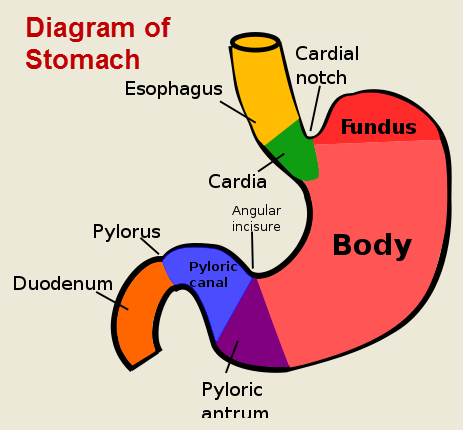
A gastrectomy is the surgical removal of all or part of the stomach. The stomach is a J-shaped organ in the upper abdomen. It is part of the digestive system, which processes nutrients ( vitamins, minerals, carbohydrates, fats, proteins, and water) in foods that are eaten and helps pass waste material out of the body.
Food moves from the throat to the stomach through a hollow, muscular tube called the esophagus. After leaving the stomach, partly-digested food passes into the small intestine and then into the large intestine.
Gastrectomy is performed for the following conditions:
Stomach Cancer
Bleeding Gastric Ulcers
Perforation (Hole) in the Stomach Wall
Benign Polyps
A partial gastrectomy is the removal of only part of the stomach. The remaining portion then continues with its digestive role. If the entire stomach is removed, the esophagus is connected directly to the small intestine, where digestion now begins. Patients must make significant dietary changes when a gastrectomy is performed.
For severe gastric ulcers involving the duodenum, the pylorus, the lower portion of the stomach, may be removed along with the all or part of the duodenum, the upper portion of the small intestine.
A Billroth procedure is then preformed. Where a sufficient portion of duodenum remains, a Billroth I is performed where the remaining stomach is reattached to the duodenum before the bile duct and pancreas ducts. If the stomach cannot be reconnected to the duodenum, a Billroth II is performed, in which an opening hole is made in the next section of the small intestine, the jejunum, and the stomach attached at that opening.
The pylorus is used to grind food and slowly release it into the small intestine. Its removal causes food to move more rapidly through the small intestine, often leading to gastric dumping syndrome, a condition treatable via change in diet."
This guide will help you prepare for your gastrectomy surgery at Memorial Sloan Kettering (MSK) and help you understand what to expect during your recovery. Read through this guide at least once before your surgery and then use it as a reference in the days leading up to your surgery. Bring this guide with you every time you come to MSK, including the day of your surgery, so that you and your healthcare team can refer to it throughout your care.
Your Stomach
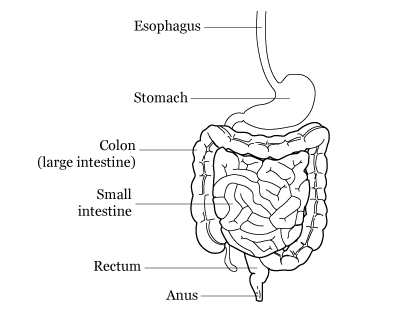
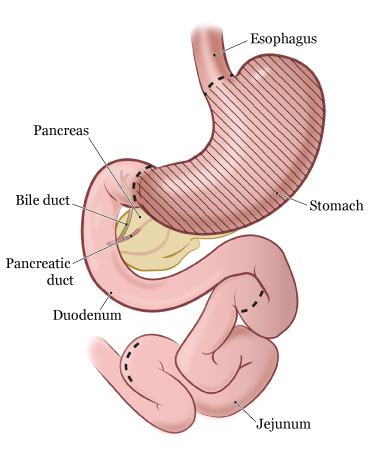
The stomach is an organ in your digestive system that helps to store and digest food. It is located between your esophagus (food pipe) and your small intestine (see Figure 1). The walls of your stomach are made up of muscles that churn and break down food into small pieces. Your stomach also produces acid that begins to break down or digest food.
Figure 1. The digestive system
When the food leaves your stomach, it moves into your small intestine. The first parts of your small intestine are the duodenum and the jejunum. Your food continues to be digested and absorbed in your small intestine.
Gastrectomy
Gastrectomy is a surgery that is done to treat cancer of the stomach. During the surgery, your surgeon may remove part or all of your stomach. There are several kinds of gastrectomies:
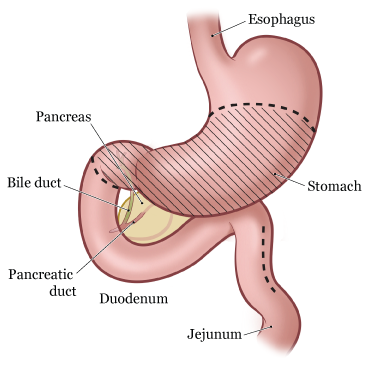
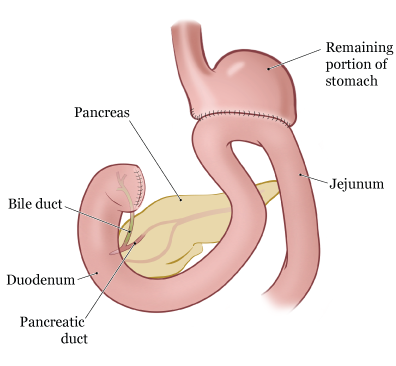
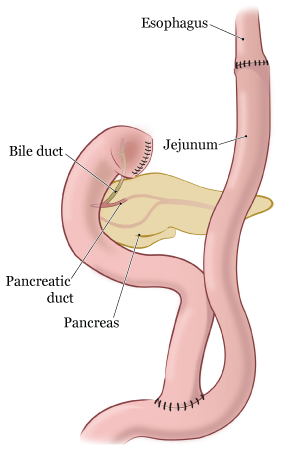
A subtotal gastrectomy includes removing the cancerous part of your stomach, nearby lymph nodes, and possibly parts of other organs near the tumor (see Figures 2 and 3).
Figure 2. Your digestive system before your subtotal gastrectomy
Figure 3. Your digestive system after your subtotal gastrectomy
A total gastrectomy involves removing the entire stomach, nearby lymph nodes, and parts of your esophagus and small intestine. Your esophagus is reconnected to your small intestine so that you can continue to eat and swallow (see Figures 4 and 5).
Figure 4. Your digestive system before your total gastrectomy
Figure 5. Your digestive system after your total gastrectomy
A gastrectomy can be done in different ways. Your surgeon will talk to you about which options are right for you. Depending on what surgery you have, your surgeon will make one or more incisions (surgical cuts) on your belly.
When one long incision is made, it is called an open surgery. Some or all of the stomach is removed through this incision.
When several small incisions are made on the belly, this is called laparoscopic minimally invasive surgery. Small surgical instruments and a laparoscope (a tube-like instrument with a camera) are inserted into the incisions to remove the part of the stomach containing the cancer.
Your surgeon may use a robotic device to help with your surgery.
Before Your Surgery
The information in this section will help you prepare for your surgery. Read through this section when your surgery is scheduled and refer to it as your surgery date gets closer. It contains important information about what you need to do before your surgery. Write down any questions you have and be sure to ask your doctor or nurse.
Preparing for Your Surgery
You and your healthcare team will work together to prepare for your surgery.
Help us keep you safe during your surgery by telling us if any of the following statements apply to you, even if you aren’t sure.
I take a blood thinner. Some examples are heparin, warfarin (Coumadin®), clopidogrel (Plavix®), enoxaparin (Lovenox®), and tinzaparin (Innohep®). There are others, so be sure your doctor knows all the medications you’re taking.
I take prescription medications.
I take any over-the-counter medications, herbs, vitamins, minerals, or natural or home remedies.
I have a pacemaker, automatic implantable cardioverter-defibrillator (AICD), or other heart device.
I have sleep apnea.
I have had a problem with anesthesia in the past.
I have allergies, including to latex.
I am not willing to receive a blood transfusion.
I drink alcohol.
I smoke.
I use recreational drugs.
About Drinking Alcohol
The amount of alcohol you drink can affect you during and after your surgery. It is important that you talk with your healthcare providers about your alcohol intake so that we can plan your care.
Stopping alcohol suddenly can cause seizures, delirium, and death. If we know you are at risk for these complications, we can prescribe medications to help prevent them.
If you drink alcohol regularly, you may be at risk for other complications during and after your surgery. These include bleeding, infections, heart problems, greater dependence on nursing care, and longer hospital stay.
Here are things you can do to prevent problems before your surgery:
Be honest with your healthcare provider about how much alcohol you drink.
Try to stop drinking alcohol once your surgery is planned. If you develop a headache, nausea, increased anxiety, or cannot sleep after you stop drinking, tell your doctor right away. These are early signs of alcohol withdrawal and can be treated.
Tell your healthcare provider if you cannot stop drinking.
Ask us any questions you have about drinking and surgery. As always, all of your treatment information will be kept confidential.
About Smoking
People who smoke can have breathing problems when they have surgery. Stopping even for a few days before surgery can help. If you smoke, your nurse will refer you to our Tobacco Treatment Program. You can also reach the program at 212-610-0507.
About Sleep Apnea
Sleep apnea is a common breathing disorder that causes a person to stop breathing for short periods while sleeping. The most common type is obstructive sleep apnea (OSA). This means that the airway becomes completely blocked during sleep, so no air can get through. OSA can cause serious problems when you have surgery. Please tell us if you have sleep apnea or if you think you might have it. If you use a breathing machine (such as a CPAP) for sleep apnea, bring it with you the day of your surgery.
Within 30 Days of Your Surgery
Presurgical Testing
Before your surgery, you will have an appointment for presurgical testing (PST). The date, time, and location of your PST appointment will be printed on the appointment reminder from your surgeon’s office.
You can eat and take your usual medications the day of your PST appointment. During your appointment, you will meet with a nurse practitioner who works closely with anesthesiology staff (doctors and specialized nurses who will be giving you medication to put you to sleep during your surgery). The nurse practitioner will review your medical and surgical history with you. You will have tests, including an electrocardiogram (EKG) to check your heart rhythm, a chest x-ray, blood tests, and any other tests necessary to plan your care. Your nurse practitioner may also recommend you see other healthcare providers.
Your nurse practitioner will talk with you about which medications you should take the morning of your surgery.
It is very helpful if you bring the following with you to your PST appointment:
A list of all the medications you are taking, including patches and creams.
Results of any tests done outside of MSK, such as a cardiac stress test, echocardiogram (echo), or carotid doppler study.
The name(s) and telephone number(s) of your doctor(s).
Complete a Health Care Proxy Form
If you haven’t already completed a Health Care Proxy form, we recommend you complete one now. A health care proxy is a legal document that identifies the person who will speak for you if you are unable to communicate for yourself. The person you identify is called your health care agent. If you are interested in completing a Health Care Proxy form, talk with your nurse. If you have completed a Health Care Proxy form or if you have any other advanced directive, bring it with you to your next appointment.
Do Breathing and Coughing Exercises
Practice taking deep breaths and coughing before your surgery. You will be given an incentive spirometer to help expand your lungs. For more information, please read How to Use Your Incentive Spirometer. If you have any questions, ask your nurse or respiratory therapist.
Exercise
Try to do aerobic exercise every day, such as walking at least 1 mile, swimming, or biking. If it is cold outside, use stairs in your home or go to a mall or shopping market. Walking will help your body get into its best condition for your surgery and make your recovery faster and easier.
Eat a Healthy Diet
You should eat a well-balanced, healthy diet before your surgery. If you need help with your diet talk to your doctor or nurse about meeting with a dietitian.
Stop taking herbal remedies or supplements 7 days before your surgery. If you take a multivitamin, talk with your doctor or nurse about whether you should continue. For more information, read Herbal Remedies and Cancer Treatment.
You will need to follow a clear liquid diet the day before your surgery. Examples of clear liquids are listed in the table below. Your doctor or nurse will tell you if you will need and extra day of clear liquids or any additional bowel preparation. While you are on this diet:
Do not eat any solid foods.
Make sure to drink plenty of liquids other than water, coffee, and tea. Try to drink at least 1 (8-ounce) glass of clear liquid every hour while you’re awake.
Drink
Do Not Drink
Soups
Clear broth, bouillon, or consommé
Any products with any particles of dried food or seasoning
Sweets
Gelatin, such as Jell-O®
Flavored ices
Sweeteners, such as sugar or honey
All others
Beverages
Clear fruit juices, such as apple, cranberry, lemonade, or grape
Soda, such as ginger ale, 7-Up®, Sprite®, seltzer
Gatorade®
Black coffee (no milk or cream)
Tea (no milk or cream)
Juices with pulp
Nectars
Milk or cream
Alcoholic beverages
Note the Time of Your Surgery
Sleep
Go to bed early and get a full night’s sleep.
Instructions for eating and drinking before your surgery
Do not eat anything after midnight the night before your surgery. This includes hard candy and gum.
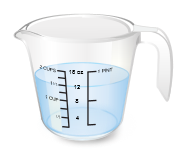
Between midnight and up until 2 hours before your scheduled arrival time, you may drink a total of 12 ounces of water (see figure).
Starting 2 hours before your scheduled arrival time, do not eat or drink anything. This includes water.
The Morning of Your Surgery
Take Your Medications as Instructed
If your doctor or nurse practitioner instructed you to take certain medications the morning of your surgery, take only those medications with a sip of water. Depending on what medications you take and the surgery you’re having, this may be all, some, or none of your usual morning medications.
Things to Remember
Do not put on any lotions, creams, deodorants, makeup, powders, or perfumes.
Do not wear any metal objects. Remove all jewelry, including body piercings. The equipment used during your surgery can cause burns if it touches metal.
Leave valuables, such as credit cards, jewelry, or your checkbook at home.
Before you are taken into the operating room, you will need to remove your eyeglasses, hearing aids, dentures, prosthetic device(s), wig, and religious articles, such as a rosary.
If you wear contact lenses, wear your glasses instead.
What to Bring
Sneakers that lace up. You may have some swelling in your feet. Lace-up sneakers can accommodate this swelling.
Only the money you may need for a newspaper, bus, taxi, or parking.
Your portable music player, if you choose. However, someone will need to hold this item for you when you go into surgery.
Your incentive spirometer, if you have one.
Your breathing machine for sleep apnea (such as your CPAP), if you have one.
If you have a case for your personal items, such as eyeglasses, hearing aid(s), dentures, prosthetic device(s), wig, and religious articles such as a rosary, bring it with you.
Your Health Care Proxy form, if you have completed one.
This guide. Your healthcare team will use this guide to teach you how to care for yourself after your surgery.
After Your Surgery
The information in this section will tell you what to expect after your surgery, both during your hospital stay and after you leave the hospital. You will learn how to safely recover from your surgery. Write down any questions you have and be sure to ask your doctor or nurse.
What to Expect
When you wake up after your surgery, you will be taken to the Post Anesthesia Recovery Unit (PACU). You will stay there until you are awake and your pain is under control. Most people go to their room after a few hours in the PACU, but some will need to stay in the PACU overnight for observation.
You will receive oxygen through a thin tube called a nasal cannula that rests below your nose. A nurse will be monitoring your body temperature, pulse, blood pressure, and oxygen levels.
Your visitors can see you briefly in the PACU, usually within 90 minutes after you arrive there. A member of the nursing staff will explain the guidelines to them. After your stay in the PACU, you will be taken to your hospital room in the inpatient unit. There, your nurse will tell you how to recover from your surgery. Below are examples of ways you can help yourself recover safely.
Walk around after surgery. Walking every 2 hours is a good goal. This will help prevent blood clots in your legs.
Use your incentive spirometer. This will help your lungs expand, which prevents pneumonia. For more information, please read our How to Use Your Incentive Spirometerresource.
Commonly Asked Questions: During Your Hospital Stay
Will I have pain after my surgery?
Your doctor and nurse will ask you about your pain often and give you medication to control your pain. Pain medication will be delivered by patient-controlled analgesia (PCA). PCA helps you control your pain by administering your pain medication into a vein (intravenous or IV) or epidural space (in your spine). Read the resource Patient-controlled Analgesia for more information.
If your pain is not relieved, tell your doctor or nurse. You will be given a prescription for pain medication before you leave the hospital. Pain medication may cause constipation (having fewer bowel movements than what is normal for you).
How can I prevent constipation?
Go to the bathroom at the same time every day. Your body will get used to going at that time.
If you feel the urge to go, do not put it off. Try to use the bathroom 5 to 15 minutes after meals.
After breakfast is a good time to move your bowels because the reflexes in your colon are strongest then.
Exercise if you can; walking is an excellent form of exercise.
Slowly increase the fiber in your diet to 25 to 35 grams per day. Fruits, vegetables, whole grains, and cereals contain fiber. If you have an ostomy or have had recent bowel surgery, check with your doctor or nurse before making any changes in your diet.
Both over-the-counter and prescription medications are available to treat constipation. Start with 1 of the following over-the-counter medications first:
Docusate sodium (Colace®) 100 mg. Take _____ capsules _____ times a day. This is a stool softener that causes few side effects. Do not take it with mineral oil.
Polyethylene glycol (MiraLAX®) 17 grams daily.
Senna (Senokot®) 2 tablets at bedtime. This is a stimulant laxative, which can cause cramping.
If you haven’t had a bowel movement in 2 days, call your doctor or nurse.
Will I be able to eat?
You will not be allowed to eat for the first day or 2 following the surgery. Then you will be on a clear liquid diet. After that, your diet will progress to a regular diet as tolerated. You will be able to eat smaller amounts of food than prior to your surgery. You will be encouraged to eat smaller meals, more frequently throughout the day.
Eating a balanced diet high in protein will help you heal after surgery. Your diet should include a healthy protein source at each meal, as well as fruits, vegetables, and whole grains. For more tips on increasing the amount of calories and protein in your diet, ask your nurse for the resource Eating Well During and After Your Cancer Treatment. For more information, please read Eating After Your Gastrectomy or Esophagogastrectomy. If you have questions about your diet, ask to see a dietitian.
How long will I be in the hospital?
Most people are in the hospital for approximately 5 days after having a gastrectomy but this will depend on the exact surgery that is done.
Commonly Asked Questions: After You Leave the Hospital
Will I have pain when I am home?
The length of time each person has pain or discomfort varies. You may still have some pain when you go home and will probably be taking pain medication. Follow the guidelines below.
Take your medications as directed and as needed.
Call your doctor if the medication prescribed for you doesn’t relieve your pain.
Do not drive or drink alcohol while you are taking prescription pain medication.
As your incision heals, you will have less pain and need less pain medication. A mild pain reliever such as acetaminophen (Tylenol®) or ibuprofen (Advil®) will relieve aches and discomfort. However, large quantities of acetaminophen may be harmful to your liver. Do not take more acetaminophen than the amount directed on the bottle or as instructed by your doctor or nurse.
Pain medication should help you as you resume your normal activities. Take enough medication to do your exercises comfortably. Pain medication is most effective 30 to 45 minutes after taking it.
Keep track of when you take your pain medication. Taking it when your pain first begins is more effective than waiting for the pain to get worse.
Can I shower?
Yes. Taking a warm shower is relaxing and can help decrease muscle aches. Use soap when you shower and gently wash your incision. Pat the areas dry with a towel after showering, and leave your incision uncovered (unless there is drainage). Call your doctor if you see any redness or drainage from your incision.
Do not take tub baths until you discuss it with your doctor at the first appointment after your surgery.
How do I care for my incision?
The location of your incision will depend on the type of surgery you had. It is normal to have numbness of the skin below the incision because some of the nerves were cut; this sensation will lessen over time.
By the time you are ready to leave the hospital, your surgical incision will have begun to heal.
You and your caregiver should look at your incision with your nurse before you leave the hospital so you know what it looks like.
If any liquid is draining from your incision, you should write down the amount and color. Call your doctor’s office and speak with the nurse about any drainage from your incision.
Change your bandages at least once a day and more often if they become wet with drainage. When there is no longer any drainage coming from your incision, they can be left uncovered.
If you go home with Steri-StripsTM on your incision, they will loosen and fall off by themselves. If they haven’t fallen off within 10 days, you may remove them.
If you go home with glue over your sutures (stitches), it will also loosen and peel off, similarly to the Steri-Strips.
If your surgeon uses staples to close your incision, you will have them removed at your postoperative visit at the outpatient clinic.
When is it safe for me to drive?
You may resume driving 3 weeks after surgery as long as you are not taking pain medication that may make you drowsy.
What exercises can I do?
Exercise will help you gain strength and feel better. Walking and stair climbing are excellent forms of exercise. Gradually increase the distance you walk. Climb stairs slowly, resting or stopping as needed. Ask your doctor or nurse before starting more strenuous exercises.
When can I lift heavy objects?
Check with your doctor before you do any heavy lifting. Normally, you should not lift anything heavier than 5 pounds for at least 6 weeks. Ask your doctor how long you should avoid heavy lifting.
When is my first appointment after my surgery?
Your first appointment after surgery will be in 1 to 3 weeks after you leave the hospital. Your nurse will give you instructions on how to make this appointment, including the phone number to call.
How can I cope with my feelings?
After surgery for a serious illness, you may have new and upsetting feelings. Many people say they felt weepy, sad, worried, nervous, irritable, and angry at one time or another. You may find that you cannot control some of these feelings. If this happens, it’s a good idea to seek emotional support.
The first step in coping is to talk about how you feel. Family and friends can help. Your nurse, doctor, and social worker can reassure, support, and guide you. It is always a good idea to let these professionals know how you, your family, and your friends are feeling emotionally. Many resources are available to patients and their families. Whether you are in the hospital or at home, the nurses, doctors, and social workers are here to help you and your family and friends handle the emotional aspects of your illness."
According to the Cleveland Clinic, you can develop Post Gastrectomy Syndrome. The information about Post Gastrectomy Syndrome is the following,
"Post-Gastrectomy Syndrome
The primary function of the stomach is to act as a reservoir, initiate the digestive process, and release its contents gradually into the duodenum so that digestion in the small bowel is optimally performed.
Causes
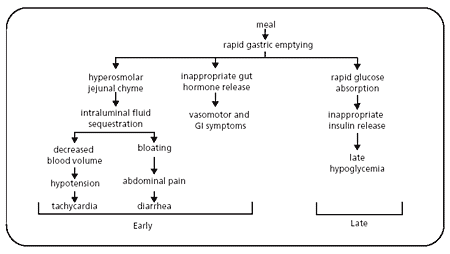
Patients with a diagnosis of gastric cancer, trauma, or complicated peptic ulcer disease may require a gastrectomy, which is the surgical removal of a portion of or, on occasion, all of the stomach. The anatomical changes that result after gastrectomy affect the emptying time of the stomach. If the pyloric valve located between the stomach and first part of the small intestine (duodenum) is removed, the stomach is unable to retain food long enough for partial digestion to occur. Food then travels too rapidly into the small intestine producing a condition known as the post-gastrectomy syndrome.
Symptoms
This syndrome is characterized by a lowered tolerance for large meals, rapid emptying of food into the small intestine or 'dumping,' abdominal cramping pain, diarrhea, lightheadedness after eating as well as increased heart rate and sharp drops in blood sugar levels. In the 'early' dumping syndrome, symptoms occur approximately one-half hour after eating whereas in the 'late' dumping syndrome they appear two to four hours after eating. The carbohydrate component draws water into the intestinal lumen causing sudden fluid shifts in the early dumping whereas late dumping is caused by a reactive hypoglycemia. An estimated 25-50% of all patients who have undergone gastric surgery have some symptoms of gastric dumping. The incidence and severity of symptoms are related directly to the extent of gastric surgery.
Complications
Complications of post-gastrectomy syndrome include anemia as a result of vitamin B12 or iron malabsorption and osteoporosis. These problems generally occur months or even years after gastric surgery. Vitamin B12 malabsorption occurs when a protein known as intrinsic factor is either not produced by the stomach (this is a condition called pernicious anemia) or when the proximal stomach is resected (the portion of the stomach that produces intrinsic factor). In either case, that absence of intrinsic factor leads to the poor absorption of vitamin B12. Under normal circumstances intrinsic factor binds to vitamin B12 and assists with the absorption of this vitamin in the lower portion of the small bowel. When vitamin B12 is poorly absorbed, anemia and, in some cases, poor nerve function can occur. This generally does not happen for several years because vitamin B12 is stored in large amounts in the liver.
Iron deficiency anemia develops because removal of the stomach often leads to a marked decrease in the production of gastric acid. This acid is necessary to convert dietary iron to a form that is more readily absorbed in the duodenum. Anemia usually does not occur for a few years after gastric surgery because iron is stored in moderately large amounts in the bone marrow, where red blood cells are produced.
Osteoporosis develops as a result of poor calcium absorption, another problem that occurs after gastric surgery. Under normal circumstances, calcium absorption, which occurs in the duodenum and proximal small bowel, is modest at best, with large amounts being lost in the bowel movement. Following gastric surgery, calcium absorption is even less efficient as a result of rapid emptying of the stomach. Calcium also binds tightly to unabsorbed dietary fat which further interferes with its absorption. Symptoms of osteoporosis may develop ten or more years after gastric surgery because of the large amount of calcium that is normally stored in bone.
Treatment
Treatment of post-gastrectomy syndrome includes initiation of a post-gastrectomy diet, which is high in protein, low in carbohydrates, and low in concentrated sweets. This diet should be consumed as five or six small meals, with limited fluid intake during meals. On occasion, medications may be required to help control these symptoms. Vitamin B12 deficiency can be prevented by providing vitamin B12 shots once each month indefinitely. Oral iron and calcium supplements are often needed to prevent the development of deficiencies in these minerals."
If you have a personal story that you would like to share based on your experience with this surgery, please feel free to email it to me at: emilysstomach[at]gmail.com.
I have seen, recently, in the support groups questions about the gastric bypass, sleeve, etc. I wanted to share with you the year's worth of research that I have been doing so that if you are considering a gastric bypass or a sleeve, you can be well informed. My doctor keeps trying to push a gastric bypass on me, but that is not going to fix the nerve damage to my vagus nerve. Personally, I don't want it because I'm scared it will cause more problems than it's worth. I've had friends pass away from complications due to gastric bypasses. In fact, three days ago when I was in the emergency room, a lady came in who had a gastric bypass done and was vomiting up blood. This is a decision that you will have to make for yourself but I wanted to share the information I've gathered so that you can decide if this is for you. Sources are included below. There are a lot of hoops to jump through in order to get a gastric bypass or sleeve. Each doctor is different on their requirements.
The information below will also go into detail the differences between the bypass and the sleeve. Before you make the decision to have surgery (and I know a lot of you are desperate for relief), make time to talk to support groups with other gastroparesis patients so that they can give you advice. I would also recommend writing down any questions/concerns that you may have for the doctor, lest you forget or the doctor is in such a hurry that you don't have time to think of questions while you're in the doctor's exam room. Be your own advocate. Additionally, I would get a second opinion, just to be on the safe side. You should meet with a nutritionist too, since your diet may be a bit different from others getting a gastric bypass. You and the nutritionist should work together to come up with a plan if you choose to have this surgery. There is also a new Facebook support group for those who have had it done, and also combat Gastroparesis: GASTROPARESIS AFTER BARIATRIC SURGERY.
This surgery is not for everyone, and I've already decided it's not for me...but I hope this research will help you make the right decision for you. Again, if your gastroparesis is caused by vagus nerve damage, removing parts of your stomach may not help. It also will not stop the vomiting.
If you have Gastroparesis, then you have probably dealt with dumping syndrome at some point during your illness. Frequently, my friends get it when their stomachs decide to empty all at once, myself included. I thought I would write an article about it because it's not something I've already addressed and I wanted to bring awareness to the fact that it exists. I know a lot of people are scared or nervous to ask questions about pooping, so I'm going to try and do my best to explain dumping syndrome and how to get past it, especially when it's already hard for you to maintain fluids due to GP (gastroparesis).
Here are some Youtube videos that you can watch below, to explain what Dumping Syndrome is. They are not the most interesting videos, but contain great information and facts on dumping syndrome.
"Dumping syndrome is a group of symptoms that are most likely to develop if you've had surgery to remove all or part of your stomach, or if your stomach has been surgically bypassed to help lose weight. Also called rapid gastric emptying, dumping syndrome occurs when the undigested contents of your stomach move too rapidly into your small bowel. Common symptoms include abdominal cramps, nausea and diarrhea.
Most people with dumping syndrome experience symptoms soon after eating. In others, symptoms may occur one to three hours after eating. Some people experience both early and late symptoms.
Dumping syndrome is managed by adjusting your diet. In more-serious cases of dumping syndrome, you may need medications or surgery.
Symptoms of Dumping Syndrome:
Symptoms of dumping syndrome are most common during a meal or within 15 to 30 minutes following a meal. They include:
Gastrointestinal
Nausea
Vomiting
Abdominal cramps
Diarrhea
Feeling of fullness
Signs and symptoms also can develop later, usually one to three hours after eating. This is due to the dumping of large amount of sugars into the small intestine (hyperglycemia). In response, the body releases large amounts of insulin to absorb the sugars, leading to low levels of sugar in the body (hypoglycemia). Symptoms of late dumping can include:
A study of more than 1,100 people who had their stomachs surgically removed found that about two-thirds experienced early symptoms and about a third experienced late symptoms of dumping syndrome. Some people experience both early and late signs and symptoms.
No matter when problems develop, however, they may be worse following a high-sugar meal, especially one that's rich in table sugar (sucrose) or fruit sugar (fructose).
Causes of Dumping Syndrome:
In dumping syndrome, food and gastric juices from your stomach move to your small intestine in an uncontrolled, abnormally fast manner. This is most often related to changes in your stomach associated with surgery, such as when the opening (pylorus) between your stomach and the small intestine (duodenum) has been removed during an operation.
The pylorus acts as a brake so that stomach emptying is gradual. When it's removed, stomach material dumps rapidly into the small intestine. The ill effects of this are thought to be caused by the release of gastrointestinal hormones in the small intestine, as well as insulin secreted to process the sugar (glucose).
Dumping syndrome can occur after any operation on the stomach as well as after removal of the esophagus (esophagectomy). Gastric bypass surgery for weight loss is the most common cause today. It develops most commonly within weeks after surgery, or as soon as you return to your normal diet. The more stomach removed or bypassed, the more likely that the condition will be severe. It sometimes becomes a chronic disorder.
Tests and Diagnosis:
Your doctor may use some of the following methods to determine if you have dumping syndrome.
Medical history and evaluation. Your doctor can often diagnose dumping syndrome by taking a careful medical history and then evaluating your signs and symptoms. If you have undergone stomach surgery, that may help lead your doctor to a diagnosis of dumping syndrome.
Blood sugar test. Because low blood sugar is sometimes associated with dumping syndrome, your doctor may order a test (oral glucose tolerance test) to measure your blood sugar level at the peak time of your symptoms to help confirm the diagnosis.
Gastric emptying test. A radioactive material is added to food to measure how quickly food moves through your stomach.
Treatments and Medications:
Most cases of dumping syndrome improve as people learn to eat better for the condition and as the digestive system adjusts. There's a good chance that changing your diet will resolve your symptoms. (See recommendations under Lifestyle and home remedies.) If it doesn't, your doctor may advise medications or surgery to address the problem.
Medications
Your doctor may prescribe certain medications to slow the passage of food out of your stomach, and relieve the signs and symptoms associated with dumping syndrome. These drugs are most appropriate for people with severe signs and symptoms, and they don't work for everyone.
The medications that doctors most frequently prescribe are:
Acarbose (Precose). This medication delays the digestion of carbohydrates. Doctors prescribe it most often for the management of type 2 diabetes, and it has also been found to be effective in people with late-onset dumping syndrome. Side effects may include sweating, headaches, sudden hunger and weakness.
Octreotide (Sandostatin). This anti-diarrheal drug can slow down the emptying of food into the intestine. You take this drug by injecting it under your skin (subcutaneously). Be sure to talk with your doctor about the proper way to self-administer the drug, including optimal choices for injection sites. Long-acting formulations of this medication are available.
Because octreotide carries the risk of side effects (diarrhea, bulky stools, gallstones, flatulence, bloating) in some people, doctors recommend it only for people who haven't responded to other treatments and who are not candidates for surgery.
Surgery
Doctors use a number of surgical procedures to treat difficult cases of dumping syndrome that are resistant to more conservative approaches. Most of these operations are reconstructive techniques, such as reconstructing the pylorus, or they're intended to reverse gastric bypass surgery.
Feeding tube
A last resort for people who are not helped by any other treatment is to insert a tube into the small intestine through which nutrients can be delivered."
After gastric surgery, it can be more difficult to regulate movement of food, which dumps too quickly into the small intestine. Eating certain foods makes dumping syndrome more likely. For example, refined sugars rapidly absorb water from the body, causing symptoms. Symptoms may also happen after eating dairy products and certain fats or fried foods.
Dumping Syndrome: Symptoms of the Early Phase
An early dumping phase may happen about 30 to 60 minutes after you eat. Symptoms can last about an hour and may include:
A feeling of fullness, even after eating just a small amount
Abdominal cramping or pain
Nausea or vomiting
Severe diarrhea
Sweating, flushing, or light-headedness
Rapid heartbeat
Dumping Syndrome: Causes of the Early Phase
Symptoms of an early phase happen because food is rapidly "dumping" into the small intestine. This may be due to factors such as these:
The small intestine stretches.
Water pulled out of the bloodstream moves into the small intestine.
Hormones released from the small intestine into the bloodstream affect blood pressure.
Dumping Syndrome: Symptoms of the Late Phase
A late dumping phase may happen about 1 to 3 hours after eating. Symptoms may include:
Fatigue or weakness
Flushing or sweating
Shakiness, dizziness, fainting, or passing out
Loss of concentration or mental confusion
Feelings of hunger
Rapid heartbeat
Dumping Syndrome: Causes of the Late Phase
The symptoms of this late phase may happen due to a rapid rise and fall in blood sugar levels. The cause of this rapid swing in blood sugar may be worse when eating sweets or other simple carbohydrates.
Dumping Syndrome Treatment
Many people find that taking steps like these greatly reduces symptoms of dumping syndrome.
Foods to avoid. Avoid eating sugar and other sweets such as:
Candy
Sweet drinks
Cakes
Cookies
Pastries
Sweetened breads
Also avoid dairy products and alcohol. And avoid eating solids and drinking liquids during the same meal. In fact, don't drink 30 minutes before and 30 minutes after meals.
Foods to eat. To help with symptoms, also try these tips:
Use fiber supplements, such as psyllium (Metamucil or Konsyl), methylcellulose (Citrucel), or guar gum (Benefiber). **NOTE: If you have Gastroparesis as well, please consult your doctor as high fiber content can make our condition worse.
Use sugar replacements, such as Splenda, Equal, or Sweet'N Low, instead of sugar.
Go for complex carbohydrates, such as vegetables and whole-wheat bread, instead of simple carbohydrates, such as sweet rolls and ice cream.
To prevent dehydration, drink more than 4 cups of water or other sugar-free, decaffeinated, noncarbonated beverages throughout the day
If you have any questions or comments about the article, feel free to email me. I'm currently working on an article about pregnancy and GP. I'm gathering research and will hopefully, have it out in the next two weeks. Please email me if you have an idea for an article that you'd like to see and/or questions/comments: emilysstomach[at]gmail.com.
 Image Source: https://www.nostomachforcancer.org/about/life-without-a-stomach/gastrectomy