Find us on Google+ Gastroparesis: poop

Copyright

“You agree that you will not modify, copy, reproduce, sell, or distribute any content in any manner or medium without permission."
Showing posts with label poop. Show all posts

Monday, May 5, 2014

Dumping Syndrome

If you have Gastroparesis, then you have probably dealt with dumping syndrome at some point during your illness. Frequently, my friends get it when their stomachs decide to empty all at once, myself included. I thought I would write an article about it because it's not something I've already addressed and I wanted to bring awareness to the fact that it exists. I know a lot of people are scared or nervous to ask questions about pooping, so I'm going to try and do my best to explain dumping syndrome and how to get past it, especially when it's already hard for you to maintain fluids due to GP (gastroparesis).


So, what is dumping syndrome?


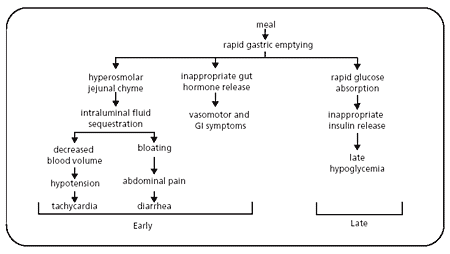
Image, courtesy of: http://www.nursestip.com/files/Dumping%20Syndrome.jpg


Here are some Youtube videos that you can watch below, to explain what Dumping Syndrome is. They are not the most interesting videos, but contain great information and facts on dumping syndrome.


According to the Mayo Clinic,

"Dumping syndrome is a group of symptoms that are most likely to develop if you've had surgery to remove all or part of your stomach, or if your stomach has been surgically bypassed to help lose weight. Also called rapid gastric emptying, dumping syndrome occurs when the undigested contents of your stomach move too rapidly into your small bowel. Common symptoms include abdominal cramps, nausea and diarrhea.

Most people with dumping syndrome experience symptoms soon after eating. In others, symptoms may occur one to three hours after eating. Some people experience both early and late symptoms.

Dumping syndrome is managed by adjusting your diet. In more-serious cases of dumping syndrome, you may need medications or surgery.


Symptoms of Dumping Syndrome:

Symptoms of dumping syndrome are most common during a meal or within 15 to 30 minutes following a meal. They include:

Gastrointestinal

Nausea
Vomiting
Abdominal cramps
Diarrhea
Feeling of fullness

Cardiovascular

Flushing
Dizziness, lightheadedness
Heart palpitations, rapid heart rate

Signs and symptoms also can develop later, usually one to three hours after eating. This is due to the dumping of large amount of sugars into the small intestine (hyperglycemia). In response, the body releases large amounts of insulin to absorb the sugars, leading to low levels of sugar in the body (hypoglycemia). Symptoms of late dumping can include:

Sweating
Hunger
Fatigue
Dizziness, lightheadedness
Confusion
Heart palpitations, rapid heart rate
Fainting

A study of more than 1,100 people who had their stomachs surgically removed found that about two-thirds experienced early symptoms and about a third experienced late symptoms of dumping syndrome. Some people experience both early and late signs and symptoms.

No matter when problems develop, however, they may be worse following a high-sugar meal, especially one that's rich in table sugar (sucrose) or fruit sugar (fructose).


Causes of Dumping Syndrome:

In dumping syndrome, food and gastric juices from your stomach move to your small intestine in an uncontrolled, abnormally fast manner. This is most often related to changes in your stomach associated with surgery, such as when the opening (pylorus) between your stomach and the small intestine (duodenum) has been removed during an operation.

The pylorus acts as a brake so that stomach emptying is gradual. When it's removed, stomach material dumps rapidly into the small intestine. The ill effects of this are thought to be caused by the release of gastrointestinal hormones in the small intestine, as well as insulin secreted to process the sugar (glucose).

Dumping syndrome can occur after any operation on the stomach as well as after removal of the esophagus (esophagectomy). Gastric bypass surgery for weight loss is the most common cause today. It develops most commonly within weeks after surgery, or as soon as you return to your normal diet. The more stomach removed or bypassed, the more likely that the condition will be severe. It sometimes becomes a chronic disorder.


Tests and Diagnosis:

Your doctor may use some of the following methods to determine if you have dumping syndrome.

Medical history and evaluation. Your doctor can often diagnose dumping syndrome by taking a careful medical history and then evaluating your signs and symptoms. If you have undergone stomach surgery, that may help lead your doctor to a diagnosis of dumping syndrome.

Blood sugar test. Because low blood sugar is sometimes associated with dumping syndrome, your doctor may order a test (oral glucose tolerance test) to measure your blood sugar level at the peak time of your symptoms to help confirm the diagnosis.

Gastric emptying test. A radioactive material is added to food to measure how quickly food moves through your stomach.


Treatments and Medications:

Most cases of dumping syndrome improve as people learn to eat better for the condition and as the digestive system adjusts. There's a good chance that changing your diet will resolve your symptoms. (See recommendations under Lifestyle and home remedies.) If it doesn't, your doctor may advise medications or surgery to address the problem.
Medications

Your doctor may prescribe certain medications to slow the passage of food out of your stomach, and relieve the signs and symptoms associated with dumping syndrome. These drugs are most appropriate for people with severe signs and symptoms, and they don't work for everyone.

The medications that doctors most frequently prescribe are:

Acarbose (Precose). This medication delays the digestion of carbohydrates. Doctors prescribe it most often for the management of type 2 diabetes, and it has also been found to be effective in people with late-onset dumping syndrome. Side effects may include sweating, headaches, sudden hunger and weakness.

Octreotide (Sandostatin). This anti-diarrheal drug can slow down the emptying of food into the intestine. You take this drug by injecting it under your skin (subcutaneously). Be sure to talk with your doctor about the proper way to self-administer the drug, including optimal choices for injection sites. Long-acting formulations of this medication are available.

Because octreotide carries the risk of side effects (diarrhea, bulky stools, gallstones, flatulence, bloating) in some people, doctors recommend it only for people who haven't responded to other treatments and who are not candidates for surgery.
Surgery

Doctors use a number of surgical procedures to treat difficult cases of dumping syndrome that are resistant to more conservative approaches. Most of these operations are reconstructive techniques, such as reconstructing the pylorus, or they're intended to reverse gastric bypass surgery.


Feeding tube

A last resort for people who are not helped by any other treatment is to insert a tube into the small intestine through which nutrients can be delivered."


Image, courtesy of: http://img.medscape.com/slide/migrated/editorial/cmecircle/2002/1989/nehra/nehra_figure_02.gif


According to WebMD,

After gastric surgery, it can be more difficult to regulate movement of food, which dumps too quickly into the small intestine. Eating certain foods makes dumping syndrome more likely. For example, refined sugars rapidly absorb water from the body, causing symptoms. Symptoms may also happen after eating dairy products and certain fats or fried foods.


Dumping Syndrome: Symptoms of the Early Phase

An early dumping phase may happen about 30 to 60 minutes after you eat. Symptoms can last about an hour and may include:

A feeling of fullness, even after eating just a small amount
Abdominal cramping or pain
Nausea or vomiting
Severe diarrhea
Sweating, flushing, or light-headedness
Rapid heartbeat


Dumping Syndrome: Causes of the Early Phase

Symptoms of an early phase happen because food is rapidly "dumping" into the small intestine. This may be due to factors such as these:

The small intestine stretches.
Water pulled out of the bloodstream moves into the small intestine.
Hormones released from the small intestine into the bloodstream affect blood pressure.


Dumping Syndrome: Symptoms of the Late Phase

A late dumping phase may happen about 1 to 3 hours after eating. Symptoms may include:

Fatigue or weakness
Flushing or sweating
Shakiness, dizziness, fainting, or passing out
Loss of concentration or mental confusion
Feelings of hunger
Rapid heartbeat


Dumping Syndrome: Causes of the Late Phase

The symptoms of this late phase may happen due to a rapid rise and fall in blood sugar levels. The cause of this rapid swing in blood sugar may be worse when eating sweets or other simple carbohydrates.


Dumping Syndrome Treatment

Many people find that taking steps like these greatly reduces symptoms of dumping syndrome.

Foods to avoid. Avoid eating sugar and other sweets such as:

Candy
Sweet drinks
Cakes
Cookies
Pastries
Sweetened breads

Also avoid dairy products and alcohol. And avoid eating solids and drinking liquids during the same meal. In fact, don't drink 30 minutes before and 30 minutes after meals.

Foods to eat. To help with symptoms, also try these tips:

Use fiber supplements, such as psyllium (Metamucil or Konsyl), methylcellulose (Citrucel), or guar gum (Benefiber). **NOTE: If you have Gastroparesis as well, please consult your doctor as high fiber content can make our condition worse.

Use sugar replacements, such as Splenda, Equal, or Sweet'N Low, instead of sugar.

Go for complex carbohydrates, such as vegetables and whole-wheat bread, instead of simple carbohydrates, such as sweet rolls and ice cream.

To prevent dehydration, drink more than 4 cups of water or other sugar-free, decaffeinated, noncarbonated beverages throughout the day


If you have any questions or comments about the article, feel free to email me. I'm currently working on an article about pregnancy and GP. I'm gathering research and will hopefully, have it out in the next two weeks. Please email me if you have an idea for an article that you'd like to see and/or questions/comments: emilysstomach[at]gmail.com.

Friday, June 21, 2013

Poop - What the Different Colors and Smells Mean

Image taken from Doctor Oz here: http://www.doctoroz.com/videos/poop-color-chart


I know this is a taboo subject because many of us are embarrassed to ask for help. I, myself, have had issues going number two in the bathroom. If I do have a bowel movement, it takes weeks.

When I finally can go to the bathroom, I'm in there pretty much nonstop. There is no warning for it, I have to go RIGHT THEN. So I decided to share some sources with you to help you when you are questioning weird smells or colors of stool.

Stool color is generally influenced by what you eat as well as by the amount of bile — a yellow-green fluid that digests fats — in your stool. As bile pigments travel through your gastrointestinal tract, they are chemically altered by enzymes — changing the pigments from green to brown. Below are the colors and what they mean.


According to Wikihow, here's how they break it down,

"An Article From Wikihow which is here: http://www.wikihow.com/Check-Your-Health-by-Poop-or-Stool-Colors

Medium brown bowel movement: Think "mb-BM" -- the healthy, reassuring color for your well being. Keep your GI system running smoothly, checking these suggested color-rules -- regularly and keep regular (twice a day is great, but even harder with GP).

Virtually all brownish-tan to medium shades of brown (color caused by bile during digestion) and even green (colored by green vegetables) are considered normal. Very dark brown stool color indicates a potentially serious intestinal condition due to bleeding.


Dull red or dull black bowel movement. Scary, but not always bad! Check this: dark or reddened stool, may often be:


Related to food or medications. Red shades? That may be from red food: beets and tomato sauce/paste products (eating a lot of various red sauces), BBQ, loading up on Ketchup, beets, cranberries, tomato juice (or soup), red gelatin or drink mixes, paprika and red pimiento peppers in sufficiently large amounts.


Dulled blackish shades may be seen after eating black jelly beans, black licorice, blueberries, iron pills, or using some anti-diarrhea medications.

Green bowel movement. Shades of green are considered unusual but normal (including green seen in diarrhea, regardless of color can be very serious, when food passes through the colon too quickly for final digestion there that can cause a green shade).[2] Green stool is not only on Saint Patty's Day, but can be from the green beer (green dyes in the food). And, also the result of consuming:

Green vegetables, including greens, spinach

Iron supplements (see black)

Or certain medications.


When to Seek Out Emergency Help:


Urgent -- tarry black, "black as tar": This is a sign of dangerous, deadly "bleeding" (a significant amount of digested blood). Call your doctor -- or get 'emergency care'! about checking bleeding or hemorrhaging in the upper GI tract: intestines, the stomach or the esophagus.


Urgent -- ashy pale colors: these can indicate liver or pancreas problems -- Call your doctor! If you see gray, clay-like stool that not only may suggest a liver problem, but also could mean your pancreas is inflamed and/or infected. Bile made by the liver is what makes stools turn brown; by not having enough bile, you'll get those ashen shades indicating:

Obstruction (possibly gallstones) of bile creation or its ducts, such as by infections, scarring, possibly by tumor or cancer, in the area of the liver, pancreas or gallbladder, Pancreatitis, Cirrhosis (Hardening) of the liver, or hepatitis.

Light-colored, white or clay-colored may suggest a lack of bile in stool. This may indicate a bile duct obstruction. Side effect of certain medications, such as "large doses" of bismuth subsalicylate (Kaopectate, Pepto-Bismol) and other anti-diarrheal drugs.

Caution: If there is a significant amount of bloody red stool, blood streaking, often caused by bleeding of internal or external hemorrhoids, or a maroon/red poop which means undigested blood: including other internal bleeding in the lower intestine, such as the large intestine or rectum -- Call your doctor -- or get 'emergency care' if: These red poops can also be of other kinds and due to:

Intestinal bleeding, including diverticulitis, ruptured intestinal walls (Dial that doc!).


Needs diagnosis. Yellow, greasy, foul-smelling. Excess fat in the stool can be due to a malabsorption disorder, for example, celiac disease, involving the protein gluten, as in breads and cereals. But, see a doctor for evaluation. Yellow stool is unusual, and may be a symptom of a serious medical condition. Yellow stool can be caused by conditions that reduce pancreatic lipase production or that block its transport to the intestines.

Infection, yellow diarrhea, if Giardia. That is a parasite that can be found in waste products and contaminated water, can cause yellow diarrhea, fever, and flu-like symptoms. "If your yellow stool persists for more than a day or two or causes you concern, seek prompt medical care."


When to Worry:

Record notes on getting worried about "any other colors" you're passing/dropping: think about all the possibilities:

Keep a record for 3- to 7-days to share your shades with your medical team to get the doctor's blessing/discursive views.

Check the reasons change color and "Poop Color Chart" (which you will see as the first picture posted at the beginning of this entry). You can see a page of facts about poop color at an online school.


Newborns, infants and toddlers

Observe newborns and infants, see also, Understand Baby Health by Poop Colors, Stool:
Newborns early-on will pass a dark green stool called meconium, which is normal, as are:
Breast-fed infants often producing yellow-green, green-brownish stool colors.
Formula-fed infants often moving yellowish, light-tan or brownish stool colors. See a doctor. Black, very dark, bloody after the first few days from being born is not normal."


I wanted to get a broaden my research to see if there are other perspectives that might be helpful as well. I mean, I knew what most stools meant but I'm learning things I never knew while writing this article.

According to WebMD, the link found here: http://women.webmd.com/pharmacist-11/digestive-problems this information could be helpful:

"Bowel movements are the end result of your body taking the nutrients it needs from the food you eat and eliminating what's left.

“Bowel movements are important for your health because they are the body’s natural way of excreting waste from the body,” says Eric Esrailian, MD, section head in general gastroenterology at the David Geffen School of Medicine at UCLA.

When it comes to frequency, color, shape, and size, a general rule of thumb is that normal bowel movements are defined as what’s comfortable for you. But being knowledgeable about your digestive process can help you identify when normal goes awry.

Frequency: “There is no normal when it comes to frequency of bowel movements, only averages” says Bernard Aserkoff, MD, a doctor in the GI Unit at Massachusetts General Hospital in Boston.

It’s average to go once or twice a day, he says, but many people go more, and some go less -- maybe every other day, and or as infrequently as once or twice a week. As long as you feel comfortable, you don’t need to give your BMs much thought.

Color: “Bowel movements are generally brown in color because of bile, which is produced in the liver and important to the digestion process,” Aserkoff tells WebMD.

The food you eat typically takes three days from the time you eat it until it finishes its journey in your toilet, Aserkoff says. If it takes a shorter time, the result may be greener stool because green is one of the first colors in the rainbow of the digestive process.

Color can be a red flag when it’s a drastic change, Aserkoff says.

“If stool is black, it can mean that you are bleeding internally, possibly as a result of an ulcer or cancer,” he says. Stool that is black due to bleeding is also "sticky" (tarry) and smells bad. However, black stools are common when taking a vitamin that contains iron or medications that contain bismuth subsalicylate.

Stool that is light in color -- like grey clay -- can also mean trouble if it’s a change from what you normally see. Although it doesn’t happen often, very light-colored stool can indicate a block in the flow of bile or liver disease.

Size and shape: “We used to believe that size was indicative of a problem if the stool was ‘pencil-thin,’” Aserkoff says. “But recent research indicates that this is actually not true.” Size and shape are irrelevant, Aserkoff says, if what’s coming out is normal for you.

Odor: Bowel movements usually smell. But is it normal if your trips to the bathroom mean that the rest of the family has to avoid that part of the house for an hour or two?

The answer is yes. It’s normal, and probably a good sign that your gut is abundant with bacteria that is working hard to keep you healthy.

Your intestines are swarming with trillions upon trillions of bacteria that enhance digestive and metabolic processes. They are also the reason why poop smells -- a direct result of the bacterial activity in your GI tract. So although it's no bed of roses, it is normal for your bowel movements to stink.
Poop Problems

So what happens when your poop process gets out of whack? The first sign that your intestines aren’t up to par is a shift from your normal GI routine, and as a result, discomfort below the waist.


Constipation and Diarrhea

Constipation is a concern when you normally have a bowel movement once or twice a day, and that changes -- maybe you haven’t gone in three days, or more. However long it’s been, you now feel gassy, bloated, and generally uncomfortable. When you try to go, you have to push and strain, and what comes out is a whole lot of nothing.

Constipation can have many causes. It might be that you’ve had a shift in your diet, such as a drop in fiber intake, or maybe because you’re not drinking enough water each day, or because your physical activity level has decreased, slowing your metabolic processes down, including digestion. Certain medications (such as narcotic pain medicines and iron supplements) can also cause constipation problems.

Although constipation causes one set of problems, diarrhea can also mean digestive disaster. Whether it’s caused by a meal that just didn’t sit right, or a harmful bacterium or virus, it's categorized by loose stool, and another hallmark of GI trouble -- discomfort.

“Diarrhea can be caused by any number of factors,” Aserkoff says. “But the problem with diarrhea, in addition to the obvious, is that it can cause other health problems, like dehydration, if you’re living with it for more than two or three days.”

Generally, you recoup from a bout of diarrhea or constipation in a day or two, Aserkoff says. If not, it’s probably worth a trip to the doctor for further GI troubleshooting.


Blood in the Stool

“One of the most significant warning signs when it comes to bowel movements is blood in the stool,” Esrailian says.

Blood in your stool could be a symptom of something as significant as cancer and warrants a call to your doctor right away -- even if you think it could be hemorrhoids, or tiny tears in the anal tissue, as a result of constipation and straining, he says. If you’re over 50, or if you have a family history of colorectal cancer, a colonoscopy is probably in order.

Other warning signs to watch for when your bowel movements have taken a turn for the worse are fever, abdominal pain, or dehydration -- any one of which could be tied to GI trouble, such as a virus, appendicitis, or food poisoning.

Proper hydration is also key for your colon, ensuring you have enough fluid in your body to move stool through the digestive track and out the other end on a regular basis, Esrailian says.

Exerciseis also beneficial for your bowels. It helps improve GI “motility,” he says, and can often alleviate constipation by improving your metabolic and digestive processes.

Overall, normal is a pretty easy mark to make when it comes to your bowel movements, both experts say, and aside from the warning signs they offered, what goes in one end usually comes out the other with minimal problems along the way."


Poop Smells and What They Mean:

According to Kymberly Snyder, with her link here: http://kimberlysnyder.net/blog/2011/10/18/what-your-poop-and-pee-are-telling-you-about-your-body/,


++ Click to Enlarge Image ++
What is your poop and pee telling you
Source:What Your Poop and Pee Mean


Five Ways Poop can Advise you for Your Health:
Article by Lynda Thrasybule, link here: http://www.livescience.com/36689-poop-health-signs-disease-infection.html


"A person's poop can say a lot about his or her health. How often you go to the bathroom, and how much waste you expel, can indicate your general digestive health.

"The digestive tract contains more bacterial cells than there are cells in the entire body," said Dr. Jean-Pierre Raufman, a gastroenterologist at University of Maryland School of Medicine. "It's very important that our bowels work well to absorb necessary nutrients but also keep out any foods, chemicals and germs that could do us harm."

While most people probably don't want to put much thought into pooping, it's an essential body function that can tell them if something is wrong. A change in bowel movements could be due merely to a change in diet, but it could also mean the body is fighting an infection or dealing with a serious condition.

Here are five hints that your poop could be giving you about your health"


Color

Stool color is often a reflection of what you eat. While various shades of brown are considered normal, some colors like black or yellow are not.

"Black stool could indicate bleeding in the stomach or the first part of the small intestine," Raufman said.

Iron supplements can darken the stool to more of a dark green, he added. Taking bismuth-containing medicines, such as Pepto-Bismol, or eating black licorice or blueberries also may cause black stools.

Bright red stool usually suggests that blood is coming from the lower part of the digestive system, such as the large intestine, rectum or anus.

Pale white or yellow stool also can mean a problem.

"The reason why stool is brown is because of our normal production of bile," Raufman said. "If there's a problem with bile flow, that may mean a problem like cancer of the bile ducts, or pancreatic cancer or hepatitis."


Shape

A change in stool shape also could be cause for concern. Stools that are narrow and pencil-thin are thought by some experts to be a symptom of colon cancer.

"It could be a sign of obstruction in the lower part of the colon," which means the bowel is partially blocked, getting in the way of the fecal matter that is passing through, Raufman said.

Another sign of a potential problem is soft stool. Stool that sticks to the side of the toilet bowl, or is difficult to flush, could indicate the presence of too much oil.

"Oil floats, so you'll see it in the water," Raufman said. "They look like fat droplets, which can mean the body isn't absorbing the fats properly." Diseases such as chronic pancreatitis block the body from properly absorbing fat.

Whether stool floats depends on how much gas is in it. "Generally, stool that sinks or floats don't mean there's a problem," he said.


Smell

Though the smell of poop can be rather unpleasant, smells that are particularly strange or foul shouldn't be ignored.

"It's hard to tell people that stool can smell even worse, but it can," Raufman said. "If there is a change in your stool that persists or is unusual, you should see your doctor."

Stool is made up of undigested food, bacteria, mucus and dead cells. It usually smells bad because of the bacteria and parasites, but it also can have compounds that produce an especially unpleasant smell.

"If you have blood in your stool, that usually comes with a particular strange odor," he said. "Also, stool with a lot of fat can smell particularly bad."

Reasons for a foul smell could include certain medications, having food that's been stuck in the colon for too long, or having an infection, he said.


Constipation

Dry, hard stools that are hard to eliminate are a sign of constipation. People who are constipated may have bowel movements fewer than three times a week.

Constipation is a common complaint, and most people experience it at least once in their lives. More than 4 million Americans have frequent constipation, according to the National Institute of Diabetes and Digestive and Kidney Diseases.

Constipation could be caused by a number of factors, including a poor diet, lack of exercise, certain medications, lack of fluids or various bowel disorders.

If ignored, constipation could lead to complications such as hemorrhoids or rectal bleeding. The best way to relieve symptoms is to follow a well-balanced high-fiber diet, drink plenty of water, try to exercise regularly and go to the bathroom when you feel the urge.


Diarrhea

Diarrhea happens when loose, watery stools pass through your bowels too quickly. Generally it lasts one or two days and goes away on its own.

"It's a normal way for the body to get rid of toxic substances, like bacteria or viral infections," but it also can lead to dehydration, Raufman said.

Parasites found in water and food can enter the body and disrupt the digestive system, causing diarrhea that can last several days.

Diarrhea also can suggest a more serious problem. Diarrhea that lasts for at least four weeks may be a sign of a chronic disease, such as irritable bowel syndrome or Crohn's disease.

But diarrhea also could be a sign of chewing gum that contains sugar alcohol, such Xylitol or sorbitol. Raufman said, "Someone who chews one or two packs of sugar-free gum a day could also get diarrhea.""


I hope this has been as informative to you as it has to me! I learn new things all of the time about GP. But, the poop question, I couldn't pass up. I know a lot of people are curious about it, so I hope this article helps!