Find us on Google+ Gastroparesis: motility

Copyright

“You agree that you will not modify, copy, reproduce, sell, or distribute any content in any manner or medium without permission."
Showing posts with label motility. Show all posts

Sunday, April 8, 2018

Gastroparesis: The Different Ways it Effects the Body

This idea and article dedicated to: Laurie Jayne

Her story, "After 14 years of being diagnosed with gastroparesis, a nurse practitioner told me this morning, that I don't have gastroparesis because I am not thin enough and don't vomit."

There are many kinds of Gastroparesis, many faces of Gastroparesis, and because everyone is different, it is hard to diagnose and treat. I, myself, have had Gastroparesis since about 2000 after an appendix surgery but was officially diagnosed in 2012. I do vomit, but that doesn't make my Gastroparesis more than someone who does not vomit, or my Gastroparesis less than someone who may have a feeding tube. There are also people who gain weight with Gastroparesis. However, Gastroparesis is Gastroparesis. It does not matter how much you weigh, because that does not mean that you are not malnourished or that you are not vitamin deficient. The Vagus Nerve is still damaged.

First of all, let's go into what Gastroparesis actually is and what causes it before we go into the different types of Gastroparesis.


"Most people live in fear of some terrible event changing their lives, the death of a loved one or a serious illness. For the chronically ill, this terrible event has already happened, and we have been let in on an amazing secret: You survive. You adapt, and your life changes, but in the end you go on, with whatever compromises you have been forced to make, whatever losses you have been forced to endure. You learn to balance your fears with the simple truth that you must go on living."
~Jamie Weisman


Sources from GPACT and Imgur from years ago for the above images.


According to Gastroparesis Clinic,

"What is gastroparesis?

Gastroparesis is a gastric motility disorder in which the function of the stomach is impaired. The stomach is an important organ in our digestive system, which uses a series of muscular contractions to store meals after they have been eaten, grind up any solid food and pump this liquid into our small intestine at the right rate, so that the next steps in the digestive process can take place. In the case of gastroparesis, the muscular contractions of the stomach are defective, and as a result the contents of the stomach are emptied too slowly leading to symptoms.


Source from Imgur.


While gastroparesis is a relatively uncommon disorder, it can be very debilitating for those who suffer from it. Gastroparesis can have a significant impact on quality of life including the physical, emotional, and financial aspects of life. Sufferers may find that the nausea, discomfort, and pain associated with gastroparesis interfere with their ability to work, socialise, and maintain normal eating patterns. In severe cases, the inability to properly digest food can result in hospitalisation for fluid and nutrition supplementation, or sometimes the need for extra nutritional supplementation by a tube.

Gastroparesis is considered to be a motility disorder because there is no evidence of physical obstruction of the stomach, meaning that the primary issue is in the movement of the stomach. Impaired movement of the musculature of the stomach can be related to many underlying health problems, including diabetes, infection, neurological disorders, side-effects of medication, and following gastric surgery. However, in a large percentage of cases, gastroparesis is idiopathic – there is no known cause. In addition to the abnormalities of movement, there are also abnormalities of sensory function, so that the stomach becomes oversensitive and the sensations arising from the stomach are perceived as different or abnormally intense.

There are a variety of treatment options available to help gastroparesis sufferers manage their symptoms, though there is currently no cure. Health professionals are likely to recommend dietary changes, medications to minimise symptoms, psychological support, or hospital-based interventions depending on the severity of the symptoms and their response to treatment.


How many people are affected?

There are very few statistics on the prevalence of gastroparesis. It has been estimated that up to 4% of the population may experience gastroparesis-like symptoms, but it is uncertain how many of these people have the actual condition, as the sympotms and abnormalities of gastroparesis can be similar to other chronic functional gastrointestinal diseases such as functional dyspepsia or chronic idiopathic nausea. The lack of clarity around the incidence of gastroparesis is partially due to variation in the recognition of the condition by health professionals, as well as variation in the interpretation of test results.

As gastroparesis may be caused by diabetes, estimates about how many people are affected by gastroparesis are sometimes made based on diabetes statistics. These statistics suggest that more than 1.5 million Americans suffer from severe gastroparesis, and one estimate suggests that approximately 120,000 Australians are affected by the disorder. Women are more commonly affected than men, with approximately 80% of gastroparesis sufferers being female. The reason for this difference is not fully understood.


When does gastroparesis start?

Gastroparesis can begin at any age, although the average age of onset is 34 years.


Types of gastroparesis

In some cases, gastroparesis may be categorised as one of the following:

Idiopathic gastroparesis – there is no detectable abnormality responsible for the symptoms experienced, although sometimes the symptoms began following an infectious episode (gastroenteriltis with vomiting, nausea and diarrhea) – postinfectious gastroparesis

Diabetic gastroparesis – diabetes mellitus is the most common disease associated with gastroparesis, with 20-50% of longstanding diabetics experiencing gastroparesis, mostly in association with other complications of diabetes.

Post surgical gastroparesis – symptoms began following surgery to the upper gastrointestinal tract – the esophagus (gullet) or stomach.


Source from Imgur years ago.


Symptoms of gastroparesis

The symptoms associated with gastroparesis range in severity, but can be very debilitating. Common symptoms include: nausea, vomiting, bloating, early satiety, postprandial fullness, and abdominal pain. In extreme cases, the inability to digest foods and liquids properly can also lead to malnutrition, weight loss, and dehydration.


Source included in the image.


These symptoms can mimic a number of other health conditions (e.g., functional dyspepsia), and a medical history, physical examination and testing will help to discern if gastroparesis is the most likely explanation for the patient’s symptoms. Imaging tests and physiological measurements are used to determine the functioning of the stomach and the rate of gastric emptying. Some patients have severely delayed emptying but little in the way of symptoms, whereas other patients may have severe symptoms with only minor delays in emptying. In other words the severity of symptoms and the rate of emptying may not be closely correlated, which is why the abnormalities of sensation (which cannot be as easily measured) are likely to be important.


Further details about specific gastroparesis symptoms

Nausea: One of the main symptoms of gastroparesis is a feeling of nausea that may be accompanied by vomiting. Whilst dietary modification and prescribed medications can be helpful in addressing this symptom, there are also some other approaches that can lessen nausea. Using ginger to make a tea, as an ingredient in recipes, or taking ginger capsules, is known to ease nausea and speed up gastric emptying in some people. There is also evidence that stimulation of acupoints PC-6 and ST-36 can help relieve nausea and improve gastric emptying.

Bloating: Abdominal bloating is commonly associated with gastroparesis. Dietary modification may decrease abdominal bloating and discomfort. A discussion with your doctor can guide you in the necessary direction however, a specialised dietician’s advice is usually required in more severe cases

Abdominal pain: Many people with gastroparesis experience abdominal pain and discomfort. Gastroparesis generally does not cause sharp stabbing pains, but instead pain that is vague and crampy in nature. It is commonly made worse by eating, and may disrupt sleep at night.

Pain relief in the form of applying a hot pack to the abdomen for short periods may be helpful. The frequency and severity of pain episodes may also be reduced by treating gastroparesis with dietary modification, as well as natural, over the counter, and prescribed medications. Opiate based medications (eg morphine) are best avoided as they can lead to an increase in symptoms in the long term and are highly addictive.

Pain in gastroparesis can have a significant impact on quality of life. Learning techniques to cope with the symptoms is an effective strategy to make living with gastroparesis easier. Techniques that can be helpful in managing pain include those used by psychologists, for example cognitive behavioural therapy.

Depression and anxiety: It is common for gastroparesis sufferers to experience anxiety or depression. This may be due to the symptoms themselves, or to other issues such as family, relationships, financial stresses, or even to significant life changing events from the past.

The symptoms of gastroparesis may interfere with the normal activities of day-to-day life. This can lead to tiredness, low mood, low energy levels, and feelings of being out of control, tense, or anxious. This in itself will make the experience of living with gastroparesis more difficult and can create a vicious cycle of increasing symptoms leading to more anxiety and a further increase in symptoms, impacting on the overall condition of the person’s health and quality of life.

If any of the above feelings or events is pertinent to your care, then this should be discussed with your doctor, and if there are previously unresolved psychological issues then it would be the right time to address these as part of the treatment plan. Treating these issues can improve the ability of the mind and body to cope with gastroparesis. If your doctor feels that depression and/or anxiety is contributing to your symptoms, your doctor may suggest medication. It can often take some time to work out the right medication and dosage before it has a favourable outcome. Alternatively, a referral to a psychologist for further assessment and treatment may be appropriate."


Source: A friend made these images.


Just because people have Gastroparesis, does not mean that they vomit or have all of the symptoms listed. Everyone has different body chemistry and not everyone may have developed Gastroparesis from diabetes. I am here to talk about the different kinds of Gastroparesis people have because:

1. Gastroparesis is misunderstood.
2. Everyone is different (and that is why it is so hard to treat and find a cure).
3. Not everyone has the same symptoms (for instance, I vomit but my friend Kenny does not).
4. Not everyone with Gastroparesis is on a feeding tube.
5. Gastroparesis can range from mild to severe.
6. Just because people have a "mild" form of Gastroparesis, that does NOT make their Gastroparesis any less than someone who vomits or has a feeding tube with it. Vagus nerve damage is vagus nerve damage.


I wanted to upload this PDF from John Hopkin's because it explains everything regarding Gastroparesis, the different types and how a person could get them, as well as other useful information. This source comes from, which you can click on to make the images bigger if you have a hard time reading them below: https://www.hopkinsmedicine.org/gastroenterology_hepatology/_pdfs/esophagus_stomach/gastroparesis.pdf


In conclusion, Gastroparesis can effect each person who has it differently. It does not mean that the person is less sick if they have a milder form of Gastroparesis. In the end, it is a motility issue that will be with that person for the rest of their life. It is not fair to compare someone on a feeding tube with Gastroparesis to someone who vomits daily with Gastroparesis. That serves no purpose because those people are both very sick with a motility disorder and they deserve respect and understanding.

Friday, September 22, 2017

The Brain in Your Gut

I know a lot of people with gastroparesis have memory issues, myself included. So, what causes this? How does our brain chemistry change when you have gastroparesis? Sleep deprivation, malnutrition, and medication can play a big part in altering our brain chemistry but I wanted to dig a bit deeper to see what else can change our body's brain chemistry, and why it affects us so harshly.


Credit: ISTOCKPHOTO/ERAXION


According to Cal Tech http://www.caltech.edu/news/microbes-help-produce-serotonin-gut-46495,

"Although serotonin is well known as a brain neurotransmitter, it is estimated that 90 percent of the body's serotonin is made in the digestive tract. In fact, altered levels of this peripheral serotonin have been linked to diseases such as irritable bowel syndrome, cardiovascular disease, and osteoporosis.

'More and more studies are showing that mice or other model organisms with changes in their gut microbes exhibit altered behaviors,' explains Elaine Hsiao, research assistant professor of biology and biological engineering and senior author of the study. 'We are interested in how microbes communicate with the nervous system. To start, we explored the idea that normal gut microbes could influence levels of neurotransmitters in their hosts.'

Peripheral serotonin is produced in the digestive tract by enterochromaffin (EC) cells and also by particular types of immune cells and neurons. Hsiao and her colleagues first wanted to know if gut microbes have any effect on serotonin production in the gut and, if so, in which types of cells. They began by measuring peripheral serotonin levels in mice with normal populations of gut bacteria and also in germ-free mice that lack these resident microbes.

The researchers found that the EC cells from germ-free mice produced approximately 60 percent less serotonin than did their peers with conventional bacterial colonies. When these germ-free mice were recolonized with normal gut microbes, the serotonin levels went back up—showing that the deficit in serotonin can be reversed.

'EC cells are rich sources of serotonin in the gut. What we saw in this experiment is that they appear to depend on microbes to make serotonin—or at least a large portion of it,' says Jessica Yano, first author on the paper and a research technician working with Hsiao.

The researchers next wanted to find out whether specific species of bacteria, out of the diverse pool of microbes that inhabit the gut, are interacting with EC cells to make serotonin.

After testing several different single species and groups of known gut microbes, Yano, Hsiao, and colleagues observed that one condition—the presence of a group of approximately 20 species of spore-forming bacteria—elevated serotonin levels in germ-free mice. The mice treated with this group also showed an increase in gastrointestinal motility compared to their germ-free counterparts, and changes in the activation of blood platelets, which are known to use serotonin to promote clotting.

Wanting to home in on mechanisms that could be involved in this interesting collaboration between microbe and host, the researchers began looking for molecules that might be key. They identified several particular metabolites—products of the microbes' metabolism—that were regulated by spore-forming bacteria and that elevated serotonin from EC cells in culture. Furthermore, increasing these metabolites in germ-free mice increased their serotonin levels.

Previous work in the field indicated that some bacteria can make serotonin all by themselves. However, this new study suggests that much of the body's serotonin relies on particular bacteria that interact with the host to produce serotonin, says Yano. 'Our work demonstrates that microbes normally present in the gut stimulate host intestinal cells to produce serotonin,' she explains.

'While the connections between the microbiome and the immune and metabolic systems are well appreciated, research into the role gut microbes play in shaping the nervous system is an exciting frontier in the biological sciences,' says Sarkis K. Mazmanian, Luis B. and Nelly Soux Professor of Microbiology and a coauthor on the study. 'This work elegantly extends previous seminal research from Caltech in this emerging field'.

Additional coauthor Rustem Ismagilov, the Ethel Wilson Bowles and Robert Bowles Professor of Chemistry and Chemical Engineering, adds, 'This work illustrates both the richness of chemical interactions between the hosts and their microbial communities, and Dr. Hsiao's scientific breadth and acumen in leading this work.'

Serotonin is important for many aspects of human health
, but Hsiao cautions that much more research is needed before any of these findings can be translated to the clinic.

'We identified a group of bacteria that, aside from increasing serotonin, likely has other effects yet to be explored,' she says. 'Also, there are conditions where an excess of peripheral serotonin appears to be detrimental.'

Although this study was limited to serotonin in the gut, Hsiao and her team are now investigating how this mechanism might also be important for the developing brain. 'Serotonin is an important neurotransmitter and hormone that is involved in a variety of biological processes. The finding that gut microbes modulate serotonin levels raises the interesting prospect of using them to drive changes in biology,' says Hsiao.

The work was published in an article titled 'Indigenous Bacteria from the Gut Microbiota Regulate Host Serotonin Biosynthesis.' In addition to Hsiao, Yano, Mazmanian, and Ismagilov, other Caltech coauthors include undergraduates Kristie Yu, Gauri Shastri, and Phoebe Ann; graduate student Gregory Donaldson; postdoctoral scholar Liang Ma. Additional coauthor Cathryn Nagler is from the University of Chicago."


Image Credit: http://i2.wp.com/sitn.hms.harvard.edu/wp-content/uploads/2016/08/Gut-Brain-Microbe-Figures_FINAL.png


This is an interesting study considering that Gastroparesis/DTP is slow to little to no motility, depending on how severe it is in each person affected with it. If 90 percent of serotonin is produced in the stomach, what happens to that serotonin when the motility is limited or the stomach is removed? Could that be a link to depression in people with Gastroparesis? Scientific American believes that psychiatry may have to readjust to consider just that in the years to come as discussed below.


According to Scientific American https://www.scientificamerican.com/article/gut-second-brain/,

"As Olympians go for the gold in Vancouver, even the steeliest are likely to experience that familiar feeling of 'butterflies' in the stomach. Underlying this sensation is an often-overlooked network of neurons lining our guts that is so extensive some scientists have nicknamed it our 'second brain'.

A deeper understanding of this mass of neural tissue, filled with important neurotransmitters, is revealing that it does much more than merely handle digestion or inflict the occasional nervous pang. The little brain in our innards, in connection with the big one in our skulls, partly determines our mental state and plays key roles in certain diseases throughout the body.

Although its influence is far-reaching, the second brain is not the seat of any conscious thoughts or decision-making.

'The second brain doesn't help with the great thought processes…religion, philosophy and poetry is left to the brain in the head,' says Michael Gershon, chairman of the Department of Anatomy and Cell Biology at New York–Presbyterian Hospital/Columbia University Medical Center, an expert in the nascent field of neurogastroenterology and author of the 1998 book The Second Brain (HarperCollins).

Technically known as the enteric nervous system, the second brain consists of sheaths of neurons embedded in the walls of the long tube of our gut, or alimentary canal, which measures about nine meters end to end from the esophagus to the anus. The second brain contains some 100 million neurons, more than in either the spinal cord or the peripheral nervous system, Gershon says.

This multitude of neurons in the enteric nervous system enables us to 'feel' the inner world of our gut and its contents. Much of this neural firepower comes to bear in the elaborate daily grind of digestion. Breaking down food, absorbing nutrients, and expelling of waste requires chemical processing, mechanical mixing and rhythmic muscle contractions that move everything on down the line.

Thus equipped with its own reflexes and senses, the second brain can control gut behavior independently of the brain, Gershon says. We likely evolved this intricate web of nerves to perform digestion and excretion 'on site,' rather than remotely from our brains through the middleman of the spinal cord. 'The brain in the head doesn't need to get its hands dirty with the messy business of digestion, which is delegated to the brain in the gut,' Gershon says. He and other researchers explain, however, that the second brain's complexity likely cannot be interpreted through this process alone.

'The system is way too complicated to have evolved only to make sure things move out of your colon,' says Emeran Mayer, professor of physiology, psychiatry and biobehavioral sciences at the David Geffen School of Medicine at the University of California, Los Angeles (U.C.L.A.). For example, scientists were shocked to learn that about 90 percent of the fibers in the primary visceral nerve, the vagus, carry information from the gut to the brain and not the other way around. "Some of that info is decidedly unpleasant," Gershon says.

The second brain informs our state of mind in other more obscure ways, as well. 'A big part of our emotions are probably influenced by the nerves in our gut,' Mayer says. Butterflies in the stomach—signaling in the gut as part of our physiological stress response, Gershon says—is but one example. Although gastrointestinal (GI) turmoil can sour one's moods, everyday emotional well-being may rely on messages from the brain below to the brain above. For example, electrical stimulation of the vagus nerve—a useful treatment for depression—may mimic these signals, Gershon says.

Given the two brains' commonalities, other depression treatments that target the mind can unintentionally impact the gut. The enteric nervous system uses more than 30 neurotransmitters, just like the brain, and in fact 95 percent of the body's serotonin is found in the bowels. Because antidepressant medications called selective serotonin reuptake inhibitors (SSRIs) increase serotonin levels, it's little wonder that meds meant to cause chemical changes in the mind often provoke GI issues as a side effect. Irritable bowel syndrome—which afflicts more than two million Americans—also arises in part from too much serotonin in our entrails, and could perhaps be regarded as a "mental illness" of the second brain.

Scientists are learning that the serotonin made by the enteric nervous system might also play a role in more surprising diseases: In a new Nature Medicine study published online February 7, a drug that inhibited the release of serotonin from the gut counteracted the bone-deteriorating disease osteoporosis in postmenopausal rodents. (Scientific American is part of Nature Publishing Group.) 'It was totally unexpected that the gut would regulate bone mass to the extent that one could use this regulation to cure—at least in rodents—osteoporosis,' says Gerard Karsenty, lead author of the study and chair of the Department of Genetics and Development at Columbia University Medical Center.

Serotonin seeping from the second brain might even play some part in autism, the developmental disorder often first noticed in early childhood. Gershon has discovered that the same genes involved in synapse formation between neurons in the brain are involved in the alimentary synapse formation. 'If these genes are affected in autism,' he says, 'it could explain why so many kids with autism have GI motor abnormalities' in addition to elevated levels of gut-produced serotonin in their blood.

Down the road, the blossoming field of neurogastroenterology will likely offer some new insight into the workings of the second brain—and its impact on the body and mind. 'We have never systematically looked at [the enteric nervous system] in relating lesions in it to diseases like they have for the' central nervous system, Gershon says. One day, perhaps there will be well-known connections between diseases and lesions in the gut's nervous system as some in the brain and spinal cord today indicate multiple sclerosis.

Cutting-edge research is currently investigating how the second brain mediates the body's immune response; after all, at least 70 percent of our immune system is aimed at the gut to expel and kill foreign invaders.

U.C.L.A.'s Mayer is doing work on how the trillions of bacteria in the gut 'communicate' with enteric nervous system cells (which they greatly outnumber). His work with the gut's nervous system has led him to think that in coming years psychiatry will need to expand to treat the second brain in addition to the one atop the shoulders."


Image Credit: http://fitlife.tv/wp-content/uploads/2015/06/Gut-System.bmp


According to John's Hopkins http://www.hopkinsmedicine.org/health/healthy_aging/healthy_body/the-brain-gut-connection,

"If you’ve ever "gone with your gut' to make a decision or felt 'butterflies in your stomach' when nervous, you’re likely getting signals from an unexpected source: your second brain. Hidden in the walls of the digestive system, this 'brain in your gut' is revolutionizing medicine’s understanding of the links between digestion, mood, health and even the way you think.

Scientists call this little brain the enteric nervous system (ENS). And it’s not so little. The ENS is two thin layers of more than 100 million nerve cells lining your gastrointestinal tract from esophagus to rectum.


What Does Your Gut’s Brain Control?

Unlike the big brain in your skull, the ENS can’t balance your checkbook or compose a love note. 'Its main role is controlling digestion, from swallowing to the release of enzymes that break down food to the control of blood flow that helps with nutrient absorption to elimination,' explains Jay Pasricha, M.D., director of the Johns Hopkins Center for Neurogastroenterology, whose research on the enteric nervous system has garnered international attention. 'The enteric nervous system doesn’t seem capable of thought as we know it, but it communicates back and forth with our big brain—with profound results.'

The ENS may trigger big emotional shifts experienced by people coping with irritable bowel syndrome (IBS) and functional bowel problems such as constipation, diarrhea, bloating, pain and stomach upset. 'For decades, researchers and doctors thought that anxiety and depression contributed to these problems. But our studies and others show that it may also be the other way around,' Pasricha says. Researchers are finding evidence that irritation in the gastrointestinal system may send signals to the central nervous system (CNS) that trigger mood changes.

'These new findings may explain why a higher-than-normal percentage of people with IBS and functional bowel problems develop depression and anxiety,' Pasricha says. 'That’s important, because up to 30 to 40 percent of the population has functional bowel problems at some point.'


New Gut Understanding Equals New Treatment Opportunities

This new understanding of the ENS-CNS connection helps explain the effectiveness of IBS and bowel-disorder treatments such as antidepressants and mind-body therapies like cognitive behavioral therapy (CBT) and medical hypnotherapy. 'Our two brains ‘talk’ to each other, so therapies that help one may help the other,' Pasricha says. 'In a way, gastroenterologists (doctors who specialize in digestive conditions) are like counselors looking for ways to soothe the second brain.'

Gastroenterologists may prescribe certain antidepressants for IBS, for example—not because they think the problem is all in a patient’s head, but because these medications calm symptoms in some cases by acting on nerve cells in the gut, Pasricha explains. 'Psychological interventions like CBT may also help to 'improve communications' between the big brain and the brain in our gut,' he says.


Still More to Learn About Mind-Gut Link

Pasricha says research suggests that digestive-system activity may affect cognition (thinking skills and memory), too. 'This is an area that needs more research, something we hope to do here at Johns Hopkins,' he says.

Another area of interest: Discovering how signals from the digestive system affect metabolism, raising or reducing risk for health conditions like type 2 diabetes. 'This involves interactions between nerve signals, gut hormones and microbiota—the bacteria that live in the digestive system,'Pasricha says."


Image Credit: https://www.lotronex.com/Images/Patient-MOA_1.jpg


According to Neurology Advisor,

"Recently, evidence has accumulated to support a complex neurobiologic basis for migraine, with origins beyond the brain. The prevailing theory involves the gut-brain axis, which postulates a complex interplay between the brain and the gastrointestinal tract. However, the precise mechanism that links the brain and the gut and triggers a migraine event remains unclear."

Read more about it here: http://www.neurologyadvisor.com/migraine-and-headache/what-we-know-association-between-migraine-gastrointestinal-health/article/695858/


Image Source: The Smithsonian.


According to The Smithsonian,

"The human microbiome—a collection of bacteria, archaea, fungi and viruses commingling in the gut and intestines—has been linked to a wide range of human health conditions, including digestive health and the prevention of autoimmune diseases. Some research has even identified a possible link between gut health and brain function. Building on this work, a study published yesterday in Nature Microbiology reveals that clinical depression could be affected by the amounts of certain bacteria in the gut.

The research team, led by microbiologist Jeroen Raes of the Catholic University of Leuven in Belgium, found that almost all gut bacteria are able to produce neurotransmitters, which are chemicals like dopamine and serotonin that enable communication between neurons. If these 'chemical messengers' are sent to receptors in the brain, they can influence mood and behavior. The researchers also identified two strains of bacteria that are lacking in the guts of people who have been diagnosed with depression.

The study adds to mounting evidence that an association between gut health and the brain exists. However, it does not establish whether poor mental health causes depletion of the bacteria, or if the missing bacteria intensifies symptoms associated with mood disorders. More research is needed to conclusively say that gut bacteria influences mental health, says Mark Lyte, a professor of microbiology at Iowa State University who wasn’t involved in the study.

'The studies are just really starting,' Lyte says. 'We do not fully understand what all the genes in all the bacteria do, so don't make the conclusion that we understand everything about the microbiota in terms of their genetic capacity to make [neurotransmitters]. We only understand a fraction of that.' Scientists recently identified more than 100 new species of bacteria in the human gut, underscoring how much we still have to learn about the functions of the microbiome.

Raes and his team studied the gut bacteria of over 2,000 European participants to examine a possible link between the microbiome and mental health. In their study, the team tested the genomes of 532 strains of bacteria to determine if the bacteria could create neurotransmitters. Over 90 percent of the bacteria in the study demonstrated the ability to produce one or more of these chemical messengers.

The body’s longest nerve, the vagus nerve, runs from the brainstem to the lowest part of the intestines. The nerve is thought to be a two-way highway, sending signals from the brain to the gut to regulate digestion and bringing signals from the gut to the brain. The latter function provides a possible pathway for neurotransmitters produced by gut bacteria to influence mental health, Raes says. The team found that both Coprococcus and Dialister bacteria were depleted among individuals with depression, even when controlling for the effects of antidepressants. Coprococcus was also found to have a biological pathway associated with dopamine, a neurotransmitter known to influence mental health.

The next step, Lyte says, is to develop a more complete understanding of how these two strains of bacteria function in the gut. Scientists have studied the genetic traits of some bacteria extensively, like E. Coli, but the genomes and traits of bacteria like Coprococcus and Dialister have yet to be carefully examined. Lyte says that scientists will need to use 'old-school' microbiology, growing these bugs in petri dishes to see how they function. A bacterium that behaves one way on paper could function very differently when exposed to a diverse environment of microbes similar to the human gut.

'You have to grow these bugs up and see what they do [in different environments] to understand what they’re going to do when they’re in the host,' Lyte says.

Additionally, Raes says his team has only identified bacteria that could influence mental health at the genus level, and that it’s crucial to identify the specific species of bacteria that are absent in people with depression to test a possible relationship between the gut and the brain. While lower levels of Dialister were associated with depression, a recent paper linked higher levels of Dialister with arthritis. It could be that prevalence of one species of Dialister increases risk of arthritis while prevalence of another reduces risk of depression, Raes says, but determining such specifics will require additional studies.

The ability to produce neurotransmitters also might be unique to bacteria that evolved in the gut, as the capability hasn’t been found in wild bacteria outside the microbiome. 'It feels like an evolutionary adaptation to the symbiosis of bacteria and [humans],' Raes says. 'If you start thinking about that, then your head explodes. Bacteria live within us and have found all these ways to communicate with us and potentially influence our behavior.'

Emma Allen-Vercoe, a professor of microbiology at the University of Guelph in Ontario, says she is excited about the future potential of microbiome research. While many more studies would be required before scientists could perform a treatment trial, Allen-Vercoe believes that Coprococcus and Dialister could be great candidates to use as psychobiotics, or probiotics that target mental health. Finding a way to grow these microbes so they could be administered to patients would be 'far from trivial,' but she hopes scientists can eventually introduce the bacteria into human guts of and examine the results.

'When I read this paper I was super excited, because I really think this is a new frontier in medicine,' Allen-Vercoe says. 'Thinking outside the box in terms of using microbes in the gut to treat diseases that traditionally haven’t been associated with the gut is quite exciting, because we’re thinking about things in a whole different way. They’ve really started something here.'"


Thank you, to one of our group members, Sarah L., for bringing the article above to my attention! I really appreciate it!


So, the brain in your gut can affect your memory. It makes me think that if you have little or no motility, it could contribute to memory loss, in addition to other things like sleep deprivation, malnutrition, and medication. It seems like a lot of issues can cause memory loss in those who suffer from Gastroparesis/DTP. Personally, I have to carry around a journal to write things in because I forget a lot of things. More research is going into this, so hopefully, we will have answers soon.

Saturday, August 26, 2017

Hirschsprung's Disease

One of my friends was recently diagnosed with this disease, and I have to admit that I had no clue about it. I knew about little to no colon motility, but I never knew that this had a name. There are lots of things that can slow the colon or stop it working completely, like scleroderma, Ehler Danlos Syndrome, and Gastroparesis. I wanted to do some research on Hirschsprung's Disease to see what information I could find to help others who may be suffering from the same thing.


According to the Atlas of Pathophysiology (http://doctorlib.info/physiology/pathophysiology/79.html),

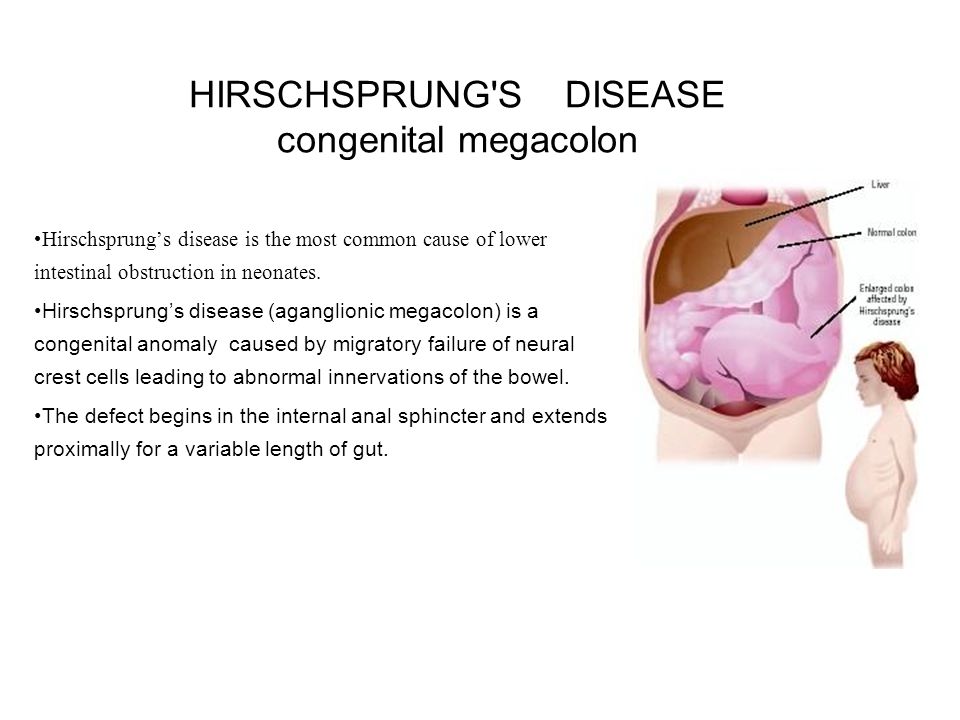
"Hirschsprung's disease, also called congenital megacolon or congenital aganglionic megacolon, is a congenital disorder of the large intestine, characterized by absence or marked reduction of parasympathetic ganglion cells in the colorectal wall. Hirschsprung's disease appears to be a familial, congenital defect, occurring in 1 in 5,000 to 1 in 8,000 live births. It's up to 7 times more common in males than in females (although the aganglionic segment is usually shorter in males) and is most prevalent in whites. Total aganglionosis affects both sexes equally. Females with Hirschsprung's disease are at higher risk for having affected children. This disease usually coexists with other congenital anomalies, particularly trisomy 21 and anomalies of the urinary tract such as megaloureter."


Image taken from: http://slideplayer.com/slide/7541905/24/images/1/HIRSCHSPRUNG+S+DISEASE+congenital+megacolon.jpg


According to the Mayo Clinic (http://www.mayoclinic.org/diseases-conditions/hirschsprung's-disease/home/ovc-20214664), the symptoms of Hirschsprung's Disease are included but not limited to,


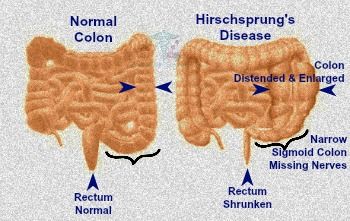
"Hirschsprung's (HIRSH-sproongz) disease is a condition that affects the large intestine (colon) and causes problems with passing stool. The condition is present at birth (congenital) as a result of missing nerve cells in the muscles of the baby's colon.

A newborn who has Hirschsprung's disease usually can't have a bowel movement in the days after birth. In mild cases, the condition might not be detected until later in childhood. Uncommonly, Hirschsprung's disease is first diagnosed in adults.

Surgery to bypass or remove the diseased part of the colon is the treatment."


Image taken from: http://www.birth-defect.org/wp-content/uploads/7f5592e639cf5afb772e168b4a153572.jpg


However, even though it is rare or uncommon, adults can very much get it as well.


The symptoms, according to Mayo (http://www.mayoclinic.org/diseases-conditions/hirschsprung's-disease/symptoms-causes/dxc-20214666), are,

"Signs and symptoms of Hirschsprung's disease vary with the severity of the condition. Usually signs and symptoms appear shortly after birth, but sometimes they're not apparent until later in life.

Typically, the most obvious sign is a newborn's failure to have a bowel movement within 48 hours after birth.


Other signs and symptoms in newborns may include:

Swollen belly

Vomiting, including vomiting a green or brown substance

Constipation or gas, which might make a newborn fussy

Diarrhea


In older children/adults, signs and symptoms can include:

Swollen belly

Chronic constipation

Gas

Failure to thrive

Fatigue


It's not clear what causes Hirschsprung's disease. It sometimes occurs in families and might, in some cases, be associated with a genetic mutation.

Hirschsprung's disease occurs when nerve cells in the colon don't form completely. Nerves in the colon control the muscle contractions that move food through the bowels. Without the contractions, stool stays in the large intestine.


Factors that may increase the risk of Hirschsprung's disease include:

Having a sibling who has Hirschsprung's disease. Hirschsprung's disease can be inherited. If you have one child who has the condition, future biological children could be at risk.

Being male. Hirschsprung's disease is more common in males.

Having other inherited conditions. Hirschsprung's disease is associated with certain inherited conditions, such as Down syndrome and other abnormalities present at birth, such as congenital heart disease."


Image taken from: http://www.medindia.net/images/common/patientinfo/950_400/abdominal-x-ray-can-helps-to-diagnose-the-hirschsprung-disease.jpg


According to MedicineNet (http://www.medicinenet.com/hirschsprung_disease/article.htm,

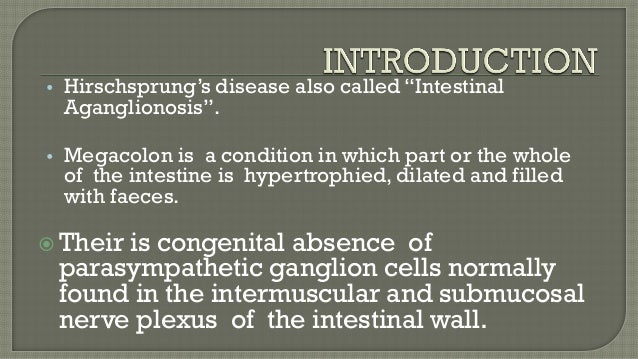
"The cause of Hirschsprung disease is due to nerve cells that are supposed to grow along the intestine and reach the anus, but do not because they stop growing too soon. Hirschsprung disease (HSCR) is a congenital (present at birth) disease of the large intestine or colon. It is one type of birth defect. People with the disease do not have the nerve cells in the intestine required to expel stools from the body normally.

Some people inherit the disease, and others have mutations in several genes. In about 50% of people with Hirschsprung disease, researchers and doctors do not know what genes cause it.

Your primary care doctor will refer you to a specialist in digestive disorders called a gastroenterologist, to diagnose the condition. Diagnosis for Hirschsprung’s is based on a physical exam, medical and family history, symptoms, and tests, for example, a digital exam.
Surgery is the treatment for this life-threatening disease (procedures include pull-through for infants and ostomy (An ostomy refers to the surgically created opening in the body for the discharge of body wastes) for toddles and older children).

After healing from surgery, your child's bowel movements may become normal. But surgery doesn't cure Hirschsprung disease. Some children/adults will have bowel problems – like constipation or fecal incontinence (“accidents”) – off and on throughout their lives.


Symptoms of Hirschsprung disease in toddlers and older children may include:

Not being able to pass stools without enemas or suppositories. An enema involves flushing liquid into the child’s anus using a special wash bottle. A suppository is a pill Placed into the child’s rectum.

Swelling of the abdomen.

Diarrhea, often with blood.

Slow growth.

Intellectual disability"


Image taken from: http://image.slidesharecdn.com/hirschsprungsdisease-140510235224-phpapp01/95/hirschsprungs-disease-3-638.jpg?cb=1399767420


According to Science Direct (http://www.sciencedirect.com/science/article/pii/S2237936315000519,

"Some patients reach adulthood without a diagnosis for this disease. Typically, patients go to the doctor with a long-standing history of constipation requiring frequent laxative use.11 The current frequency of the disease in adults is unknown, especially since HD is an overlooked and misdiagnosed disease in this age group. ...the diagnosis of HD is supported by barium enema studies, anorectal manometry and rectal biopsy.

Imaging studies such as computed tomography (CT) and barium enemas are usually accepted for evaluation of chronic constipation, which is a common disorder in adults. Our patient underwent CT due to the unavailability of a barium enema study, but CT is a more expensive method.

The anorectal manometry, even though not contributing in the present case, is an ancillary test of the utmost importance, since the presence of the rectum-anal reflex in this exam usually rule out the diagnosis of HD.

Several procedures are used to manage this disease after childhood; currently the option of choice is the surgical procedure of Duhamel. Late diagnosis contributes to the need for surgery in more than one surgical time, with ileostomy or colostomy, since the healthy colon is more distended in adolescents and adults compared to neonates and children. Nevertheless, the literature considers as the procedure of choice the Duhamel technique in only one surgical time, which reduces the hospitalization time.

This surgery is considered curative. However, post-operative bowel functioning is not always satisfactory. Enterocolitis, constipation and fecal incontinence represent the main postoperative complications in children. To date, the progression for adolescent or adult patients is not fully clarified yet, due to the small number of reported cases."


Image taken from: https://i.pinimg.com/736x/80/76/5d/80765d68dfe49fd160965c6aa5410100--menu-google-search.jpg


I really hope this will help educate you about Hirschsprung disease. I am still learning about it myself. The research I did says it is more likely to happen with children, but adults I know have it and were just officially diagnosed. After you have a rectal biopsy (because doctors do a biopsy to verify you do have HD), then they might do an anorectal manometry (which is where they stick a balloon up your rectum, kind of like the pelvic floor test). Once all of that has been confirmed, then they might start talking reconstructive pelvic surgery.


I would still advise you to be cautious, do your own research, talk to people who have had it done, and make an informed decision so you will know if this is right for you. Thank you very much to my friend who brought this illness to my attention, because I had no idea this was going on. My heart goes out to all of you who are fighting this on a daily basis.

Monday, February 1, 2016

Gastroparesis: Know the Risk Factors for This Mysterious Stomach Condition

This is an article that spoke to me as well that I found online. I wanted to save it in my blog so that I could refer back to it when I need to. I also like having things in the same place, research wise, because it makes finding things easier. Plus, it contains great information that might help others who may not have seen this article. I want to have information in the same place so that people can find it and read it but I am including the source, if you want to go back and read the original article. This article was taken from: http://health.clevelandclinic.org/2015/09/gastroparesis-know-the-risk-factors-for-this-mysterious-stomach-condition/.


And it reads,

"Gastroparesis: Know the Risk Factors for This Mysterious Stomach Condition
Early diagnosis makes treatment easier
September 8, 2015 / By Digestive Health Team
Digestive stomach system - real view female anatomy concept


As diabetes cases skyrocket, another condition called gastroparesis is rapidly becoming a more common diagnosis. It reduces the ability of the stomach to empty its contents but does not involve a blockage. Nausea, vomiting, loss of appetite, bloating and chronic abdominal pain are the hallmark symptoms, according to gastroenterologist Michael Cline, DO.

If you have diabetes, gastroparesis can cause it to be poorly controlled. Severe gastroparesis makes it difficult to manage your blood sugar.

Primary care physicians — and even gastroenterologists — frequently overlook and under-diagnose the condition, he says. Sometimes it is initially misdiagnosed as an ulcer, heartburn or an allergic reaction.

In non-diabetic patients, the condition may relate to acid reflux.

'In current data, up to 40 percent of people with acid reflux have some sort of delay in gastric emptying,' he says. 'So that’s a fairly large number, when you look at the millions of Americans who have acid reflux,' Dr. Cline says.


Stomach motility either abnormal or absent

Gastroparesis, which means partial paralysis of the stomach, is a serious disease that prevents your stomach from digesting food and emptying properly. Damaged nerves and muscles don’t function with their normal strength and coordination. That slows the movement of contents through your digestive system.

Doctors don’t yet know how to reverse the damage, but there is a range of treatment options. And, early diagnosis helps, Dr. Cline says.


A look at what causes gastroparesis

The primary cause of gastroparesis is damage to or dysfunction of peripheral nerves and muscles.

In diabetic patients, Dr. Cline says, it appears as more of a neuropathy-based disease associated with damaged nerves. In patients who don’t have diabetes, it seems more muscular-based: The nerve endings are all right, but the muscles are not responding, he says.


In addition to diabetes, other sources of gastroparesis include:

Lingering post-viral effects — You get a virus, but the nausea and vomiting from the virus don’t go away after the virus is gone.'Some of those cases will resolve, and we just have to wait and watch,' Dr. Cline says. 'But a lot of times it doesn’t resolve, so we have to continue to treat the patients.'

Connective tissue diseases — Gastroparesis may plague patients who have diseases such as multiple sclerosis or muscular dystrophy.

Side effects from medication — Probably the most difficult group to treat, narcotic pain medicines and other drugs slow a patient’s intestinal motility, Dr. Cline says.'That can be very hard to treat, because the medications often override what we prescribe to treat the gastroparesis,' he says.

Post-surgical effects — Some patients develop gastroparesis after the vagus nerve is damaged or trapped during a gastrointestinal surgical procedure.


A difficult disease to treat


Treatment sometimes begins with adjustments to diet and medication. If those approaches don’t work, surgical treatments are the next steps:

Feeding tube — Because gastroparesis impairs proper nutrition, surgeons can insert a feeding tube through the patient’s nose that bypasses the stomach. Or a surgeon may place what is known as a J tube directly into the patient’s small bowel for feeding.If these don’t work, total patient nutrition (TPN) is the next step. The patient is fed through an IV.

Gastric pacemaker — A surgeon also may use a minimally invasive laparoscopic procedure to implant a gastric pacemaker to treat this chronic digestive condition.The small device employs gentle electrical impulses to stimulate the stomach’s muscles to perform their usual functions. These impulses help move the stomach’s contents through the digestive tract and bring the patient relief from symptoms.'We’re moving towards not really curing gastroparesis — because we really don’t know how to reverse the neuropathies yet — but fixing it as best we can,' says Dr. Cline. 'So patients and their families need to push for the diagnostic tests that we can do, because the earlier it’s diagnosed, the easier it is to treat.'


The gastric pacemaker after surgery. Photo used with permission from the patient, not in article.


Treating psychological concerns


A neuropsychiatric specialist is sometimes called in to address mental health concerns that can accompany this chronic disease.

'If you wake up sick every day and vomiting all the time, this disease can quickly move from a purely physical one to a psychiatric one, so we treat the possible components of depression, anxiety, pain and so on, too,' Dr. Cline says."

Thursday, March 19, 2015

How to Protect Yourself from Gastroparesis Scams

How to Protect Yourself from Gastroparesis Scams

I've been noticing more and more scams that keep popping up in groups I'm in, saying things like if you change your diet and take this pill, your gastroparesis will be cured. A lot of people fall for these scams. I want to prevent that. First off, gastroparesis cannot be cured. It's vagus nerve damage. So, I'm going to spend some time talking about possible things that can slow your motility down even more, like medication, and I'm going to talk about what causes gastroparesis. I would also, at the end, like to offer you ways to protect yourself in case of a scam, because they're all over the place. Just type in "gastroparesis cure" and you'll get youtube videos, websites, all kinds of things. I just don't want any of my friends of my gp family to be taken advantage of because you all mean a lot to me. Without you, I'm not sure I'd have the strength to leave the bed most days. Now, let's talk about this vagus nerve.


That Little Thing Called the Vagus Nerve

Gastroparesis can be caused by a lot of things - abdominal surgery, stomach viruses, diabetes. If you do have nerve damage, the nerve damage will not repair itself. Think of this scenario: you injured your knee playing basketball. You managed to move your kneecap out of joint but kept playing anyway. Then, when you got to the hospital, the doctors fixed your knee but you still have pain. The doctors tell you that you now have nerve damage. If the nerve damage in your knee will never heal, how can the vagus nerve in your stomach ever heal? The nerves that were once functioning aren't functioning anymore.

A pill, diet change, exercise change - sure they can all help manage your gastroparesis but it will never be cured. I'm considering doing a stomach bypass to try and make it so that I can eat before I vomit, tear my esophagus, and bleed to death. So, my doctor is pushing this surgery hard and I'm scared. It's OK to be scared. Gastroparesis may never heal, but you have friends and loved ones who support you. If not, I have a whole list of resources in this blog saying that you do. You can always find me on my Facebook Page: www.facebook.com/emilysstomach. I'd be happy with a "like" too, if you can spare me one. =)


Image taken from: http://www.yoursurgery.com/procedures/duodenum/images/Duod3-A.jpg


Here are some facts about vagus nerves: http://www.md-health.com/vagus-nerve.html


Slower Motility and Gastroparesis Causes

People can't be cured from gastroparesis, except in certain circumstances. There are certain medications that can cause decreased motility function like narcotics, that when you come off of them, your stomach will work again. There are other medications that will do that as well. According to The American College of Gastroenterology (http://patients.gi.org/topics/gastroparesis/) , these are the medications that will slow down motility:

"Narcotics
Tricyclic antidepressants
Calcium channel blockers
Clonidine
Dopamine agonists
Lithium
Nicotine
Progesterone"


Image taken from: http://blog.doctoroz.com/wp-content/uploads/2013/09/pills-multicolored-original.jpg


The website also goes on to state:

"There are many causes of gastroparesis. Diabetes is one of the most common causes for gastroparesis. Other causes include infections, endocrine disorders like hypothyroidism, connective tissue disorders like scleroderma, autoimmune conditions, neuromuscular diseases, idiopathic (unknown) causes, psychological conditions, eating disorders, certain cancers, radiation treatment applied over the chest or abdomen, some chemotherapy agents, and surgery of the upper intestinal tract. Any surgery on the esophagus, stomach or duodenum may result in injury to the vagus nerve which is responsible for many sensory and motor (muscle) responses of the intestine. In health, the vagus nerve sends neurotransmitter impulses to the smooth muscle of the stomach that result in contraction and forward propulsion of gastric contents. If the vagus nerve is injured by trauma or during surgery gastric emptying may be reduced. Symptoms of postoperative gastroparesis may develop immediately, or months to years after a surgery is performed.

It is important to realize that medications prescribed for a variety of conditions may have side effects that cause gastric emptying to slow down. The most common drugs that delay stomach emptying are narcotics and certain antidepressants. Table 1 lists more medications that may delay stomach emptying. If possible, patients having dyspeptic symptoms, vomiting or early fullness should discontinue the offending medications before undergoing any motility tests. Fortunately, gastric emptying resumes and symptoms improve when medications causing ‘pseudo-gastroparesis’ are stopped. It is important to have the names of all your medications recorded and with you when you see a physician for evaluation of gastrointestinal symptoms.
People with eating disorders such as anorexia nervosa or bulimia may also develop delayed gastric emptying. Gastric emptying may resume and symptoms improve when food intake and eating schedules normalize."


Images taken from: http://davaoaccountant.com/wp-content/uploads/2012/11/scam.gif


One of my administrators from my groups, Christy R. said this about scammers in relation to our groups,

"Be sure to friend carefully, if you have issues with sketchy members who may be scammers or else, please message an admin, do not post a public message about it.

That being said, we need to be careful. When you start talking to someone outside of the group in FB messenger or even other means, we don't suggest you do this lightly. (Like mom says, don't talk to strangers!)

Know who you are friending:
-do other people already know them? Common mutual friends?
-does their profile seem authentic (picture of them, information within their profile)
-why are you friending them?
-how long have you been chatting with them inside of the group before messaging them privately.

When you do talk to them, PLEASE:
-do not give out your personal information
-address, middle name, who you live with, kids names, your email address, cell phone number, etc.
-be very careful about the information you share. Once you give it, you can't get it back.

That said, if you find someone you're talking to is asking too many questions, or is making you uncomfortable, please message one of the admins at the bottom of the post. We would appreciate that versus posting publicly. Thanks!"


According to MoneyExpert.com: There are 30+ ways to stop scams. You can read them on their site at: https://www.moneysavingexpert.com/shopping/stop-scams/

It is wonderful information that will help you with cold calls, internet scams, social media scams, email scams, etc. Please read it.


According to Facebook this is how to avoid spam and scammers,

"Scams on Facebook happen when people create fake accounts or hack into existing Facebook accounts or Pages you've liked. The scammers use these fake or compromised accounts to trick you into giving them money or personal information. If you've received a message that you believe is a scam, you should avoid responding and report the message to Facebook.


Here are some common scams to watch out for:

Romance scams: Romance scammers typically send romantic messages to people they don’t know, often pretending to be divorced, widowed or in a bad marriage. They'll engage in online relationships in hopes of receiving money for flights or visas. Their goal is to gain your trust, so the conversations may continue for weeks before they ask for money.

Lottery scams: Lottery scams are often carried out from accounts or Pages impersonating someone you know or an organization (such as a government agency or Facebook). The messages will claim that you're among the winners of a lottery and that you can receive your money for a small advance fee. The scammer may ask you to provide personal information, such as your physical address or bank details.
Loan scams: Loan scammers send messages and leave posts offering instant loans at a low interest rate for a small advance fee.

Access Token Theft: A link is shared with you that requests access to your Facebook account or Page. The link may look like it came from a legitimate app, but instead it is a way that spammers can gain access to your account and spread spam.


To protect yourself from scams, watch out for the following:

People asking you for money who you don’t know in person

People asking you for advance fees to receive a loan, prize or other winnings

People asking you to move your conversation off Facebook (such as a separate email)

People claiming to be a friend or relative in an emergency

Messages or posts with poor spelling and grammatical mistakes

Pages representing large companies, organizations or public figures that are not verified verified

People or accounts directing you to a Page to claim a prize"


Here Are Ways to Protect Yourself Against Scammers


I just want you to be able to protect yourself from these scams. We're all lonely, miserable, and this illness is hard to live with. But, we can still look out for each other and not fall prey to these scams. So, if you see one in your group or on a page, please report that person to an admin and/or facebook.


Here are some ways to protect yourself against scams from Scam Watch (http://www.scamwatch.gov.au/content/index.phtml/tag/howtoprotectyourself):


"How to protect yourself. Almost everyone will be approached by a scammer at some stage. Some scams are very easy to spot while other scams may appear to be genuine offers or bargains. Scams can even take place without you doing anything at all.

Most scams need you to do something before they can work. You may send money to someone based on a promise that turns out to be false. You may give your personal details to people who turn out to be scammers. Some scams rely on you agreeing to deals without getting advice first or buying a product without checking it out properly.

The simple tips below will help you protect yourself and your family from scams. Scams can cost people a lot of money and cause a great deal of distress. By following these simple tips, you can protect yourself against scams.


Golden rules

If it looks too good to be true—it probably is.
ALWAYS get independent advice if an offer involves significant money, time or commitment.
Remember there are no get-rich-quick schemes: the only people who make money are the scammers.
Do not agree to offers or deals straight away: tell the person that you are not interested or that you want to get some independent advice before making a decision.
You can contact your local office of fair trading, ASIC or the ACCC for assistance.
NEVER send money or give credit card or online account details to anyone you do not know and trust.
Check your bank account and credit card statements when you get them. If you see a transaction you cannot explain, report it to your credit union or bank.
Keep your credit and ATM cards safe. Do not share your personal identity number with anyone. Do not keep any written copy of your PIN with the card.


Digging a little deeper

Do not let anyone pressure you into making decisions about money or investments: always get independent financial advice.
Read all the terms and conditions of any offer very carefully: claims of free or very cheap offers often have hidden costs.
Make sure you know how to stop any subscription service you want to sign up to.
Be very careful about offers for medicines, supplements or other treatments: always seek the advice of your health care professional.
Remember there are no magic pills or safe options for rapid weight loss.
Beware of products or schemes that claim to guarantee income or winnings.
If someone offers you an investment or other financial service, ask for their Australian Financial Services Licence number: check this with ASIC.
Be wary of investments promising a high return with little or no risk.
Beware of job offers that require you to pay an upfront fee.


Protect your identity

Only give out your personal details and information where it is absolutely necessary and where you have initiated the contact and trust the other party.
Destroy personal information, don’t just throw it out. You should cut up, burn or shred old bills, statements or cards so scammers can not get your personal details from them later.
Treat your personal details as you would treat money: don’t leave them lying around for others to take.
Order a free copy of your credit report every year to make sure no one is using your name to borrow money or run up debts.


Sending or transferring money

Never send money to anyone you are not totally sure about.
Do not send any money or pay any fee to claim a prize or lottery winnings.
Money laundering is a criminal offence: do not agree to transfer money for someone else.
Make sure that cheques have been cleared by your bank before transferring or wiring any refunds or overpayments back to the sender.
Do not pass on chain letters or take part in pyramid schemes: you will lose your money and could lose your friends.


Dealing with a face-to-face approach

If someone comes to your door, ask to see their identification. You do not have to let them in and they MUST leave if you ask them to.
Contact your local fair trading agency if you are unsure about an offer or trader.
Remember that family members and friends may try to involve you in a scam without realising that it is a scam: you should seek independent advice (from a lawyer or financial adviser).


Telephone traps

If you receive a phone call out of the blue, always ask for the name of the person you are speaking to and who they represent.
Do not give your personal, credit card or online account details over the phone unless you made the call and the phone number came from a trusted source.
It is best not to respond to text messages or missed calls that come from numbers you don’t recognise.
Be careful of phone numbers beginning with 190. These are charged at a premium rate and can be very expensive.
Look out for SMS and MMS numbers that start with 19. These are charged at a premium rate (sometimes even for receiving a message) and can be very expensive.


Dealing with suspicious or unsolicited offers sent by email or SMS

Do not open suspicious or unsolicited emails (spam): delete them.
Do not click on any links in a spam email or open any files attached to them.
Never call a telephone number that you see in a spam email or SMS.
NEVER reply to a spam email or SMS (even to unsubscribe).


Internet tips

Talk to your internet service provider about spam filtering or, alternatively, purchase spam-filtering software.
If you want to access an internet account website, use a bookmarked link or type the address in yourself: NEVER follow a link in an email.
Install software that protects your computer from viruses and unwanted programs and make sure it is kept up-to-date.
Beware of free websites and downloads (such as music, adult sites, games and movies). They may install harmful programs without you knowing.
Check the website address carefully. Scammers often set up fake websites with very similar addresses.
Never enter your personal, credit card or online account information on a website that you are not certain is genuine.
Never send your personal, credit card or online account details by email.
Try to avoid using public computers (at libraries or internet cafes) to do your internet banking.
Do not use software on your computer that auto-completes online forms. This can give internet scammers easy access to your personal and credit card details.
Choose passwords that would be difficult for anyone else to guess.


Protecting your business

Never give out or clarify any information about your business unless you know what the information will be used for.
Never agree to any business proposal on the phone: always ask for an offer in writing.
Try to avoid having a large number of people authorised to make orders or pay invoices.
Always check that goods or services were both ordered and delivered before paying an invoice.
Make sure the business billing you is the one you normally deal with.
If you are unsure about any part of a business offer, ask for more information or seek independent advice.


Keeping children safe online: Cybersmart

The Cybersmart program is a national cybersafety education program managed by the Australian Communications and Media Authority (ACMA). It provides a comprehensive range of information, resources and presentations designed to meet the needs of children, parents, teachers and library staff.

The ACMA Cybersmart website is home to all its cybersafety resources, research and activities. For more information, visit Cybersmart or contact the Cybersafety Contact Centre on 1800 880 176."


Source: https://www.moneysavingexpert.com/shopping/stop-scams/


According to the AARP,

"Protect Yourself From Facebook Scams
Cybercrooks use the popular 'like' button against you

by Sid Kirchheimer, AARP Bulletin


Each day, Facebook users click the “Like” button about 3.2 billion times. And cybercrooks love that. Increasingly, they’re using the upward thumb as bait in some of the most common scams on the huge social network.


Social Media Scams

These include postings by false friends who seek money by claiming they’re stranded overseas, bogus account verification notices and cancellation warnings supposedly coming from Facebook (just like phony notices from your bank).

'There are two goals in most social media scams: to spread quickly and to make money,' says Gerry Egan of Norton online security products, who recently conducted a study of Facebook scams. With those billions of clicks per day, Like buttons help achieve that prompt and widespread propagation, particularly as Facebook users get wise to traditional social media scams.

In reviewing the current top Facebook scams, Norton experts detected 8.5 million attacks against customers using its software in the year that ended May 1. The two most common ploys employed Like button leverage.


Here’s how:

Clickjacking. It’s like hijacking, only it’s a click of the Like button that the bad guys seize control of.

In one common version, you’re offered a chance to watch an enticing video. Click on the 'Play' button and you’re really clicking on an invisible 'Like' button that’s hidden behind it. You may now be taken to a page that announces you have to disclose personal information before you can watch the video. Provide it and still there’s no video — you’re taken instead to other pages to complete online surveys or be pitched dubious products.xEach day, Facebook users click the 'Like' button about 3.2 billion times.

Meanwhile, your Like is registered on your Facebook page, so your friends think you’ve watched the video and thought it was good. When they click 'play' to try to check it out, the same sequence of events happens to them.

The scammer, meanwhile, is collecting a commission from shady merchants for every 'Like' referral that’s generated.

So the two-part goal is achieved: Spread quickly and make money.

Meanwhile, the offer of cool videos is also a common method of spreading 'malware,' programs that do nasty things once they enter your computer. You’ll know you’ve been targeted this way if a pop-up appears saying you need to install special software to watch a video, says Egan. Don’t do it.


'Like'-baiting. Unlike clickjacking, this ruse gets you to knowingly click a 'Like' button. The goal is the same: squeezing personal information out of you to create commissions for scammers. But rather than a phony video, the incentive is usually free tickets or an entry into a drawing, says Egan. 'Instead of stealing your click, they get you to provide it voluntarily by promising free gifts.' And of course the gifts don’t materialize.


To protect yourself against these and other Facebook scams:

Be cautious about hitting that Like button, as well as placing too much personal information on your Facebook page. If you post pictures about a recent ski trip, for instance, you may be contacted by cybercrooks offering free lift tickets as part of a 'Like'-baiting ploy.

Don’t trust Likes by others. 'Especially when you get a notification from a friend that seems out-of-character, call that person before you click,' suggests Egan.

Use Facebook-specific settings on your security software. You may not know it, but many products offer protection customized to viruses and malware found on the social network site."


According to Chartered Training Standards Institute,

"Scams[sic] Awareness Month 2018 is taking place throughout the month June. Partnership work is key to this campaign. Both locally and nationally, we have seen the biggest impacts when working together with other organisations to spread the message and increase the effectiveness of our engagement with the public. This briefing has been created to provide you with the information on how you can get involved in this year’s campaign. Further details will be available in the coming weeks.

General background
Scams Awareness Month is an annual opportunity to raise awareness and take a stand against the crimes and predatory practices which affect millions of people. Citizens Advice research shows that almost three-quarters (72%) of people surveyed had been targeted by scammers over a two year period (2015-2017). Over a third, had been targeted five or more times.

In order to increase the effectiveness and engagement of the campaign last year, a number of new approaches were implemented such as using behavioural insights, targeted communications strategies and folding in a user-needs approach. Evaluation for 2017’s campaign shows that not only was this new approach well received by partners and campaigners, it showed a marked increase in engagement of target groups such as young people.

This year’s campaign Following the success of last year’s campaign will be aiming to re-promote de-stigmatisation and encourage more reporting of scams. Scams are a growing problem. In the latest year figures from the CESW (Crime Survey England and Wales - year to Sept ‘17), there was a 7% increase in the number of fraud offences recorded in England and Wales (662,519) compared with the previous year. This continues the year-on-year increases seen over the last five years. The increase was largely owed to offences reported to Action Fraud, which rose by 18%.

While this may be attributed to the effectiveness of the awareness raising campaigns focus on reporting, it highlights the importance of Scams Awareness Month. There continues to be a need to encourage reporting and tackle the stigmatisation of being scammed."