Find us on Google+ Gastroparesis: nerve damage

Copyright

“You agree that you will not modify, copy, reproduce, sell, or distribute any content in any manner or medium without permission."
Showing posts with label nerve damage. Show all posts

Saturday, December 2, 2017

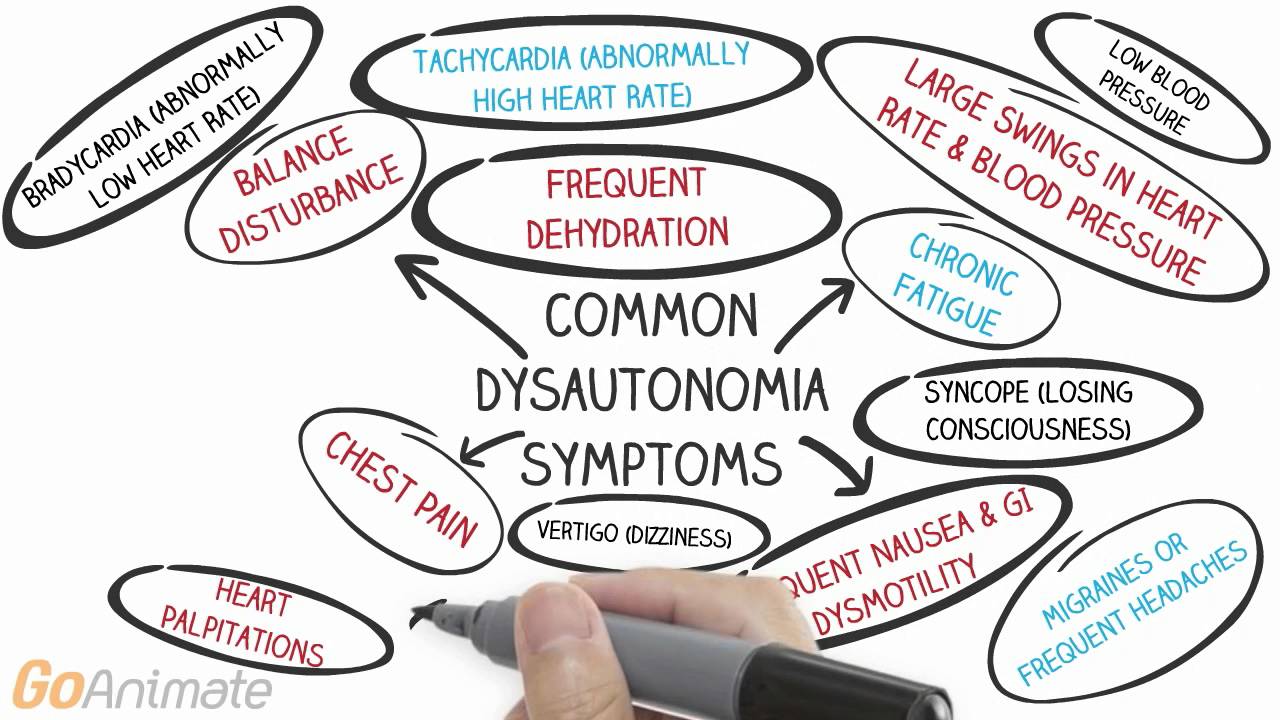
Dysautonomia and Gastroparesis

Source: http://blog.brightlifedirect.com/wp-content/uploads/2016/09/dysautonomia-umbrella.jpg

I have noticed in my support groups that a lot more people are being diagnosed with POTS and Dysautonomia. I have been asked if it is related to Gastroparesis, since they were diagnosed with the others after the initial diagnosis of Gastroparesis. I wanted to write an article on POTS and Dysautonomia to not only help those newly diagnosed, but to explain the connection between the two and Gastroparesis. I especially wanted to write about Dysautonomia because October is Dysautonomia Awareness Month.

Source: http://i.pinimg.com/originals/79/6a/64/796a643254abfaed18b12779a5b90a1d.jpg


So, what is Dysautonomia?

According to the Cleveland Clinic (http://my.clevelandclinic.org/health/articles/dysautonomia ,

"What is Dysautonomia?

Dysautonomia refers to a disorder of autonomic nervous system (ANS) function that generally involves failure of the sympathetic or parasympathetic components of the ANS, but dysautonomia involving excessive or overactive ANS actions also can occur. Dysautonomia can be local, as in reflex sympathetic dystrophy, or generalized, as in pure autonomic failure. It can be acute and reversible, as in Guillain-Barre syndrome, or chronic and progressive. Several common conditions such as diabetes and alcoholism can include dysautonomia. Dysautonomia also can occur as a primary condition or in association with degenerative neurological diseases such as Parkinson's disease. Other diseases with generalized, primary dysautonomia include multiple system atrophy and familial dysautonomia. Hallmarks of generalized dysautonomia due to sympathetic failure are impotence (in men) and a fall in blood pressure during standing (orthostatic hypotension). Excessive sympathetic activity can present as hypertension or a rapid pulse rate.


Is there any treatment?

There is usually no cure for dysautonomia. Secondary forms may improve with treatment of the underlying disease. In many cases treatment of primary dysautonomia is symptomatic and supportive. Measures to combat orthostatic hypotension include elevation of the head of the bed, water bolus (rapid infusion of water given intravenously), a high-salt diet, and drugs such as fludrocortisone and midodrine.


What is the prognosis?

The outlook for individuals with dysautonomia depends on the particular diagnostic category. People with chronic, progressive, generalized dysautonomia in the setting of central nervous system degeneration have a generally poor long-term prognosis. Death can occur from pneumonia, acute respiratory failure, or sudden cardiopulmonary arrest.


What research is being done?

The NINDS supports and conducts research on dysautonomia. This research aims to discover ways to diagnose, treat, and, ultimately, prevent these disorders.


Organizations

National Dysautonomia Research Foundation

P.O. Box 301
Red Wing, MN 55066-0301
ndrf@ndrf.org
www.ndrf.org
Tel: 651-327-0367
Fax: 651-267-0524

National Organization for Rare Disorders (NORD)

55 Kenosia Avenue
Danbury, CT 06810
orphan@rarediseases.org
www.rarediseases.org
Tel: 203-744-0100; Voice Mail: 800-999-NORD (6673)
Fax: 203-798-2291

Dysautonomia Foundation

315 W. 39th Street
Suite 701
New York, NY 10018
info@familialdysautonomia.org
www.familialdysautonomia.org
Tel: 212-279-1066
Fax: 212-279-2066

Familial Dysautonomia Hope Foundation, Inc. (FD Hope)

121 South Estes Drive
Suite 205-D
Chapel Hill, NC 27514-2868
info@fdhope.org
www.fdhope.org
Tel: 919-969-1414

The Multiple System Atrophy Coalition

9935-D Rea Road
Charlotte, NC 28227
vjames@msacoalition.org
www.multiple-system-atrophy.org
Tel: 866-737-5999

Dysautonomia Youth Network of America, Inc.

1301 Greengate Court
Waldorf, MD 20601
info@dynainc.org
www.dynainc.org
Tel: 301-705-6995
Fax: 301-638-DYNA

Source: National Institutes of Health; National Institute of Neurological Disorders and Stroke NINDS

This information is provided by the Cleveland Clinic and is not intended to replace the medical advice of your doctor or health care provider. Please consult your health care provider for advice about a specific medical condition. This document was last reviewed on: 8/11/2015...#6004"


Source: http://7468669c0013a7dae459-4d0fcf8d315d40f305ee2ebb6c32f79c.ssl.cf1.rackcdn.com/6071847_1445348729.4079_updates.jpg


Source: http://image.slidesharecdn.com/dysautonomia-100311124144-phpapp01/95/dysautonomia-6-728.jpg?cb=1268311395


Source: http://i.ytimg.com/vi/i-FtCGrXvTs/maxresdefault.jpg


Source: http://image.slidesharecdn.com/18dysautonomiaeps2016breakoutpresi-ii-160127175513/95/syncope-and-dysautonomia-4-638.jpg?cb=1453917438


Source: http://www.facebook.com/photo.php?fbid=10212997873295898&set=pcb.828771880581405&type=3&theater&ifg=1


Source: http://i.pinimg.com/736x/53/ec/4e/53ec4e9eb210e4519bf341f2da2accab--crps--days.jpg


Thursday, March 19, 2015

How to Protect Yourself from Gastroparesis Scams

How to Protect Yourself from Gastroparesis Scams

I've been noticing more and more scams that keep popping up in groups I'm in, saying things like if you change your diet and take this pill, your gastroparesis will be cured. A lot of people fall for these scams. I want to prevent that. First off, gastroparesis cannot be cured. It's vagus nerve damage. So, I'm going to spend some time talking about possible things that can slow your motility down even more, like medication, and I'm going to talk about what causes gastroparesis. I would also, at the end, like to offer you ways to protect yourself in case of a scam, because they're all over the place. Just type in "gastroparesis cure" and you'll get youtube videos, websites, all kinds of things. I just don't want any of my friends of my gp family to be taken advantage of because you all mean a lot to me. Without you, I'm not sure I'd have the strength to leave the bed most days. Now, let's talk about this vagus nerve.


That Little Thing Called the Vagus Nerve

Gastroparesis can be caused by a lot of things - abdominal surgery, stomach viruses, diabetes. If you do have nerve damage, the nerve damage will not repair itself. Think of this scenario: you injured your knee playing basketball. You managed to move your kneecap out of joint but kept playing anyway. Then, when you got to the hospital, the doctors fixed your knee but you still have pain. The doctors tell you that you now have nerve damage. If the nerve damage in your knee will never heal, how can the vagus nerve in your stomach ever heal? The nerves that were once functioning aren't functioning anymore.

A pill, diet change, exercise change - sure they can all help manage your gastroparesis but it will never be cured. I'm considering doing a stomach bypass to try and make it so that I can eat before I vomit, tear my esophagus, and bleed to death. So, my doctor is pushing this surgery hard and I'm scared. It's OK to be scared. Gastroparesis may never heal, but you have friends and loved ones who support you. If not, I have a whole list of resources in this blog saying that you do. You can always find me on my Facebook Page: www.facebook.com/emilysstomach. I'd be happy with a "like" too, if you can spare me one. =)


Image taken from: http://www.yoursurgery.com/procedures/duodenum/images/Duod3-A.jpg


Here are some facts about vagus nerves: http://www.md-health.com/vagus-nerve.html


Slower Motility and Gastroparesis Causes

People can't be cured from gastroparesis, except in certain circumstances. There are certain medications that can cause decreased motility function like narcotics, that when you come off of them, your stomach will work again. There are other medications that will do that as well. According to The American College of Gastroenterology (http://patients.gi.org/topics/gastroparesis/) , these are the medications that will slow down motility:

"Narcotics
Tricyclic antidepressants
Calcium channel blockers
Clonidine
Dopamine agonists
Lithium
Nicotine
Progesterone"


Image taken from: http://blog.doctoroz.com/wp-content/uploads/2013/09/pills-multicolored-original.jpg


The website also goes on to state:

"There are many causes of gastroparesis. Diabetes is one of the most common causes for gastroparesis. Other causes include infections, endocrine disorders like hypothyroidism, connective tissue disorders like scleroderma, autoimmune conditions, neuromuscular diseases, idiopathic (unknown) causes, psychological conditions, eating disorders, certain cancers, radiation treatment applied over the chest or abdomen, some chemotherapy agents, and surgery of the upper intestinal tract. Any surgery on the esophagus, stomach or duodenum may result in injury to the vagus nerve which is responsible for many sensory and motor (muscle) responses of the intestine. In health, the vagus nerve sends neurotransmitter impulses to the smooth muscle of the stomach that result in contraction and forward propulsion of gastric contents. If the vagus nerve is injured by trauma or during surgery gastric emptying may be reduced. Symptoms of postoperative gastroparesis may develop immediately, or months to years after a surgery is performed.

It is important to realize that medications prescribed for a variety of conditions may have side effects that cause gastric emptying to slow down. The most common drugs that delay stomach emptying are narcotics and certain antidepressants. Table 1 lists more medications that may delay stomach emptying. If possible, patients having dyspeptic symptoms, vomiting or early fullness should discontinue the offending medications before undergoing any motility tests. Fortunately, gastric emptying resumes and symptoms improve when medications causing ‘pseudo-gastroparesis’ are stopped. It is important to have the names of all your medications recorded and with you when you see a physician for evaluation of gastrointestinal symptoms.
People with eating disorders such as anorexia nervosa or bulimia may also develop delayed gastric emptying. Gastric emptying may resume and symptoms improve when food intake and eating schedules normalize."


Images taken from: http://davaoaccountant.com/wp-content/uploads/2012/11/scam.gif


One of my administrators from my groups, Christy R. said this about scammers in relation to our groups,

"Be sure to friend carefully, if you have issues with sketchy members who may be scammers or else, please message an admin, do not post a public message about it.

That being said, we need to be careful. When you start talking to someone outside of the group in FB messenger or even other means, we don't suggest you do this lightly. (Like mom says, don't talk to strangers!)

Know who you are friending:
-do other people already know them? Common mutual friends?
-does their profile seem authentic (picture of them, information within their profile)
-why are you friending them?
-how long have you been chatting with them inside of the group before messaging them privately.

When you do talk to them, PLEASE:
-do not give out your personal information
-address, middle name, who you live with, kids names, your email address, cell phone number, etc.
-be very careful about the information you share. Once you give it, you can't get it back.

That said, if you find someone you're talking to is asking too many questions, or is making you uncomfortable, please message one of the admins at the bottom of the post. We would appreciate that versus posting publicly. Thanks!"


According to MoneyExpert.com: There are 30+ ways to stop scams. You can read them on their site at: https://www.moneysavingexpert.com/shopping/stop-scams/

It is wonderful information that will help you with cold calls, internet scams, social media scams, email scams, etc. Please read it.


According to Facebook this is how to avoid spam and scammers,

"Scams on Facebook happen when people create fake accounts or hack into existing Facebook accounts or Pages you've liked. The scammers use these fake or compromised accounts to trick you into giving them money or personal information. If you've received a message that you believe is a scam, you should avoid responding and report the message to Facebook.


Here are some common scams to watch out for:

Romance scams: Romance scammers typically send romantic messages to people they don’t know, often pretending to be divorced, widowed or in a bad marriage. They'll engage in online relationships in hopes of receiving money for flights or visas. Their goal is to gain your trust, so the conversations may continue for weeks before they ask for money.

Lottery scams: Lottery scams are often carried out from accounts or Pages impersonating someone you know or an organization (such as a government agency or Facebook). The messages will claim that you're among the winners of a lottery and that you can receive your money for a small advance fee. The scammer may ask you to provide personal information, such as your physical address or bank details.
Loan scams: Loan scammers send messages and leave posts offering instant loans at a low interest rate for a small advance fee.

Access Token Theft: A link is shared with you that requests access to your Facebook account or Page. The link may look like it came from a legitimate app, but instead it is a way that spammers can gain access to your account and spread spam.


To protect yourself from scams, watch out for the following:

People asking you for money who you don’t know in person

People asking you for advance fees to receive a loan, prize or other winnings

People asking you to move your conversation off Facebook (such as a separate email)

People claiming to be a friend or relative in an emergency

Messages or posts with poor spelling and grammatical mistakes

Pages representing large companies, organizations or public figures that are not verified verified

People or accounts directing you to a Page to claim a prize"


Here Are Ways to Protect Yourself Against Scammers


I just want you to be able to protect yourself from these scams. We're all lonely, miserable, and this illness is hard to live with. But, we can still look out for each other and not fall prey to these scams. So, if you see one in your group or on a page, please report that person to an admin and/or facebook.


Here are some ways to protect yourself against scams from Scam Watch (http://www.scamwatch.gov.au/content/index.phtml/tag/howtoprotectyourself):


"How to protect yourself. Almost everyone will be approached by a scammer at some stage. Some scams are very easy to spot while other scams may appear to be genuine offers or bargains. Scams can even take place without you doing anything at all.

Most scams need you to do something before they can work. You may send money to someone based on a promise that turns out to be false. You may give your personal details to people who turn out to be scammers. Some scams rely on you agreeing to deals without getting advice first or buying a product without checking it out properly.

The simple tips below will help you protect yourself and your family from scams. Scams can cost people a lot of money and cause a great deal of distress. By following these simple tips, you can protect yourself against scams.


Golden rules

If it looks too good to be true—it probably is.
ALWAYS get independent advice if an offer involves significant money, time or commitment.
Remember there are no get-rich-quick schemes: the only people who make money are the scammers.
Do not agree to offers or deals straight away: tell the person that you are not interested or that you want to get some independent advice before making a decision.
You can contact your local office of fair trading, ASIC or the ACCC for assistance.
NEVER send money or give credit card or online account details to anyone you do not know and trust.
Check your bank account and credit card statements when you get them. If you see a transaction you cannot explain, report it to your credit union or bank.
Keep your credit and ATM cards safe. Do not share your personal identity number with anyone. Do not keep any written copy of your PIN with the card.


Digging a little deeper

Do not let anyone pressure you into making decisions about money or investments: always get independent financial advice.
Read all the terms and conditions of any offer very carefully: claims of free or very cheap offers often have hidden costs.
Make sure you know how to stop any subscription service you want to sign up to.
Be very careful about offers for medicines, supplements or other treatments: always seek the advice of your health care professional.
Remember there are no magic pills or safe options for rapid weight loss.
Beware of products or schemes that claim to guarantee income or winnings.
If someone offers you an investment or other financial service, ask for their Australian Financial Services Licence number: check this with ASIC.
Be wary of investments promising a high return with little or no risk.
Beware of job offers that require you to pay an upfront fee.


Protect your identity

Only give out your personal details and information where it is absolutely necessary and where you have initiated the contact and trust the other party.
Destroy personal information, don’t just throw it out. You should cut up, burn or shred old bills, statements or cards so scammers can not get your personal details from them later.
Treat your personal details as you would treat money: don’t leave them lying around for others to take.
Order a free copy of your credit report every year to make sure no one is using your name to borrow money or run up debts.


Sending or transferring money

Never send money to anyone you are not totally sure about.
Do not send any money or pay any fee to claim a prize or lottery winnings.
Money laundering is a criminal offence: do not agree to transfer money for someone else.
Make sure that cheques have been cleared by your bank before transferring or wiring any refunds or overpayments back to the sender.
Do not pass on chain letters or take part in pyramid schemes: you will lose your money and could lose your friends.


Dealing with a face-to-face approach

If someone comes to your door, ask to see their identification. You do not have to let them in and they MUST leave if you ask them to.
Contact your local fair trading agency if you are unsure about an offer or trader.
Remember that family members and friends may try to involve you in a scam without realising that it is a scam: you should seek independent advice (from a lawyer or financial adviser).


Telephone traps

If you receive a phone call out of the blue, always ask for the name of the person you are speaking to and who they represent.
Do not give your personal, credit card or online account details over the phone unless you made the call and the phone number came from a trusted source.
It is best not to respond to text messages or missed calls that come from numbers you don’t recognise.
Be careful of phone numbers beginning with 190. These are charged at a premium rate and can be very expensive.
Look out for SMS and MMS numbers that start with 19. These are charged at a premium rate (sometimes even for receiving a message) and can be very expensive.


Dealing with suspicious or unsolicited offers sent by email or SMS

Do not open suspicious or unsolicited emails (spam): delete them.
Do not click on any links in a spam email or open any files attached to them.
Never call a telephone number that you see in a spam email or SMS.
NEVER reply to a spam email or SMS (even to unsubscribe).


Internet tips

Talk to your internet service provider about spam filtering or, alternatively, purchase spam-filtering software.
If you want to access an internet account website, use a bookmarked link or type the address in yourself: NEVER follow a link in an email.
Install software that protects your computer from viruses and unwanted programs and make sure it is kept up-to-date.
Beware of free websites and downloads (such as music, adult sites, games and movies). They may install harmful programs without you knowing.
Check the website address carefully. Scammers often set up fake websites with very similar addresses.
Never enter your personal, credit card or online account information on a website that you are not certain is genuine.
Never send your personal, credit card or online account details by email.
Try to avoid using public computers (at libraries or internet cafes) to do your internet banking.
Do not use software on your computer that auto-completes online forms. This can give internet scammers easy access to your personal and credit card details.
Choose passwords that would be difficult for anyone else to guess.


Protecting your business

Never give out or clarify any information about your business unless you know what the information will be used for.
Never agree to any business proposal on the phone: always ask for an offer in writing.
Try to avoid having a large number of people authorised to make orders or pay invoices.
Always check that goods or services were both ordered and delivered before paying an invoice.
Make sure the business billing you is the one you normally deal with.
If you are unsure about any part of a business offer, ask for more information or seek independent advice.


Keeping children safe online: Cybersmart

The Cybersmart program is a national cybersafety education program managed by the Australian Communications and Media Authority (ACMA). It provides a comprehensive range of information, resources and presentations designed to meet the needs of children, parents, teachers and library staff.

The ACMA Cybersmart website is home to all its cybersafety resources, research and activities. For more information, visit Cybersmart or contact the Cybersafety Contact Centre on 1800 880 176."


Source: https://www.moneysavingexpert.com/shopping/stop-scams/


According to the AARP,

"Protect Yourself From Facebook Scams
Cybercrooks use the popular 'like' button against you

by Sid Kirchheimer, AARP Bulletin


Each day, Facebook users click the “Like” button about 3.2 billion times. And cybercrooks love that. Increasingly, they’re using the upward thumb as bait in some of the most common scams on the huge social network.


Social Media Scams

These include postings by false friends who seek money by claiming they’re stranded overseas, bogus account verification notices and cancellation warnings supposedly coming from Facebook (just like phony notices from your bank).

'There are two goals in most social media scams: to spread quickly and to make money,' says Gerry Egan of Norton online security products, who recently conducted a study of Facebook scams. With those billions of clicks per day, Like buttons help achieve that prompt and widespread propagation, particularly as Facebook users get wise to traditional social media scams.

In reviewing the current top Facebook scams, Norton experts detected 8.5 million attacks against customers using its software in the year that ended May 1. The two most common ploys employed Like button leverage.


Here’s how:

Clickjacking. It’s like hijacking, only it’s a click of the Like button that the bad guys seize control of.

In one common version, you’re offered a chance to watch an enticing video. Click on the 'Play' button and you’re really clicking on an invisible 'Like' button that’s hidden behind it. You may now be taken to a page that announces you have to disclose personal information before you can watch the video. Provide it and still there’s no video — you’re taken instead to other pages to complete online surveys or be pitched dubious products.xEach day, Facebook users click the 'Like' button about 3.2 billion times.

Meanwhile, your Like is registered on your Facebook page, so your friends think you’ve watched the video and thought it was good. When they click 'play' to try to check it out, the same sequence of events happens to them.

The scammer, meanwhile, is collecting a commission from shady merchants for every 'Like' referral that’s generated.

So the two-part goal is achieved: Spread quickly and make money.

Meanwhile, the offer of cool videos is also a common method of spreading 'malware,' programs that do nasty things once they enter your computer. You’ll know you’ve been targeted this way if a pop-up appears saying you need to install special software to watch a video, says Egan. Don’t do it.


'Like'-baiting. Unlike clickjacking, this ruse gets you to knowingly click a 'Like' button. The goal is the same: squeezing personal information out of you to create commissions for scammers. But rather than a phony video, the incentive is usually free tickets or an entry into a drawing, says Egan. 'Instead of stealing your click, they get you to provide it voluntarily by promising free gifts.' And of course the gifts don’t materialize.


To protect yourself against these and other Facebook scams:

Be cautious about hitting that Like button, as well as placing too much personal information on your Facebook page. If you post pictures about a recent ski trip, for instance, you may be contacted by cybercrooks offering free lift tickets as part of a 'Like'-baiting ploy.

Don’t trust Likes by others. 'Especially when you get a notification from a friend that seems out-of-character, call that person before you click,' suggests Egan.

Use Facebook-specific settings on your security software. You may not know it, but many products offer protection customized to viruses and malware found on the social network site."


According to Chartered Training Standards Institute,

"Scams[sic] Awareness Month 2018 is taking place throughout the month June. Partnership work is key to this campaign. Both locally and nationally, we have seen the biggest impacts when working together with other organisations to spread the message and increase the effectiveness of our engagement with the public. This briefing has been created to provide you with the information on how you can get involved in this year’s campaign. Further details will be available in the coming weeks.

General background
Scams Awareness Month is an annual opportunity to raise awareness and take a stand against the crimes and predatory practices which affect millions of people. Citizens Advice research shows that almost three-quarters (72%) of people surveyed had been targeted by scammers over a two year period (2015-2017). Over a third, had been targeted five or more times.

In order to increase the effectiveness and engagement of the campaign last year, a number of new approaches were implemented such as using behavioural insights, targeted communications strategies and folding in a user-needs approach. Evaluation for 2017’s campaign shows that not only was this new approach well received by partners and campaigners, it showed a marked increase in engagement of target groups such as young people.

This year’s campaign Following the success of last year’s campaign will be aiming to re-promote de-stigmatisation and encourage more reporting of scams. Scams are a growing problem. In the latest year figures from the CESW (Crime Survey England and Wales - year to Sept ‘17), there was a 7% increase in the number of fraud offences recorded in England and Wales (662,519) compared with the previous year. This continues the year-on-year increases seen over the last five years. The increase was largely owed to offences reported to Action Fraud, which rose by 18%.

While this may be attributed to the effectiveness of the awareness raising campaigns focus on reporting, it highlights the importance of Scams Awareness Month. There continues to be a need to encourage reporting and tackle the stigmatisation of being scammed."

Saturday, October 20, 2012

Updates on GP Management

I just downloaded a book that I hope will help that I found through the Gastroparesis community on Facebook. It's called, "Living Well with Gastroparesis" by Crystal Saltrelli. It has 75 recipes that should be easier for me to digest. I'm also going to try and keep a food journal to see what works and what doesn't.

What makes me happy about this book is that the author's story sounds strangely like mine. She went to the doctor and was diagnosed with Gastroparesis without hearing that word before, ever. Then, she went to the Motility Specialist who wrote her off because the Specialist felt that she wasn't a severe case, even though she was hospitalized over and over (much like me) for nausea, vomiting, and severe pain. It's just scary how similar my situation is to this woman.

The recommendation is to eat six small meals a day but that's challenging for me. I'm usually full after one small meal for several days, IF it stays down. I went to the doctor yesterday, dehydrated, and my blood pressure was back up to 140/110 because I was in pain and spent the last three days vomiting. I vomit, on average, about 6 to 8 times a day. Mostly, it's just green stomach acid because there's nothing left to come up at this point. Liquids won't even stay down.

I hope this book will help me learn to manage this condition. She says that the gastric pacemaker worked wonders for her and helped her to digest food easier. This was mentioned to me once by my GI doctor, but I haven't heard much else about it.

I can't live this way anymore. I can't leave my house without a bucket. I barely eat. I've lost 20 pounds. The doctors aren't sure what to do. The Motility Specialist doesn't want to see me until I need a feeding tube but I'd prefer not to have it come to that, you know?

I'm lethargic and tired. My friends don't want to hang around me, because let's face it, I can't go anywhere with my head shoved into a bucket. I just feel isolated and alone sometimes - and it hurts because no one understands this condition. My husband has been my rock and has been really supportive. But, I miss going out, even little things like to the movies or camping. The smell of food makes me really ill. I have to hide away from it when people are cooking downstairs.

I went to my regular doctor yesterday. He gave me Phenergan and Bentyl, which have helped in the past but it's hard for me to keep pills down. My stomach is bloated and swollen with severe pain. My skin is clammy because I have a fever. I managed to catch some kind of stomach virus ... and let me tell you, that plus gastroparesis makes me feel like I'm dying. The doctor wanted to put in an IV to hydrate me, but I was so dehydrated that he couldn't find a vein...not even in my FOOT! He said I should go to the emergency room but I just couldn't bring myself to go. I didn't want to wait 6 to 8 hours to be given pain and nausea medicine to be sent home just to have it all repeat over again. I want help managing the problem - not masking the symptoms.

Tuesday, I have a surgery scheduled for the Spinal Cord Electrical Stimulator (back surgery to control the nerve damage). This should help the nerves in my knee from misfiring me to tell me my knee is in severe pain. I'm hoping this will cut the vomiting in half as vomiting is also my pain response. That way, I can tell what is coming from my stomach and my stomach alone. Also, this will help me to walk again without making me feel like I've broken a bone in my knee. Walking is supposed to help digestion.

I will start the food journal tomorrow. I'm going to browse through these recipes to see if I can find anything worth making. I might have to make my husband do it because anything involving cooking or being near food makes me ill. I don't know if it's just in my head or what, but I can't deal with strong smells right now. I've been resting and trying not to push myself. I've been trying to drink gatorade, apple juice, and eat yogurt. Soft things that won't be too harsh on my stomach. I ate rice last night which was a bad mistake because now I have horrible gastric cramping. Before long, I just might have to buy some baby food and go from there.

What's even worse is that I've felt too sick to do anything. It's like everything I used to care about isn't even a priority at the moment because I am just so ill. I hate feeling that way. I miss my friends. I miss my family. It's even hard for me to play a video game because the games make me motion sick.

I just wish doctors wouldn't write me off because I'm not in need of a feeding tube yet. You think that they'd try to keep me from getting one, right? I'm just not sure what to do at this point. I don't want to be hospitalized for another 8 days but at the same time, I'm too weak to even take a shower to wash my hair.

Friday, September 7, 2012

Feeling a Bit Down but I Have Hope

I am feeling a lot better since the surgery. I'm still in a little bit of pain because I haven't healed all of the way. I feel it every time I eat, which is conditioning me not to eat. I'm trying. The vomiting is still occurring but I'm used to it at this point. I'm able to leave my house more even though I still have to carry a bucket. But, that's OK. At least I'm more mobile now that I used to be.

I'm mostly upset because people have been saying that I'm too sick to think for myself - which isn't true. I may have a chronic illness, but I've got full control of my mental faculties. It hurt my feelings but I'm going to move on from it. People are entitled to their opinions, and I can't change it.

I am still waiting to hear back from the knee doctor about my implant and back surgery. I'm waiting for my insurance to get back to the doctor about the trial. I hope to hear something from them soon because I really miss hiking. I'm hoping that the trial cuts the vomiting in half, since that's my pain response also, so that I can get on with my life. As a Geologist, I'm going to be required to hike. Plus, it's something I love.

I thought about trying to attempt to do Yoga on the Wii Fit because I miss Yoga, too. But, I may need a chair for balance. I can't decide if it's a bad idea or not. I can't squish my stomach or I'll regret it later. I may not have any structural damage to my knee but the nerves are still misfiring. I really need to see a neurologist. I need to figure out the cause of all of these nerve issues. Gastroparesis is caused by damage to the vagas nerve and my knee has nerve problems as well. It's just too much of a coincidence to ignore.

Other than that, I'm feeling much better than I have in months. I'm getting used to this illness. I've lost a bunch of weight, so some of my clothes no longer fit. I need to go shopping for new clothes. It's not the way I wanted to lose weight but I've lost about 25 pounds so far.

All in all, I am feeling optimistic. I have hope now. I didn't before. I think I will be able to live with this and be fine. I need moral support, certainly, and not people tearing me down. I know it gets frustrating to listen to someone complain about being sick all of the time, but please be patient with me. I'm trying my best.

Friday, April 10, 2009

Injury & School - Where it all Began

So, I managed to hurt my knee while hiking on a Geology field trip. My professor took us up and down very steep inclines...(not really hills...they were steeper than that) and I managed to put all of my weight on my right leg and strained the heck out of it. I haven't been able to put weight on it since and this took place on March 21st. So, I've been pretty much trying to keep off of it and have been on pain medicine. I went for an MRI and the doctor told me the results yesterday. Apparently, the ligaments are intact but my bones in my knee are swollen. I didn't even realize that bones could swell. So, I have to see an orthopedist and possibly get steroid injections into my leg to make it feel better.

Additionally, I've also been working on August Wilson's Joe Turner's Come and Gone which is an upcoming production at my school. I'm one of three assistant stage managers. Needless to say, I h aven't been able to do very much since a majority of my job was walking around, setting up, etc. So, I feel really useless. Everyone has been really understanding but it still makes me feel bad. I'm getting paid the same amount as the other two assistants but I'm doing a lot less. To be fair, I tried to resign but the stage manager wouldn't let me. I have never worked with her before but she seems to like me ok. She keeps telling me that she's going to steal me and that I should change my major to theatre. I would love to do so as I've always loved theatre but I probably wouldn't make any money whatsoever. :( And, I really need to make money when I graduate so my husband can go to school. I think one of the ASMs really doesn't like me (it's the first time I've worked with her as well and she's not getting a very good first impression of me).

Anyway, tomorrow is another geology field trip. I have to go or else I'll have to write another research paper AND give another presentation. Now, the first one is due next week and I'm still working on it. The graduate students have to give two talks and two papers, so I'm lumped in with them if I don't go tomorrow. This rubbed me the wrong way because I had a guy in my class who missed the first field trip and he was told to write a paper...NOT a research paper or a presentation, but just a paper. This bugs me and makes me feel like my teacher either really hates me or is sexist...not sure which.

Also, I am pretty sure that I failed the test on Tuesday. Well, I'm pretty sure everyone in the class failed it because we usually do. On the last test, I made the lowest grade in the class. I hope that I was able to bring my grade up slightly so that he can see improvement for my final grade. I'm scared I'm either going to make a C or a D in his class. I was told he doesn't fail anyone, but I could very well be the first. It's not like I don't try and I don't study...but it's A LOT of information crammed into such a short period of time. I mean, I have mostly A's and B's on my transcript. I have a couple of C's but nothing lower than that. :/ I mean, I know I could be doing better but I'm trying my hardest. I've had a lot going on also. My mom had an accident and was in ICU for a bit, I broke my arm and had to have surgery, my mom's side of the family quit speaking to me because my uncle caused some issues, and just recently I injured my knee. I really need to write a book but no one would believe half of the things I've been through. I think I'm holding up rather well and making good grades despite everything else. It IS true that I procrastinate and that I can do better and I'm working on that. However, I managed to make all B's last semester even though I had surgery on my arm in the middle of the semester. My husband is a little worried that I'm going to flunk out of school. I'm not planning on it. I just have a little bit more left and then I graduate.