Find us on Google+ Gastroparesis: chronically ill

Copyright

“You agree that you will not modify, copy, reproduce, sell, or distribute any content in any manner or medium without permission."
Showing posts with label chronically ill. Show all posts

Tuesday, April 9, 2019

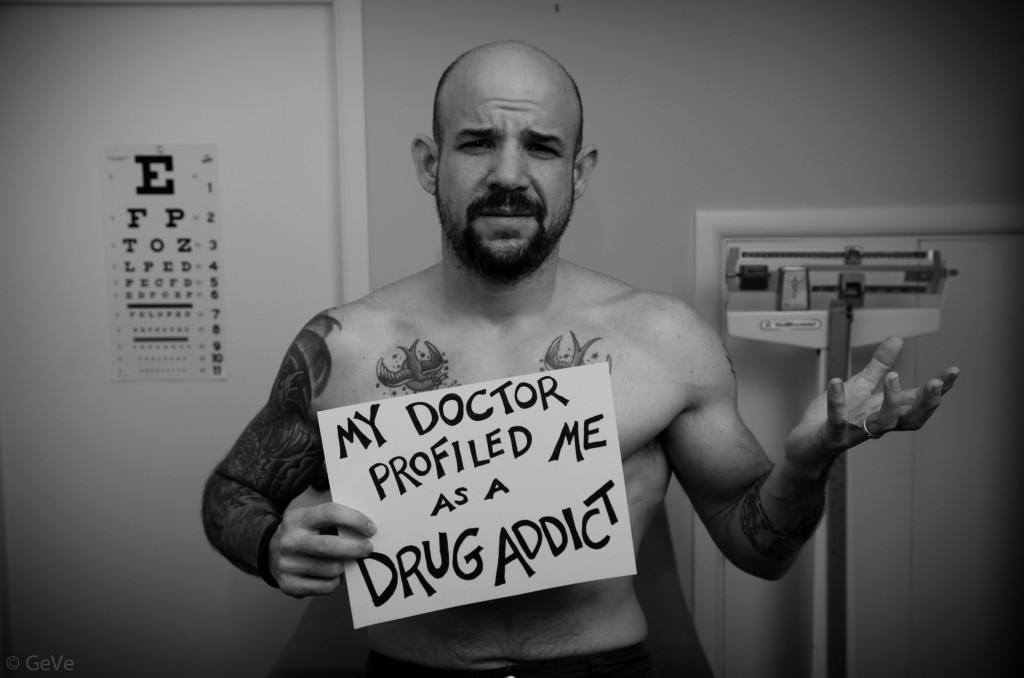
Patient Profiling: Drug Seekers, Medical Slang, and Malpractice

I posted an article that made me extremely angry. You can read it here:

ADDICTS USING GASTROPARESIS IN ORDER TO ABUSE PRESCRIPTION DRUGS.

I have heard story after story from people with chronic pain, invisible illnesses, and issues that illustrate why it is terrible for healthcare professionals to make snap judgments. They treat chronically ill patients as drug seekers. It can be life threatening if healthcare professionals just write someone off as a drug seeker without evaluating them. I just want to ask the doctors, "do drug addicts not have medical emergencies, too?" Patient profiling has become a REALLY big problem in our healthcare system, as has the "opioid epidemic."

I have written two articles on chronically ill patients being treated as drug addicts, and you can find them here:

GASTROPARESIS PATIENTS VS DRUG SEEKERS.

INVISIBLE EMERGENCIES SERIES PART THREE.


First of all, let me define patient profiling. According to Kevin MD,

"Patient profiling is the practice of regarding particular patients as more likely to have certain behaviors or illnesses based on their appearance, race, gender, financial status, or other observable characteristics. Profiling disproportionately impacts patients with chronic pain, mental illness, the uninsured, and patients of color. Like racial profiling by police, patient profiling by physicians is more common than you think.

We rely on doctors to first do no harm–to safeguard our health–but profiling patients often leads to improper medical care, and distrust of physicians and the health care system, with potential lifelong consequences."


Image Source: HERE


Can You Sue A Doctor For Patient Profiling?


According to Find Law,


"By Ephrat Livni, Esq. on April 01, 2016 3:55 PM

Patient profiling is a term used to describe a kind of discrimination by doctors. When a healthcare provider treats a patient based on their "type" rather than assessing them individually, that is profiling, and it can lead to problems in treatment.

Doctors should assess each patient individually, but profiling alone is not likely going to be a basis for a lawsuit against a doctor or hospital, unless that profiling manifested in medical malpractice. So let's explore the distinction between profiling, which is certainly unpleasant, and negligence law, which is based on actual injury.


Patient Profiling Primer

Dr. Pamela Wible, writing for Med Page Today's blog, Kevin MD, discusses and defines patient profiling. She explains, "Patient profiling is the practice of regarding particular patients as more likely to have certain behaviors or illnesses based on their appearance, race, gender, financial status, or other observable characteristics."

"Profiling disproportionately impacts patients with chronic pain, mental illness, the uninsured, and patients of color. Like racial profiling by police, patient profiling by physicians is more common than you think," Dr. Wible writes. "Profiling patients often leads to improper medical care."

That is where profiling starts to meet negligence in medicine. But there is still a distinction, as a medical malpractice suit must be predicated on an injury or harm that is compensable.


Medical Malpractice

Medical malpractice is a form of negligence for medical professionals. Negligence in medicine manifests in errors in diagnosis, treatment, or illness management, for example.

If any of these are the cause of an injury to the patient and it can be proven that the doctor's failures led to it, and that there were no unforeseeable intervening causes, then you have proven part of a claim. You must also show and that this harm can be compensated.

Now, if a doctor's negligence arose as a result of patient profiling, and you were harmed then the doctor's profiling, to the extent it can be shown, will help prove your malpractice claim. But profiling and negligence are not the same and one does not necessarily lead to the other, although it may be a strong sign that malpractice will arise if you are profiled as a patient.


Talk to a Lawyer

If you were treated poorly by a medical professional and were injured as a result, speak to a lawyer. Many personal injury attorneys consult for free or a minimal fee and will be happy to assess your claim."


Image Source: HERE


Failed/Erroneous Diagnosis and Treatment


"We all tend to trust our doctors. After all, they’re the experts. Even though we have some of the best doctors in the world, even they can make a mistake. And these mistakes can be a lack of treatment or the wrong treatment. These can be confusing concepts, so here is a brief overview on failed or erroneous diagnoses and treatments in medical malpractice cases.


Medical Misdiagnosis Generally

In most cases, if a delay or failure to diagnose a disease has resulted in injury or disease progression above and beyond that which would have resulted from a timely diagnosis, medical professionals could be held liable. Most doctors are trained to think and act by establishing a "differential diagnosis." Doing so calls for a doctor to list, in descending order of probability, his or her impressions or "differing" diagnoses of possible causes for a patient's presenting symptoms.

The key question in assessing a misdiagnosis for malpractice is to ask what diagnoses a reasonably prudent doctor, under similar circumstances, would have considered as potential causes for the patient's symptoms. If a doctor failed to consider the patient's true diagnosis on his/her differential diagnosis list, or listed it but failed to rule it out with additional tests or criteria, then the doctor is likely able to be sued for medical malpractice.

However, this situation may be difficult to prove. For example, a patient may allege that a doctor failed to timely diagnose a certain cancer, resulting in "metastasis" (spread of the cancer to other organs or tissues). But experts may testify that "micrometastasis" (spreading of the disease at the cellular level) may occur as much as ten years before a first tumor has been diagnosed, and cancerous cells may have already traveled in the bloodstream and lodged elsewhere, eventually to grow into new tumors. Therefore, it may be difficult in some cases to establish that a patient has suffered a worse prognosis because of the failure or delay in diagnosis.


Failure to Treat and Erroneous Treatment

If a patient is treated for a disease or condition that he or she does not have, the treatment or medication itself may cause harm to the patient. This is in addition to the harm caused by the actual condition continuing untreated.

The most common way in which doctors are negligent by failing to treat a medical condition is when they "dismiss" the presenting symptoms as temporary, minor, or otherwise not worthy of treatment. This situation may result in a worsening of the underlying condition or injury, causing further harm or injury. For example only, an undiagnosed splinter or chip in a broken bone may result in the lodging of a piece of bone in soft tissue or internal bleeding caused by the sharp edge of the splintered bone.

Erroneous treatment is most likely to occur as a result of a misdiagnosis. However, a doctor who has correctly diagnosed a disease or condition may nonetheless fail to properly treat it. Other times, negligence is the result of a doctor attempting a "novel" treatment that fails, when in fact a more conventional treatment would have been successful.


Getting Legal Help with a Medical Malpractice Claim

Having an illness or injury is bad enough, without thinking our doctors made it worse. And it’s not always easy to know whether the professionals in charge of your medical care acted properly. If you would like to know more about your claim, you can contact an experienced medical malpractice attorney.


Medical Malpractice In-Depth


When illness or injury forces you to see a physician or go to the hospital, you can generally be assured that a medical professional's years of experience and training will result in excellent treatment. But in truth, medical care providers are only human, and errors are always possible. Medical malpractice occurs when a negligent act or omission by a doctor or other medical professional results in damage or harm to a patient. To get started with a medical malpractice case, read First Steps in a Medical Malpractice Claim. See FindLaw's Medical Malpractice section for more articles and resources.


Negligence by a medical professional can include an error in diagnosis, treatment, or illness management. If such negligence results in injury to a patient, a legal case for medical malpractice can arise against:

The doctor, if his or her actions deviated from generally accepted standards of practice;
The hospital for improper care or inadequate training, such as problems with medications or sanitation;
Local, state or federal agencies that operate hospital facilities.


Medical malpractice laws are designed to protect patients' rights to pursue compensation if they are injured as a result of negligence. However, malpractice suits are often complex and costly to win. Therefore, if you believe you have a medical malpractice claim, it is important to consult with an attorney who will discuss your case with you, and help you determine your best options.


Legislation Affecting Malpractice Actions

Due in part to the power and resources of health care industry lobbyists, many states have passed legislation making it more difficult to bring and prevail in medical malpractice actions. In most states today, physicians and hospitals are protected by legal limits, called "caps," on the amount of damages and attorneys' fees that can be awarded in malpractice suits. Also, most states have a two-year time limit for filing malpractice actions, unless extraordinary circumstances affect the case.

One obstacle plaintiffs in many states may have to overcome before they can even file a malpractice action against a health care professional is the requirement that they file what is commonly known as a "certificate of merit." In order to file a certificate of merit, a plaintiff will first have to have an expert, usually another physician, review the relevant medical records and certify that the plaintiff's health care provider deviated from accepted medical practices, which resulted in injury to the plaintiff. The plaintiff's attorney then files the certificate of merit, which confirms that the attorney has consulted with a medical expert and that the plaintiff's action has merit.


"Respondeat Superior" and Independent Contractors

Medical malpractice can be committed by several types of health care professionals and, in a case where a hospital employee commits malpractice, the hospital itself may be held liable under the legal doctrine of "respondeat superior." Under this theory, an employer may be held liable for the negligent acts of its employee if the employee was acting within the scope of his or her employment when the negligence occurred. This doctrine is very important to plaintiffs in medical malpractice cases, because it helps ensure there will be a financially responsible party to compensate an injured plaintiff.

In some situations, commonly involving attending physicians working in hospitals, health care providers are considered independent contractors rather than employees, which makes the doctrine of "respondeat superior" inapplicable. What this means is, if a doctor or other health care professional an independent contractor, and commits malpractice while treating a patient in a hospital, the hospital cannot be held liable for the doctor's negligence. However, the hospital can be held liable for its own negligence, for example, in granting attending privileges to an unlicensed or incompetent physician.


Seek Legal Help with a Medical Malpractice Attorney

It's not always easy to know how to pursue a medical malpractice case. A qualified medical malpractice attorney will be able to discuss the strengths and weaknesses of your case and help you get the compensation you deserve. A good first step is to contact a medical malpractice attorney."


Image Source: On Image. Doctors are scared to prescribe pain medications due to the rising number of deaths and pressure from above


According to Parent Professional,


"Have you ever heard of patient profiling? It takes place when medical–and mental health–professionals make an assumption about someone seeking care based on their appearance, race, gender, financial status or even the kind of illness they have, such as mental health or substance use problems. The first time I came across this was in an article written by Pamela Wible, MD (article below at the end of this article), who recounted patient stories where the personal judgment of a medical person resulted in poorer care. She worried that, similar to racial profiling by police, patient profiling is more common than we want to admit. And it undermines care.

When I first heard about patient profiling, I immediately thought of my younger son. A few years ago (when he was in his early 20s), he woke up on a Sunday morning with horrible vertigo, He couldn’t stand, couldn’t focus and couldn’t drive. I took him to the local emergency room where they asked a series of routine questions: Are you on any medication? (No.) Have you ever experienced this before? (No.) Have you had anything alcoholic to drink? (Yes, one beer last night with friends. I was the designated driver.) Unfortunately, the questions stopped after he said he had had that beer the night before. He was given intravenous fluids, allowed to rest and sent home. The next day, his very irate primary care doctor sent him to a different emergency room where he was treated for inflammation of the inner ear.

For my son, staff at the first emergency room decided that a young adult in his 20s experienced vertigo because he had been drinking. They made a snap judgment and his treatment was delayed. To this day, he feels a general mistrust of emergency room staff.

For children and youth with mental health needs and their families, patient profiling happens far too often. It happens in the emergency room and it happens in visits to medical specialists. One mom, whose daughter had both a diagnosis of depression and frequent migraines – for which she was seeing a specialist – waited four days recently in the emergency room because no inpatient beds were available. She was told that her daughter couldn’t receive migraine medication while waiting because that was drug seeking behavior And it was probably part of the bipolar anyway. The mother was frantic when she called us and very frustrated that her daughter’s care was all being lumped under mental health. She felt the emergency room staff had stopped their assessment of her daughter’s needs after they heard about the bipolar disorder.

This doesn’t just happen in emergency rooms. It happens with medical specialists who think that mental health concerns have caused medical symptoms. It happens when doctors call parents 'enmeshed' or 'co-dependent' and don’t see them as a resource and partner but instead as part of the problem. It happens when young people are seen as their diagnosis and not as a valuable self-reporter and critical thinker.

That said, there is a fine line between patient profiling that can help or harm. Doctors, nurses, therapists and other workers often form an initial impression based on their experiences or their training. They often need this starting point to determine a course of action. But – and this is the crucial piece – that starting point needs updating as new information comes in. A second impression or a third is often in order. When the initial judgment is incomplete or inaccurate and it is not revised, it can be harmful.

A cornerstone of good care is excellent communication. While this is often characterized as the doctor or medical professional communicating to the patient, it should be a two-way street. Mutual exchange of information is critical but so is mutual listening. In any human interaction, the only way we can truly connect is when we get past our snap judgments and see who is actually there.

When a child is in crisis or when her need for care is urgent, parents are rarely at their best. Most often, there have been many stressful days or weeks before this point which have worn them down. We rely on medical staff to see beyond the diagnosis to the whole child, teen or young adult. We trust them to see our commitment and strength in the midst of the frenzy. We hope they will see us as a key member of the team, not as a 'less than' parent to be held at arm’s length.

When this doesn’t happen due to patient profiling, we all lose."


Image Source: HERE


According to the Daily Mail,


"Medical jargon is pretty impossible for most patients to follow, but some of the terms you hear your doctor use may just be insulting industry jargon.

Over decades, doctors have ad-libbed a whole vocabulary to encode their frustrations with problem patients, communicate grim status updates, or even gossip about children.

In medicine, this slang is more than harmless insider-jargon: studies have shown that doctors' attitudes and discrimination toward patients can have a real affect on the treatment they receive and how well they recover.

Medical schools have begun to recruit more diverse students in the hopes of changing the field's culture, but several young doctors who wished to remain anonymous told Daily Mail Online that discriminatory terms are still common.

But discrimination is institutionalized and dangerous in medicine, according to Dr Peter Muennig and Dr Alex Green of Harvard University and Massachusetts General Hospital, and it's worth knowing some of these terms that doctors may use to mask the severity of a situation or downright insult you (warning: some of these are offensive).


GOMER

This 'classic' term stands for 'get [them] out of my emergency room.' It has been used in hospitals for decades and is familiar to just about every doctor working, Dr Muennig says.

The acronym is a sort of catch-all term for any of the kinds of patients doctors don't want to deal with.

'There's a certain level of discrimination against the chronically ill, and that's where GOMER comes from,' says Dr Muennig.

In a recent interview with Daily Mail Online, he also said that this term is often used particularly to describe people who physicians suspect are hunting for pain medication.


Frequent fliers

Patients may return to the hospital week after week - or even day after day - for a variety of legitimate or illegitimate reasons, earning them the title 'frequent fliers,' but certainly no points from doctors.

Chronically ill patients with conditions like diabetes must make regular appointments for dialysis.

Other patients become common faces in emergency rooms and clinics because of their hypochondriacs tendencies, constantly sure that they are gravely ill.

Still other patients may just be looking for a drug fix, coming in with complaints of chronic pain, or in hopes that the physicians on shift will be more willing to prescribe than yesterday's were.

'It's most often used to talk about people with severe diseases like diabetes, or renal failure and diabetes,' says Dr Muennig.


FLK

Doctors use this cruel acronym for 'funny looking kid' to describe 'those babies who are "syndromic" or [we can tell] something is wrong with them based on how they look,' a Chicago doctor told Daily Mail Online.

Children born with any of the three trisomies - genetic mutations that cause there to be an extra copy or partial copy of a chromosome - often have distinct appearances.

These disorders include Down syndrome, which is typified by a flattened face, smaller head and ears than normal and upward slanting eyes.

Doctors also use the FLK to describe babies that don't have a clear diagnosis, but whose 'abnormal' appearance suggests that there may be something wrong with them.


Crumping

Not to be confused with the dance style, doctors use 'crumping' when they have a patient that is 'crashing, but not aggressively,' the Chicago doctor told Daily Mail Online.

The phrase is synonymous to 'circling the drain.' Rather than their organs suddenly failing - or crashing - these patients are deteriorating quickly, and often don't have much chance for survival.

'I don't think it's necessarily harmful to say "crumping" or "frequent flier,"' a New York-based doctor said, 'but I'm very careful as a physician to not use those words in earshot of a family, that would be strongly unprofessional.'


Total body dolores

Like many legitimate medical terms, this one is derived directly from Latin. 'Dolores' translates to pain so this 'literally means total body pain,' the doctor says.

The phrase is most often used between doctors, to describe a patient, as in, 'I have a total body dolores in room 109.'

He says he's seen this term used commonly to describe Latino patients in particularly. 'These patients can be very nervous,' he says, in part because English is often their second language, making the hospital and medical-speak even more frightening, 'and their anxiety manifests physically.'

Slang is used 'commonly with people of color, people using drugs,' he says. More common phrases like '"crack head" are commonly heard on the ward too.'

Although 'doloroes' means pain in Latin, a rather medical language, it means the same thing in Spanish, as well as being a woman' name. This all adds up to maximize confusion for patients.


Status dramaticus

A patient earns the title 'status dramaticus' when they are a '10/10 [for pain] always, although they look fine,' the Chicago doctor says.

'This is someone that wails shrieks, howls so loudly you can hear them from the hallways. Everything hurts and they make sure you know about it,' he says.

The problem with doctors using terms like status dramaticus, says Dr Alex Green, 'is that they're dealing with people who are sick, physically and sometimes mentally and these [dismissals] can be more directly harmful.'


WWWS

The acronym for 'wealthy white woman syndrom ' is 'actually bad because it's a term that is used when you're frustrated at specific patients and dismissing their symptoms,' says Dr Lisa Wang, a psychiatry resident in New York.

Research has documented that physicians are more likely to take women's pain less seriously than they would a man's. There is a widely held belief - though studies turn up mixed results - that women's bodies are designed for childbirth and their pain thresholds are higher.

A 2008 study from the National Institutes of Health also found that women wait 16 minutes longer to be seen in an emergency room than men do.

'As medical providers, on an unspoken level, I think [using these terms] is a coping mechanism, to make light of really difficult situations,' Dr Wang says.


HHS and Aye-aye-itis

Discrimination against people of color and those for whom English is a second language is rampant, as evidenced by the terms 'hysterical Hispanic syndrome' and aye-aye-itis.

'I hear "aye-aye-itis" used for a Hispanic patient who has many somatic complaints, none of which are related to their surgery or main problem, usually accompanied by "aye, aye,"' the Chicago doctor says.

'Language barriers are a big discriminatory factor,' says Dr Green.

'There's an attitude of "oh, another patient that doesn't speak English, why don't they learn, it makes our lives so difficult,' says Dr Green, who has worked on initiatives to educate hospitals on language barriers and introduce interpreters.

'I roll my eyes every time I hear that [kind of term]' says a New York doctor. 'I call it out because it gets at the rampant cynicism to the job.'

In one Harvard study, 20 percent of a group of 8,000 Latino people reported experiencing discrimination at a health care facility or clinic.


Slugging

'A slug is someone who is reluctant to get up out of bed after surgery,' says the Chicago doctor.

'They tend to be slow, in pain, and want to stay "one more day longer, please,"' he says.

On one hand, 'poor effort,' as he calls it, can have a negative impact on the quality and timeline for recovery, but there is a darker side to this tendency too.

A hospital bed might be the safest and most certain place some patients can stay, especially for those who are not financially secure or may be struggling with addiction.

'When you have patients showing up drunk every single night, always overdosing, not taking their blood pressure medications and coming in because of it, it becomes easy to blame patients, though I don't think you should,' says one New York doctor.

Dr Green says that 'a lot of it derives from [doctors'] systemic frustrations with the medical system back-firing back onto patients.'"


I have written a companion article with ALL of the medical slang, acronyms, etc. all on its own, because there is SO much of it. You can find the article: http://www.emilysstomach.com/2019/04/patient-profiling-medical-slang-only.html


Image Source: HERE


According to Pamela Wible MD,


"Patient Profiling: Are You a Victim?


We rely on doctors to first do no harm–to safeguard our health–but profiling patients often leads to improper medical care, and distrust of physicians and the health care system, with potential lifelong consequences. For the first time, people share their stories:

'I was once denied pain meds after a fall off a 10-foot porch by the same doc who gave my pretty female friend pain meds after getting two stitches in her finger. I felt like my appearance had something to do with it.' ~ Jay Snider

'In 1986 I was in a motorcycle accident. I tore up my face on the road. I was taken to the ER and treated like crap because I had no insurance. They cauterized my facial wounds rather than stitch me up, and then dumped me on the sidewalk with amnesia. I still have distinct black scars; people think they’re tattoos. I went into collections and it took years to pay that one off. Six weeks ago, I fell while trimming a tree. When the ER found the insurance card in my wallet, I was treated like gold.' ~ James Cummings

'As a teen, I fractured my nose. Many sinus issues later, I consulted an ENT specialist. He insisted that I damaged my sinus passages by using cocaine. His assumptions caused me pain, humiliation, confusion, and anger. I repeatedly assured him that I wasn’t a user. Two surgeries later, my septum was removed. Afterwards, he was so cruel as to continue his tirade about my cocaine use. As the gauze was being removed from my nose, I fainted. When I was roused, he insisted that I leave immediately showing no concern about whether I could even make it home safely.' ~ Lonnie Stoner

'It was 1975. I was 23 and I’d been on the pill for 4 years, but I became concerned about potential negative side effects of long-term hormonal manipulation. So I researched other contraceptives and felt the diaphragm was the simplest and safest option for me. When I went to the county clinic to get fitted, I explained what I’d researched to the doctor. He scoffed at my concerns, urged me to stay on the pill, and disputed any potential negative consequences. He reminded me that taking a pill each day was SO much easier than having to be responsible for using the diaphragm properly. It was clear he thought I was too young and clueless to make this decision about my own reproductive health care. Although he tried to dissuade me from switching to a diaphragm, I insisted that’s what I wanted, and he finally fitted me for it. After he left the room, the nurse said, ‘Don’t worry, dear; it’s quite easy to use. I’ve been using one for years with no problems. It’s a good choice for you to make!’ It was clear she didn’t approve of his patronizing attitude either.' ~ Patsy Raney

'I injured my back at work. I couldn’t get time off, so my family doc prescribed pain meds so I could get through the day and Xanax for sleep. I returned every six months for two years and he always accused me of taking more than I was prescribed. He got progressively more rude and angry. I brought my wife with me to see if I was imagining it. She witnessed it too, so we searched for another doctor. I asked my new doctor to taper me off of the pain meds and Xanax so I could try medical marijuana instead. He was skeptical. He told me to go to the pain clinic. I’d gone there once before and was treated like a criminal. I didn’t want to go there! So he wrote up a contract that said I would agree to take pain meds and Xanax and I’d be drug tested monthly to make sure that I wasn’t using medical marijuana. When I told him I wouldn’t sign the contract, he told me to find another doctor. This was at a critical time when I needed real help and was worried about taking the meds for over two years.' ~ Carl Williams

I’ve been a doctor for 20 years. I thought I’d seen it all. Drug addicts have altered my prescriptions, even forged my name. Patients have lied to me. Many haven’t followed my treatment plans. Some have died as a result. Still, I try to treat everyone fairly and with respect. But now I’m wondering, “Have I ever profiled a patient?” I bet I have. So on behalf of my colleagues and myself, I’ve got a message for any patient who has ever been misjudged or mistreated:


Image Source: In Article


Special shout out to Chriss for her help.


Tuesday, September 18, 2018

We Need to Address the Cyberbullying Happening Within the Chronic Illness Community

I just found out that The Mighty published an article I submitted. I am just over the moon right now and can't tell you how much I needed some good news!

https://themighty.com/2018/09/cyberbullying-gastroparesis-chronic-illness-community/


The article is down below. I just wanted to say thank you, to all of you who read my blog. I have found my voice to write in this blog and it's because of you guys. Sorry - this isn't bragging (the article). I just found out about this 10 minutes ago so I'm still in delirious shock. I've been published several times in my lifetime, but this one meant the most to me. I didn't think they were going to publish it given how many submissions they must get on a daily basis. This was my first and only submission, so I didn't have high hopes. I really am glad they published it because more attention needs to be paid to cyber bullies. People commit suicide over this and it's a very serious issue. I am so humbled and so grateful that they published this article. I am just speechless! I cannot tell you guys how much this means to me. I know some of you might think it's silly, but this was very personal for me. I want to fight back against people who do this.

If you are currently being cyber bullied, please reach out. You do NOT have to suffer in silence. There are several resources here to get help: https://www.stopbullying.gov/get-help-now/index.html

I am not a social worker, therapist, or anything like that, but if any of you out there feels lonely, I could be a friend and listen. My email is: emilysstomach[at]gmail.com.


There has been a lot of bullying going on within the chronic illness community, a lot of which has been in the gastroparesis community, which is the only one I can really speak on. Furthermore, I cannot speak on behalf of my friends, but I can tell you that I have been cyberbullied to the point where I wanted to leave all social media altogether. I thought that since we are all chronically ill, and we all share the diagnosis of gastroparesis, that we were supposed to be united. Instead, some of the people or groups who are chronically ill seem to find a person to target and make their lives a living nightmare.

We, the chronically ill, face enough adversity from doctors, nurses, family and friends – people who do not understand gastroparesis or think it is “all in our head.” I had this notion that we should be working together to promote understanding and educate those who may not know about our illness. I never, in a million years, thought I would be the target of cyberbullying by the people who were supposed to understand more than anyone, by the people who were supposed to be there to be help to support me, and by the people I thought I could count on. I never thought I would be the victim of cyberbullying.

Cyberbullying is a big deal. There have been cases of people dying by suicide because they were cyberbullied. The first person who comes to mind is Gabriella “Gabbie” Green, who died by suicide in January because of cyberbullying.

I wanted to bring this into the light and talk about this issue because words do hurt, more than people realize, and cyberbullying has become a big problem. I want to bring awareness to this issue because it might help save someone’s life.

There is no excuse for cyberbullying. I was just so shocked to learn that it was happening in the chronic illness community, not just the gastroparesis community. I understand we are all sick and we all have bad days, and that does happen when you have a chronic illness. However, that does not give a person a right to bully someone else. I do not understand the reason behind the cyberbullying or why people need to hurt others like that. With gastroparesis, this kind of stress for days (in my personal experience, I was cyberbullied across all of the social media sites I made an account with) can cause a horrible gastroparesis attack that may land people in the hospital.

People need to understand that words hurt and can do some real damage. You never know what struggles the person on the other end of the computer may be facing. All people see is what is posted online, and that is it. You never really know what is going on in someone else’s life. I guess some people may see those with chronic illness as “easy targets” for cyberbullying because they assume we are “too weak” and “too sick” to stand up for our principles on the matter, but we are not.

I always envisioned all of those with chronic illness, from fibromyalgia to gastroparesis, working together to get information out there and to help others who battle chronic illnesses, especially if they are newly diagnosed. It is not about ganging up on people, controlling groups, pages, who has the most members on Facebook, etc. It is great to have so many options for support, and people can join more groups. Joining groups on Facebook should not be a competition and the person should not be cyberbullied for making a decision on a group that fits them.

It’s about support, pure and simple.


There are so many obstacles we have to go through with gastroparesis; we shouldn’t manufacture more – we should stand united. We need to educate those who may not know about gastroparesis and what it entails. We should rally together to educate, not tear each other down. Divided we fall, united we conquer.

I want to talk about cyberbullying, since I’m experiencing it firsthand, and what it’s doing to the gastroparesis community and other chronic illness communities. I also want to help others who may be going through the same things. It’s hard being bullied, especially if Facebook will not listen and you don’t have any other recourse. I’ll share some things I have learned and some tips from an anti-bullying site that I found. We should be lifting each other up, supporting one another and working together to make a difference. All of this fighting within our community has got stop. While having gastroparesis is hard enough, and I will repeat this again because it’s important, we face enough adversity from doctors, nurses, ER staff, etc. We don’t need it from each other.

So, here’s what you can do to avoid cyberbullying.

1. Do not feed the troll. What I mean by that is, do not give the person fuel for their fire to keep attacking you. As hard as it is, it can help to stay silent. These people crave attention and will try to get it by any means necessary.

2. Block these people. They have no control over your life unless you let them. You are better off without these toxic people in your life. You are important, and you shouldn’t let these people have control over what you do.

3. Write yourself an email. Every time these people hurt you and you want to say something back, write yourself an email and send it to yourself to get your feelings out. That way, you don’t bottle it up and you can get out what you want to say. You don’t need to send it to anyone else, this is just for you.

4. Do not be scared. Don’t be scared to log in to Facebook or wherever these trolls might be lurking. That would be giving them power over you. Don’t let them. Like it or not, these people are going to be everywhere so there is really not a way to avoid them.

5. Do not stop living your life. The thing with bullies is that they will try to interrupt as much of your life as possible. Do not let them. The world spins on. You should keep living your life and do not let them make you deviate from it, because that is their goal.

I would also check with your state and see what laws they may have in place about cyberbullying. If you are currently being cyberbullied, do not give up. I had to block many people on Facebook when I would first log in. You can also report those people, located on a drop down menu on their cover page, before you block them to let Facebook know. You can also look up Facebook’s guidelines and there is an email address they give you to send your difficulties to them. Additionally, there are support groups on Facebook for cyberbullying you can join. I would also recommend talking with a psychiatrist about it, because your mental health is important, especially with gastroparesis, or any chronic illness.


RESOURCES
If you or someone you know needs help, visit our suicide prevention resources.

If you need support right now, call the National Suicide Prevention Lifeline at 1-800-273-8255, the Trevor Project at 1-866-488-7386 or reach the Crisis Text Line by texting “START” to 741741.

Thursday, August 23, 2018

Bringing Awareness to Cyber Bullying

There has been a lot of bullying going on within the chronically ill community, a lot of which has been in the gastroparesis community, which is the only one I can really speak on. Furthermore, I cannot speak on behalf of my friends, but I can tell you that I have been cyber bullied to the point where I wanted to leave all social media altogether. I thought that since we are all chronically ill, and that we all share the diagnosis of gastroparesis, that we were supposed to be united. Instead, people or groups who are chronically ill find a person to target and make their lives a living nightmare.

We, the chronically ill, face enough adversity from doctors, nurses, family, and friends; people who do not understand gastroparesis or think it is all in our head. I had this notion that we should be working together to promote understanding and educate those who may not know about our illness. I never, in a million years, thought I would be the target of cyber bullying by the people who were the ones who were supposed to understand more than anyone, by the people who were supposed to be there to be help to support you, and by the people I thought I could count on. I never thought that I would be the victim of cyber bullying. I wrote this in August of 2013, but I updated it to include current information on and about Cyber Bullying: http://www.emilysstomach.com/2017/08/cyber-bullying-and-gp-community.html

My article in The Mighty about Cyber Bullying can be found here: https://themighty.com/2018/09/cyberbullying-gastroparesis-chronic-illness-community/

And I want to be sure to drive this point home. Chronically ill people have higher statistics of suicide and suicidal thoughts. If you are cyber bullied on top of being ill, that is A LOT to deal with. I wrote a blog article about suicide here: http://www.emilysstomach.com/2014/10/sucide-and-chronic-illness.html

Here is an article from The Mighty with the statistics: https://themighty.com/2017/06/chronic-illness-increase-suicide-risk/

According to Comparitech,

"Cyberbullying Facts and Statistics for 2016-2018


Cyberbullying is on the rise worldwide. We've gathered both local (US) and global cyberbullying statistics, trends, and facts that help illustrate the extent of this growing problem. Our article focuses on cyberbullying data from 2016, 2017, and 2018 before delving into some older, but relevant stats.

By: Sam Cook, Data privacy, internet security, and cord-cutting expert.
November 12, 2018

*This list of cyberbullying statistics from 2016-2018 is regularly updated with the latest facts, figures and trends.

All technology these days produces both good results and notable consequences. The internet is increasingly a perfect case study for this idea. While better connecting the world and democratizing information, the internet has also allowed individuals to hide behind masks of anonymity. The “faceless evil” of the internet is a growing threat for teens, specifically when it comes cyberbullying. Despite a more recent ramping up of awareness campaigns, cyberbullying facts and statistics indicate the problem is not going away anytime soon.


Cyberbullying around the World

We analyzed the results of an Ipsos international survey of adults in 28 countries which reveal an increasing number of parents have children who have experienced some form of cyberbullying.

In total 20,793 interviews were conducted between March 23 – April 6, 2018 among adults aged 18-64 in the US and Canada, and adults aged 16-64 in all other countries.

Of particular interest are Russia and Japan. In both countries, parents expressed extremely high levels of confidence that their children did not experience cyberbullying of any kind.

Meanwhile, Indian parents remained among the highest to express confidence that their children were cyberbullied at least sometimes, a number that only grew from 2011 to 2018. Across Europe and the Americas, it also appears more parents are either becoming aware of their children’s negative experiences with cyberbullying, or their children are increasingly experiencing such attacks online.


Percentage of parents that report their child has been a victim of cyberbullying. 2011-2018 Survey Results


Global perspectives on cyberbullying


The following chart includes additional perspectives and insight into cyberbullying from a global scale, including:

Percent of respondents aware of cyberbullying as a concept
Number of countries responding where specific anti-bullying laws exist
Respondents who believe current laws are enough to handle cyberbullying cases.


Cyberbullying facts and statistics for 2016-2018

*This list of cyberbullying statistics from 2016-2018 is regularly updated with the latest facts, figures and trends.

All technology these days produces both good results and notable consequences. The internet is increasingly a perfect case study for this idea. While better connecting the world and democratizing information, the internet has also allowed individuals to hide behind masks of anonymity. The “faceless evil” of the internet is a growing threat for teens, specifically when it comes cyberbullying. Despite a more recent ramping up of awareness campaigns, cyberbullying facts and statistics indicate the problem is not going away anytime soon.
Recent statistics show steady growth in cyberbullying

A 2007 Pew Research study found 32 percent of teens have been victims of some type of cyberbullying. Nearly a decade later, a 2016 study by the Cyberbullying Research Center found those numbers were almost unchanged. By 2016, just under 34 percent of teens reported they were victims of cyberbullying. Meanwhile, the National Crime Prevention Council puts that number much higher, at 43 percent.

According to the Cyberbullying Research Center, which has been collecting data on the subject since 2002, that number has doubled since 2007, up from just 18 percent. Disagreements in statistics and data gathering methods aside, a minimal increase in cyberbullying is a distinct positive. It’s also an indication that the increasing attention on cyberbullying in the intervening years has done little to stem the tide.

Google Trends data indicates much more attention is focused on cyberbullying than ever before. The volume of searches for “cyberbullying” increased threefold since 2004:


Source: Google Trends


Research presented at the 2017 Pediatric Academic Societies Meeting revealed the number of children admitted to hospitals for attempted suicide or expressing suicidal thoughts doubled between 2008 and 2015. Much of the rise is linked to an increase in cyberbullying. (Source: CNN). More teen suicides are also now attributed in some way to cyberbullying (1, 2, 3) than ever before.

It appears bullying has effects beyond self-harm. Javelin Research finds that children who are bullied are 9 times more likely to be the victims of identity fraud as well.


Where and How Cyberbullying Occurs

While data on cyberbullying growth rates are sometimes difficult to come by, there’s a much larger body of information regarding where and how cyberbullying occurs. Just as with bullying before social media and internet forums, those who bully others typically look for two things: opportunity and attention.

In the internet age, the opportunity to bully others has only increased. Prior to the internet, a physical presence was often needed outside of spreading rumors. Now, bullying can occur immediately, to a much larger audience, and can spread much faster. Additionally, those who choose to bully others can get more immediate gratification from likes, shares, retweets, and the “piling on” effect that often occurs when others add to an already negative situation.

As one 2010 study found, bystanders can have a significant impact on vulnerable students’ risk for victimization. According to the study’s findings, bystanders can “moderate the effects of individual and interpersonal risk factors for victimization.” While the study was conducted on physical bullying, by extension, “bystanders” can have a significant impact in online interactions by either calling out such behavior or, lacking that, not responding and diminishing the attention cyberbullies may be hoping to receive.

Data from numerous studies also indicate that social media is now the favored medium for cyberbullies. Other formats are still in use as well, however, including text messaging and internet forums such as Reddit.


Recent stats include:

20.1 percent of reported that they were affected by online rumors. (Source: Cyberbullying Research Center)
Just over 7 percent of middle school and high school students had a mean or hurtful web page created about them. (Source: Cyberbullying Research Center)
In a survey of parents and adults across Asia, 79 percent reported that either their child or a child they know had been threatened with physical harm while playing online games. (Source: Telenor)
Cyberbullying often occurs on Facebook or through text messages. (Source: American Journal of Public Health)


Direct Impact of Cyberbullying on Teens and Adolescents

The long-lasting impacts of cyberbullying are difficult to ignore. Alongside the increasing number of suicides directly linked to cyberbullying, other consequences arise for bullying victims. One 2016 study discovered that bullying victims are more likely to engage in substance abuse and nonviolent delinquency. Other cyberbullying research (listed below) indicates that cyberbullying carries over into how students feel about their physical safety at school. Additionally, cyberbullying can negatively impact a student’s’ overall success by cutting into their motivation.


Key research on the impact of cyberbullying includes the following:

As of August 2016, 16.9 percent of middle and high school students identified themselves as cyberbully victims. (Source: Cyberbullying Research Center)
Among adolescents, 36.7 percent of female respondents stated they’d be the victim of cyberbullying at some point in their lifetime, compared to 30.5 percent of boys. (Source: Cyberbullying Research Center)
Most online behaviors and threats to well-being are mirrored in the offline world (Source: Perspectives on Psychological Science)
34 percent of students claimed to have been bullied online at least once in their lifetime. (Source: Florida Atlantic University)
17 percent of students explained that they’d been bullied sometime within the past 30 days. (Source: Florida Atlantic University)
Roughly 64 percent of students who claimed to have been cyberbullied explained that it negatively impacted both their feelings of safety and ability to learn at school. (Source: Florida Atlantic University)


Suicide Rates Cyberbullying
Source: CDC


According to a decade-long Florida Atlantic University study of 20,000 middle and high school students, 70 percent of students said that someone spread rumors about them online. (Source: Florida Atlantic University)
More than one in 10 students (12 percent) admitted to cyberbullying someone else at least once. (Source: Florida Atlantic University)
Girls are more likely to be victims of cybercrime (except for those bullied within the last 30 days), while boys are more likely to be cyberbullies. (Source: Florida Atlantic University)
There are significant cross-overs between in-person and online bullying. 83 percent of students who had been bullied online in the last 30 days had also been bullied at school. Meanwhile, 69 percent of students who admitted to bullying others online had also recently bullied others at school. (Source: Florida Atlantic University)
Adolescents who engaged in cyberbullying were more likely to be perceived as 'popular' by their peers. (Source: Journal of Early Adolescence).


A need for more broad-reaching and open research

One common theme emerged as we researched various aspects of cyberbullying—a stunning lack of data. This is not to say that research on cyberbullying isn’t there. Even a simple search in research databases will reveal thousands of articles covering the topic in some form. However, most research on cyberbullying is either small in scale or lacking in depth. Most research is also based on surveys, resulting in a large variation in the results from survey to survey.

The Florida Atlantic University study represents one of the best sources of information to date. However, more is needed, including a meta-analysis of the data gathered from many other sources. Until then, publically available cyberbullying statistics paint an incomplete picture of the ongoing issue.
Past research still holds value

Despite a lack of consistent publicly or easily-accessible data, a plethora of data from beyond 2015 can still help shed some valuable light on the issue. Past research and statistics reveal where cyberbullying has been and help reflect on why this issue is still a concern today.


Older data on cyberbullying include the following:

Most teenagers (over 80 percent) now use a mobile device regularly, opening them up to new avenues for bullying. (Source: Bullying Statistics)
Half of all young adults have experienced cyberbullying in some form. A further 10-20 percent reported experiencing it regularly. (Source: Bullying Statistics)
Cyberbullying and suicide may be linked in some ways. Around 80 percent of youth that commits suicide have depressive thoughts. Cyberbullying often leads to more suicidal thoughts than traditional bullying. (Source: JAMA Pediatrics)
More than half of all teens who use social media have witnessed cyberbullying. (Source: NoBullying.com)
Over 50 percent of surveyed teens say they never confide in their parents after being victimized by cyberbullies. (Source: NoBullying.com)
The website Nobullying.com recorded over 9.3 million visits in 2016 from people seeking help with bullying, cyberbullying and online safety. (Source: NoBullying.com</a>)
Almost 43 percent of kids have been cyberbully victims. Around 25 percent have been victimized more than once. (Source:
DoSomething.org)


Source: DoSomething.org

Nine out of 10 teens who have been bullied through social media report that they’ve ignored it. A further 84% said they’ve seen others attempt to stop cyberbullies. (Source: DoSomething.org)
A UK survey of more than 10,000 youths discovered that 69 percent reported doing something about abusive online behavior directed toward another person. (Source: DoSomething.org)
The same U.K. survey also discovered that 71 percent of young adults believe social networks do not do enough to prevent cyberbullying. (Source: DoSomething.org)

Looking for more internet-related stats? Check out our roundup of identity theft stats and facts for 2017 -2019, or our Cybercrime statistics which runs to 100+ facts and figures."


Source: https://www.google.com/url?sa=i&rct=j&q=&esrc=s&source=imgres&cd=&cad=rja&uact=8&ved=2ahUKEwi3t9f7oITdAhUvneAKHd4WBzIQjRx6BAgBEAU&url=https%3A%2F%2Fwww.slideshare.net%2Fparulata%2Fabhishek-cyber-bullying&psig=AOvVaw2p615526q1dftVgPza3vZ6&ust=1535150920149901


Cyber bullying is a big deal. There have been cases of people committing suicide over being cyber bullied. The first person that comes to mind is Gabriella "Gabbie" Green, who committed suicide in January because of cyber bullying.

I wanted to bring this into the light and talk about this issue because words do hurt, more than people realize, and cyber bullying has become a BIG problem. I want to bring awareness to this issue because it might help save someone's life.

There is NO excuse for cyber bullying. I was just so shocked to learn that it was happening in the chronically ill community, not just the gastroparesis community. I understand that we are all sick and that we all have bad days, and that does happen when you have a chronic illness. However, that does not give a person a right to bully someone else. I do not understand the reason behind the cyber bullying or why people need to hurt others like that. With gastroparesis, this kind of stress for days (in my personal experience, I was cyber bullied across all of the social media sites I made an account with) can cause a horrible gastroparesis attack that may land people in the hospital.


Source: https://www.google.com/url?sa=i&rct=j&q=&esrc=s&source=imgres&cd=&cad=rja&uact=8&ved=2ahUKEwiCmqn4oITdAhUnneAKHYvvD0YQjRx6BAgBEAU&url=http%3A%2F%2Fwww.girlsarepowerful.com%2Fwhat-is-cyberbullying%2F&psig=AOvVaw06_ZcH1jHEf3UY5CNmcaRL&ust=1535150913398991


People need to understand that words hurt and can do some real damage. You never know what struggles the person on the other end of the computer may be facing. All people see is what is posted online, and that is it. The people who are cyber bullying may not realize that the person they are terrorizing just had a death in the family, had surgeries, or just found out they have another illness which could kill them at any moment. Like I said, you never really know what is going on in someone else’s life. I guess the chronically ill are easy targets for cyber bullying because people assume we are too weak and sick to stand up for our principles on the matter, but we are not.

I always envisioned ALL of the chronically ill, from fibromyalgia to gastroparesis, working together to get information out there and to help others whom battle chronic illnesses, especially if they are newly diagnosed. It is not about ganging up on people, controlling groups, pages, who has the most members on Facebook, etc. It is great to have so many options for support, and people can join more group. Joining groups on Facebook should not be a competition and the person should not be cyber bullied for making a decision on a group that fits them.

It's about support, pure and simple.


Source: https://west.ite.edu.sg/_layouts/showcase/2016/mwd/junhong/images/cyberbullying_diff_1.jpg


There are so many obstacles that we have to go through with gastroparesis, we shouldn't manufacture more, we should stand united. We need to educate those who may not know about gastroparesis and what that entails. It's August, Gastroparesis Awareness Month. We should rally together to educate, not tear each other down. Divided we fall, united we conquer.

I want to talk about cyber bullying, since I'm experiencing it firsthand, and what it's doing to the gastroparesis community and other chronic illness communities. I also want to help others who may be going through the same things. It's hard being bullied, especially if Facebook will not listen and you don't have any other recourse. I'll share some things I have learned and some tips from an anti-bullying site that I found. We should be lifting each other up, support one another, and working together to make a difference. All of this in community fighting hasgo ton stop before someone is pushed to suicide. While having gastroparesis is hard enough, and I will repeat this again because it’s important, we face enough adversity from doctors, nurses, ER staff, etc., we don't need it from each other.


Source: https://www.google.com/url?sa=i&rct=j&q=&esrc=s&source=imgres&cd=&cad=rja&uact=8&ved=2ahUKEwjFuMPtoITdAhUQPN8KHQJcAToQjRx6BAgBEAU&url=https%3A%2F%2Fwww.slideshare.net%2FYumnaAli6%2Fcyber-bullying-72410753&psig=AOvVaw0gw3aE5Gs7aMvX67PpT1of&ust=1535150890025499


Source: Imgur


So, here's what you can do to avoid cyber bullying.

1. Do not feed the troll. What I mean by that is, do not give the person fuel for their fire to keep attacking you. As hard as it is, stay silent. These people crave attention and will try to get it by any means necessary. There is a wonderful article that states,

"Narcissists and Psychopaths Online: The Narcissism of Cyberbullying and Trolling
by Shahida Arabi

Cyberspace provides malignant narcissists and those who have antisocial traits with easy access to victims and minimal effort. A recent study showed that online trolls demonstrated high degrees of sadism, psychopathy and Machiavellianism. Conclusion? In the words of Dr. Golbeck, internet trolls are narcissists, psychopaths and sadists.

This should come to no surprise to anyone who has encountered trolls or cyberbullies – they are notorious for attempting to provoke people in order to derive sick feelings of satisfaction that they apparently can’t get anywhere else. Their lack of compassion, tact and empathy when bullying others online is evident in the way they brandish their ill-informed opinions indiscriminately regardless of context, eagerly hoping to get recognition for their malice.

Cyberbullying and trolling are strategic ways for narcissists who lack adequate narcissistic supply or who are experiencing boredom to get a quick “fix” without being held accountable for their abuse.

In the context of intimate relationships, survivors of narcissistic abuse, an insidious form of psychological and emotional abuse that can cause what psychotherapist Christine Canon de Louisville calls “Narcissistic Victim Syndrome,” may be stalked, harassed and cyberbullied for years even after the ending of the relationship, especially if they were the ones to discard the narcissist first by exiting the relationship altogether.


Source: http://www.pngdown.com/research-paper-on-cyber-bullying/the-real-effects-of-cyber-bullying-nobullying-cyberbullying-research-paper-infogr/


To Report Bullying on Facebook

There are different ways to go about reporting being cyber bullied on Facebook. First and foremost, I would take screenshots of everything sent your way and keep it in a file.

Tom's Guide gives you step by step instructions on how to report bullying to Facebook: https://www.tomsguide.com/us/report-abuse-on-facebook,review-3591.html

You can also report abusive content on Facebook and this will show you how: https://blog.avast.com/how-to-stand-up-against-a-cyber-buylling-on-facebook

Here is another way to report abusive content on Facebook: https://www.facebook.com/help/181495968648557

The government also has tips on what you can do if you're being cyber bullied: https://www.stopbullying.gov/cyberbullying/cyberbullying-tactics/index.html

Prevent Cyber Bullying: http://stopcyberbullying.org/reportfbabuse/

How to Stop Bullying on Facebook: https://www.wikihow.com/Stop-Bullying-on-Facebook


If you have been cyber bullied on Facebook, this article talks about how to get your dignity back and how to rebuild your reputation: https://www.makeuseof.com/tag/abused-bullied-harassed-on-facebook-6-ways-to-get-back-your-dignity-weekly-facebook-tips/


When a narcissist suffers from an offense to their false sense of superiority and entitlement, they endure what is known as a narcissistic injury, often followed by narcissistic rage. This rage is a result of an injury to their ego when something or someone threatens their delusions of grandeur and “false self.”

Since survivors often implement No Contact with their abusers, narcissistic abusers feel a loss of power and attempt to regain that power through tactics like provocation, hoovering and post-breakup triangulation techniques.

On the internet, narcissists and those who have antisocial traits employ similar manipulation tactics in cyberspace to provoke and harm complete strangers.

Bullying in any form, especially anonymous bullying, can lead to devastating results. Research indicates that cyberbullying in schools leads to a higher rate of suicidal ideation and suicide attempts in victims of cyberbullying. There have been a number of suicides that were triggered by the words of anonymous sadists – the suicides of many teenagers, for example, were a direct result of cyberbullying.

Cyberbullying and trolling leave such a terrible psychological impact that there is even a movement against anonymous comments sections on media outlets. Since there is little accountability for cyberbullies and the laws against it in each state may not protect victims entirely from emotional abuse, it often goes unchecked and unpunished. If cyberbullies are ever reprimanded, it is usually after the fact of a tragic suicide or another form of publicity that draws attention to the consequences of cyberbullying.

Cyberbullying can also be retraumatizing and invalidating for survivors of abuse and trauma. Specifically, in the narcissistic abuse survivor community, narcissists tend to support other narcissists and both survivors as well as professionals may come under attack for speaking their truth about narcissistic abuse. There is, unfortunately, a great deal of victim-blamers and enablers online who support the actions of abusers or vilify advocates that expose the predatory nature of abusers with Narcissistic Personality Disorder or Antisocial Personality Disorder."
The article can be found here if you would like to read then rest of it: Narcissists and Psychopaths Online: The Narcissism of Cyberbullying and Trolling by Shahida Arabi


Source: Located on the Image.


2. Block these people. They have no control over your life unless you let them. You are better off without these toxic people in your lives. You ARE important, and don't let these people have control over what you do.

3. Write yourself an email. Every time these people hurt you and you want to say something back, write yourself an email and send it to yourself to get your feelings out. That way, you don't bottle it up and you can get out what you want to say. You don't need to send it to anyone else, this is just for you.

4. Do not be scared. Don't be scared to login to Facebook or wherever these trolls might be lurking. That would be giving them power over you. Don't let them. You're better than that, and like it or not, these people are going to be everywhere so there is really not a way to avoid them.

5. Do not give in. These people want something from you, don't give it to them. Bullies usually won't stop until they can get what they want. I will give an example. This is a popular one - in movies and T.V. shows - bullies want lunch money. They will not stop punching you in the gut until they get it and run off. So, don't give the bullies your "lunch money."

6. Do not stop living your life. The thing with bullies is that they will try to interrupt as much of your life as possible. Do not let them. The world spins on. You should keep living your life and do not let them make you deviate from it, because that is their goal.


Source: https://www.google.com/url?sa=i&rct=j&q=&esrc=s&source=imgres&cd=&cad=rja&uact=8&ved=2ahUKEwjFuMPtoITdAhUQPN8KHQJcAToQjRx6BAgBEAU&url=https%3A%2F%2Fwww.slideshare.net%2FYumnaAli6%2Fcyber-bullying-72410753&psig=AOvVaw0gw3aE5Gs7aMvX67PpT1of&ust=1535150890025499


I would also check with your state and see what laws they may have in place about cyber bullying. If you are currently being cyber bullied, do not give up. I had to block many people on Facebook when I would first log in. You can also report those people, located on a drop down menu on their cover page, before you block them to let Facebook know. You can also look up their guidelines and there is an email address they give you to send your difficulties to them. Additionally, there are support groups on Facebook for cyber bullying you can join. I would also recommend talking with a psychiatrist about it, because your mental health is important, especially with gastroparesis, or any chronic illness.


Here is my group that I started to raise awareness about cyber bullying, and also to give a safe group environment for those being bullied right now:

 
Gastroparesis & Cyber Bullying
Closed group · 5 members
Join Group
Cyber bullying is a serious issue on Facebook. People have killed themselves over it. I've been a victim of it myself and I got anxiety attacks when...


According to http://heyugly.org/cyberbullying,


This is another great article! You should read it in its entirety.


According to https://www.bullying.co.uk/cyberbullying/how-to-deal-with-cyberbullying/,


"It's very upsetting to get abusive emails, instant messages and to have nasty websites or social network profiles set up to invite people to post offensive remarks about you. This is called cyber bullying.

dealing with cyberbullying
There are ways that people who send emails can be tracked by internet service providers and the police. All emails carry information which shows the path the email has taken to get to your computer.

Internet service providers (ISP) have contact email addresses for complaints about email and Cyber Bullying coming from their network and this will normally be abuse@hotmail.com, abuse@btinternet.com or whichever system the sender is using. Don't reply to the email or delete it, get your parents to forward the whole thing to the sender's ISP.

We closed down a series of message boards in the Hertfordshire/north London area where pupils were being identified by name, school and year and others were invited to post abuse about them. These boards have been reported to Hertfordshire Police following complaints to us by parents and pupils.

Among problems we identified were:

A death threat
Numerous bogus messages posted in the names of people being targeted
A boy who lost all his friends as a result of postings made in his name
Numerous threats of violence
A girl who tried to kill herself due to abuse
a teenager on anti-depressants and afraid to go out due to threats
Sending abuse by email or posting it into a web board can be harassment and if this has happened to you then your parents or carers need to make a complaint to the police.

All message boards run by private individuals are hosted by firms and you can often find an address to complain to in the 'help' section of the board. In our experience firms usually act swiftly to shut down the board because allowing abuse to be posted is against their terms and conditions."


Source: On Image


Source: https://edtech4beginners.com/2017/03/21/how-do-you-deal-with-cyber-bullying-in-schools/


Source: http://sybasigns.com.au/digital-resources/web-2-0/digital-resource-freedom-from-cyber-bullying