The idea was suggested to me (by my MD) that a blog/diary might help me feel better by venting my frustrations and struggles with Gastroparesis. Also, I hope I can help others who may have the same thing through my own experiences.
For more information, please email: emilysstomach[at]gmail.com or follow on Twitter: http://twitter.com/emilysstomach or like us on Facebook: http://www.facebook.com/emilysstomach or Instagram: http://www.instagram.com/emilysstomach
Copyright
“You agree that you will not modify, copy, reproduce, sell, or distribute any content in any manner or medium without permission."
I have had this subject saved to write about since March of this year. Life has just gotten in the way, so I've been unable to complete the article like I wanted to. However, I wanted to do some research today on the subject, now that I have had friends who have had it done. I want to talk about the
Per oral endoscopic pyloromyotomy (hereto referred as the POP procedure and GPOEM) and ERCP. I will discuss and share my research about the POP procedure first, but I have written about it in the past. You can find the article I have written on POP/GPOEM here:https://www.emilysstomach.com/2017/06/gpoem-what-is-it-and-how-does-it-help.html
"Innovative Endoscopy Procedure for Gastroparesis Is Safe and Feasible
Gastroparesis, delayed gastric emptying in the absence of mechanical obstruction, is a debilitating and chronic digestive disease affecting 5 million people in the U.S. Typically, medical therapies, intrapyloric injections of botulinum toxin, gastric electrical stimulation therapy and surgical open or laparoscopic pyloroplasty are utilized to manage the disease.
Still, it is a frustrating condition for patients and physicians alike, and until recently these medical and surgical procedures have been largely unsuccessful in resolving the disease’s symptoms or have been associated with complications. According to Cleveland Clinic general surgeon John H. Rodriguez, MD, however, a new, minimally invasive endoscopy therapy, per oral endoscopic pyloromyotomy (POP), has recently shown great promise as an alternative to surgical pyloroplasty for these patients.
Dr. Rodriguez explains that POP has been described in small case reports since 2013 and was first performed at Cleveland Clinic in January 2016. Since that time, he and his colleagues have conducted a prospective study of the technique, and recently published results in Surgical Endoscopy on the first 47 subjects (although to date they have performed almost 100 cases).
The POP study design
From January 2016 to January 2017, prospective patients who were suspected of having gastroparesis were evaluated by a multidisciplinary team comprised of a psychiatrist, dietitian, gastroenterologist and four surgeons specializing in minimally invasive techniques. Prior to having the procedure, a four-hour, non-extrapolated gastric-emptyingscintigraphy study was performed on all subjects, who subjectively rated their symptoms on the Gastroparesis Cardinal Symptom Index (GCSI). Subjects repeated the GCSI at three months after POP.
Of the 47 patients, 27 (57.4 percent) were classified as having idiopathic gastroparesis, 12 (25.6 percent) as having diabetic gastroparesis and eight (17 percent) as having postsurgical gastroparesis. The majority of the patients (87.2 percent) had been treated with one or more previous interventions for their symptoms, such as placement of an enteral feeding tube or a gastric pacer or botulinum toxin injection.
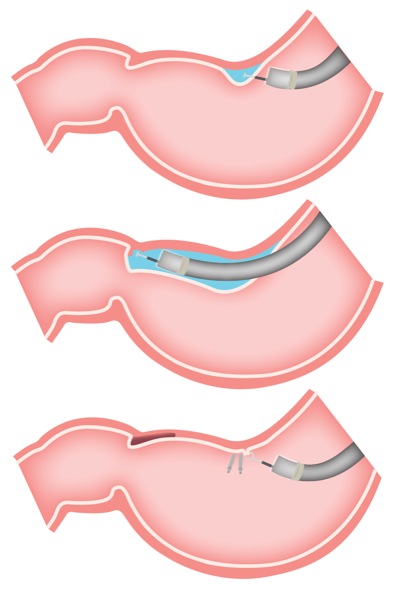
Image Source:HERE.Per-oral pyloromyotomy is a minimally invasive, lower-risk method of disrupting the pylorus that has been shown to improve gastroparesis symptoms.
The POP procedure was performed in the operating room under general anesthesia. Patients stayed in the hospital overnight after the POP procedure and an upper gastrointestinal (GI) series was performed to assess emptying through the pylorus and to check for unrecognized perforations. At discharge, patients were instructed to follow a liquid diet for two weeks and to take anti-acid therapies (sucralfate and a proton pump inhibitor) for four weeks. A repeat gastric-emptying study was performed at three months post-procedure.
The POP procedure produced statistically significant objective and subjective improvements in gastroparesis symptoms at 30 days and three months after treatment. Prior to the procedure, the average percentage of retained food at four hours was 37 percent and the average GCSI score was 4.6. After POP, the retained food percentage was reduced to 20 percent and the GCSI score to 3.3.
One patient died within 30 days of the POP procedure, but his death was unrelated to the surgery. “The procedure is very safe,” says Dr. Rodriguez, “and there were no procedure-related adverse events, including gastric or duodenal ulcer, intraluminal hemorrhage or gastric dumping syndrome.” There were also no repeat surgeries or hospitalizations related to the POP procedure.
A first-line treatment option
“This procedure has dramatically changed our practice at the Cleveland Clinic, and has become our first-line treatment option for medically refractive gastroparesis in well-selected patients,” Dr. Rodriguez says.
According to Matthew D. Kroh, MD, head of the research group and Chief of the Digestive Disease Institute at Cleveland Clinic Abu Dhabi, “POP is an attractive option for patients who in the past would have been offered surgical therapy because it is less invasive. This endoscopic procedure results that are similar to the best alternatives, without the morbidity associated with surgical access, and has a short recovery time.” Dr. Rodriguez adds that “because of its safety profile, we are able to apply POP more broadly than we could apply surgical interventions.”
Dr. Rodriguez reports that Cleveland Clinic has taken the lead in the U.S. with the POP procedure, but because GI motility is so complex and gastroparesis fairly common, he expects to see the technique become more widespread as more experience aggregates on its long-term safety and effectiveness."
"Early human experience with Per-Oral Endoscopic Pyloromyotomy (POP)
Eran Shlomovitz, MD, Radu Pescarus, MD, Ahmed Sharata, MD, Kevin M Reavis, MD, Christy M Dunst, MD, Lee L Swanstrom, MD. Providence Portland Medical Center, The Oregon Clinic..
Introduction:
Gastroparesis, a condition characterized by delayed gastric emptying, and a constellation of symptoms including nausea, vomiting, early satiety and bloating, is a debilitating condition. A variety of surgical options are available including pyloroplasty and pyloromyotomy. Although these have been shown to be effective they are associated with surgical trauma. We hypothesize that an endoscopic submucosal myotomy technique can be applied to endoscopically divide the pyloric sphincter, provide the benefits of a natural orifice procedure and improve gastric emptying in gastroparetic patients.
Methods and procedures:
Endoscopic per-oral pyloromyotomy (POP) was performed in four female patients ages 65, 59, 33 and 32 years old. All patient underwent a complete pre-operative work-up including upper endoscopy, gastric emptying study as well as a pH study and esophageal manometry if a concomitant fundoplication was performed. Three procedures were performed under laparoscopic guidance as patients required other concurrent laparoscopic procedures (see table). In one patient the procedure was fully endoscopic. The myotomy was performed by a technique similar to the one utilized in the POEM procedure. After the creation of a mucosotomy, a submucosal tunnel is established up to the duodenal bulb followed by a myotomy of the circular fibers of the pylorus. The mucosotomy is subsequently closed with clips.
Results:
Endoscopic per-oral pyloromyotomy was technically successful in all four cases and patients were discharged home on post operative day 2 or 3. There were no immediate procedural complications. One patient presented to the hospital 2 weeks post procedure with an upper GI bleed necessitating transfusions. On endoscopy a 1cm ulcer was found in the pyloric channel and an exposed vessel was clipped. The patient was subsequently discharged home on high dose proton pump inhibitors. Three month follow-up nuclear medicine gastric emptying studies (GES) are available for 3 of the 4 patients. Normalization of gastric emptying studies was demonstrated in 2 patients. Patient 3 showed improved gastric emptying half life, but unchanged residual activity at 4hrs.
Concomitant procedure
Operative time
Blood loss
Pre-op GES
Post-op GES
Patient 1
65 F
Cholecystectomy
102 min
Minimal
Half life: 150min
Residual at 4hrs: 29%
Half life: 36min
Residual at 4hrs: 0%
Patient 2
59 F
Redo- PEH repair and Nissen
295 min
100 cc
Half life: 90min
Residual at 4hrs: 14%
Half life: 18min
Residual at 4hrs: 0%
Patient 3
33 F
Nissen
231 min
Minimal
Half life: 160-170min
Residual at 4hrs: 15%
Half life: 70-90min
Residual at 4hrs: 14%
Conclusion:
Endoscopic pyloromyotomy is a technically feasible and potentially much less morbid endoscopic surgical procedure. Early follow-up suggests objective improvement in gastric emptying. Further long-term follow-up and additional clinical experience is required to establish the role of this technique in the management of gastroparesis."
Now, I want to discuss ERCP. I have had this procedure done to me, personally, and it helped me a great deal. I had my ERCP done in 2012, when I was first diagnosed with Gastroparesis. The doctors had to place a stent in my bile duct of my liver because it was not draining bile properly. You can read more about my personal experiences in my earlier blog articles:
I did develop pancreatitis after the procedure, which can be a side effect. That was a very painful experience. However, I want to research ERCP for those of you whose doctors may have suggested it, for those of you curious about it, and for those of you who might not know about the procedure itself.
There is a wonderful video with an explanation of the procedure made bySages,
This talk was presented at the 2018 SAGES Meeting/16th World Congress
of Endoscopic Surgery by Heidi J Miller during the When Bad Things
Happen to Good People – Endoscopy: Being FLEXible on April 14 2018
Endoscopic retrograde cholangiopancreatography (ERCP) is a procedure that combines upper gastrointestinal (GI) endoscopy and x-rays to treat problems of the bile and pancreatic ducts.
What are the bile and pancreatic ducts?
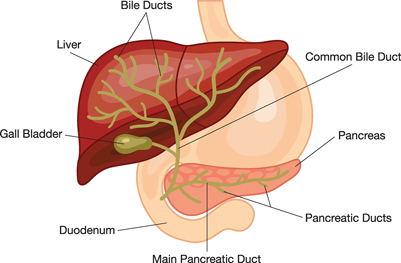
Your bile ducts are tubes that carry bile from your liver to your gallbladder and duodenum. Your pancreatic ducts are tubes that carry pancreatic juice from your pancreas to your duodenum. Small pancreatic ducts empty into the main pancreatic duct. Your common bile duct and main pancreatic duct join before emptying into your duodenum.
Why do doctors use ERCP?
Doctors use ERCP to treat problems of the bile and pancreatic ducts.
Doctors also use ERCP to diagnose problems of the bile and pancreatic
ducts if they expect to treat problems during the procedure. For
diagnosis alone, doctors may use noninvasive tests—tests that do not
physically enter the body—instead of ERCP. Noninvasive tests such as
magnetic resonance cholangiopancreatography (MRCP)—a type of magnetic resonance imaging (MRI) —are safer and can also diagnose many problems of the bile and pancreatic ducts.
Doctors perform ERCP when your bile or pancreatic ducts have become narrowed or blocked because of
gallstones that form in your gallbladder and become stuck in your common bile duct
To prepare for ERCP, talk with your doctor, arrange for a ride home, and follow your doctor’s instructions.
Talk with your doctor
You should talk with your doctor about any allergies and medical
conditions you have and all prescribed and over-the-counter medicines,
vitamins, and supplements you take, including
nonsteroidal anti-inflammatory drugs (NSAIDs) such as ibuprofen and naproxen
Your doctor may ask you to temporarily stop taking medicines that
affect blood clotting or interact with sedatives. You typically receive
sedatives during ERCP to help you relax and stay comfortable.
Tell your doctor if you are, or may be, pregnant. If you are pregnant
and need ERCP to treat a problem, the doctor performing the procedure
may make changes to protect the fetus from x-rays. Research has found
that ERCP is generally safe during pregnancy.1
Arrange for a ride home
For safety reasons, you can’t drive for 24 hours after ERCP, as the sedatives or anesthesia used during the procedure needs time to wear off. You will need to make plans for getting a ride home after ERCP.
Don’t eat, drink, smoke, or chew gum
To see your upper GI tract clearly, you doctor will most likely ask
you not to eat, drink, smoke, or chew gum during the 8 hours before
ERCP.
How do doctors perform ERCP?
Doctors who have specialized training in ERCP perform this procedure at a hospital or an outpatient center. An intravenous
(IV) needle will be placed in your arm to provide a sedative. Sedatives
help you stay relaxed and comfortable during the procedure. A health
care professional will give you a liquid anesthetic to gargle or will
spray anesthetic on the back of your throat. The anesthetic numbs your
throat and helps prevent gagging during the procedure. The health care
staff will monitor your vital signs and keep you as comfortable as
possible. In some cases, you may receive general anesthesia.
You’ll be asked to lie on an examination table. The doctor will carefully feed the endoscope down your esophagus, through your stomach,
and into your duodenum. A small camera mounted on the endoscope will
send a video image to a monitor. The endoscope pumps air into your
stomach and duodenum, making them easier to see.
During ERCP, the doctor
locates the opening where the bile and pancreatic ducts empty into the duodenum
slides a thin, flexible tube called a catheter through the endoscope and into the ducts
injects a special dye, also called contrast medium, into the ducts through the catheter to make the ducts more visible on x-rays
uses a type of x-ray imaging, called fluoroscopy, to examine the ducts and look for narrowed areas or blockages
The doctor may pass tiny tools through the endoscope to
insert stents—tiny tubes that a doctor leaves in narrowed ducts
to hold them open. A doctor may also insert temporary stents to stop
bile leaks that can occur after gallbladder surgery.
The procedure most often takes between 1 and 2 hours.
What should I expect after ERCP?
After ERCP, you can expect the following:
You will most often stay at the hospital or outpatient center
for 1 to 2 hours after the procedure so the sedation or anesthesia can
wear off. In some cases, you may need to stay overnight in the hospital
after ERCP.
You may have bloating or nausea for a short time after the procedure.
You may have a sore throat for 1 to 2 days.
You can go back to a normal diet once your swallowing has returned to normal.
You should rest at home for the remainder of the day.
Following the procedure, you—or a friend or family member who is with
you if you’re still groggy—will receive instructions on how to care for
yourself after the procedure. You should follow all instructions.
You will receive instructions on how to care for yourself after ERCP. You should follow all instructions.
Some results from ERCP are available right away after the procedure.
After the sedative has worn off, the doctor will share results with you
or, if you choose, with your friend or family member.
If the doctor performed a biopsy, a pathologist will examine the biopsy tissue. Biopsy results take a few days or longer to come back.
What are the risks of ERCP?
The risks of ERCP include complications such as the following:
pancreatitis
infection of the bile ducts or gallbladder
excessive bleeding, called hemorrhage
an abnormal reaction to the sedative, including respiratory or cardiac problems
perforation in the bile or pancreatic ducts, or in the duodenum near the opening where the bile and pancreatic ducts empty into it
tissue damage from x-ray exposure
death, although this complication is rare
Research has found that these complications occur in about 5 to 10 percent of ERCP procedures.2 People with complications often need treatment at a hospital.
As always, please discuss these procedures with your doctors. This is just research I have compiled but it does not take the place of a doctor's expertise or advice.
Endoscopic — Refers to a tool called an
endoscope, a long, thin (about the width of your little finger),
flexible tube with a camera on the end.
Retrograde — Refers to the direction (backward)
in which the endoscope injects a liquid for X-rays of parts of the GI
tract called the bile duct system and pancreas.
Cholangio — Refers to the bile duct system.
Pancreatography — Refers to the pancreas.
The process of taking these X-rays is known as cholangiopancreatography.
ERCP can help find the cause of jaundice (when your skin and/or the whites of your eyes turn yellow) or pancreatitis, which is inflammation (swelling and redness) of the pancreas that is often caused by gallstones or alcohol abuse. ERCP can also treat some of those issues.
Using tools passed through the endoscopic tube, your doctor can
inject dye to light up organs under X-rays. This provides a clear view
of your pancreas, pancreatic duct, bile duct system, gallbladder and
duodenum (the first portion of the small intestine).
ERCP is an endoscopic procedure used to inject dye into the bile and pancreas ducts. X-ray pictures are then taken.
ERCP can see if there is a blockage or narrowing in your biliary or pancreatic ducts caused by stones, tumors or scarring.
ERCP is frequently performed to find the cause of abnormal
liver-chemistry tests and to follow up on an abnormal ultrasound, CT
scan or MRI exam.
During an ERCP, if any blocks are found, tools can be passed through to relieve the block. Stones can be removed from the common bile duct or pancreatic duct and blocks can be dilated, biopsied and/or stented.
ERCP can relieve jaundice (when your skin and/or the whites of your eyes turn yellow) caused by blocked bile ducts.
ERCP can help find the cause of pancreatitis, inflammation (swelling and redness) of the pancreas, and prevent future attacks.
Source: On The Image but one of my favorites on how to explain Gastroparesis.
Clinical Trials - We Need Better Treatments
I apologize for taking so long to write an article. I, myself, have had a rough year like everyone else seemed to in the GP Community. I lost A LOT of friends last year in my support groups, people I started support groups with, and people I talked to regularly. I logged into Facebook this morning to check on my groups, as I've been sick with pneumonia on top of Gastroparesis for the past week and a half (before that, my husband and I were passing a respiratory virus back and forth) and found another one of my friends had died. She was someone I've known since I first started advocating for Gastroparesis. She was apart of the handful of women who helped start Gastroparesis support groups and build up the Gastroparesis Community. I wanted to dedicated this article to her, and the other friends I've lost. Last year, we lost 48 people. This year, so far, I think the total is four or five people. It's heartbreaking. We need better treatments. Having invasive "treatments" like feeding tubes, which can cause infections and worse, and then on the other end of the spectrum, medicine like Reglan, which can lead to irreversible, neurological disorders. We need medication to help our stomachs, to keep them from cramping so badly, to help them contract.
We need SOME kind of help. I'm so upset at watching my friends suffer and die. I get scared every time I throw up, wondering if it's going to be the last time - if this is the time I'm going to rupture my esophagus and die. I get panic attacks logging on to Facebook, scared I might read another one of my friends has passed away, which always upsets me right away, not only because they passed, but I feel like when I take breaks from Facebook, that I'm letting them down for not being online. I feel like I didn't get to say what I wanted to say to them before they passed. Most of that is on me. I've been not terrified to log into Facebook, but just
Gastroparesis is a chronic, morbid and costly neuromuscular disorder of the stomach characterized by delayed gastric emptying in the absence of gross structural abnormalities. The periprandial symptoms associated with this disease can preclude adequate oral intake and often lead to weight loss and nutritional deficiencies 1. These manifestations are largely due to impaired gastric accommodation of meals and delayed transfer of food boluses from the stomach into the duodenum2. Consequently, the investigators hypothesize that dietary supplementation with a low volume, hypercaloric nutritional drink can help prevent malnutrition, decrease symptom burden and improve health-related quality of life in this population. Due to the paucity of such a supplement, the investigators developed a novel nutritional drink designed to maximize tolerability in patients with gastroparesis . This nutritional drink was tested on healthy volunteers (phase I) and passed the palatability test. The investigators now aim to test the tolerability of this drink on gastroparesis patients.
Condition or disease Intervention/treatment Phase
Gastroparesis Dietary Supplement: Nutrient drink Not Applicable
Detailed Description:
Primary objective:
To evaluate the safety and tolerability of the nutritional drink in gastroparesis patients.
Secondary objective:
To evaluate the efficacy of the nutritional drink in gastroparesis patients.
Study Procedures This study will be a pilot, open-label, trial in gastroparesis patients. A total of 20 patients will be recruited from the gastroenterology gastroparesis clinic. If the volunteer meets eligibility criteria, a co-investigator will contact the patient to schedule a study visit with a nutritionist and obtain a written consent. The contact and screening information of patients that are successfully recruited will be documented, placed in the participant's study folder and stored in a locked cabinet in the research unit. Any information documented during the screening process for patients who do not meet basic eligibility criteria or do not wish to participate will be immediately destroyed.
Patients will be given enough supply of the nutrition drink for (4 weeks) and asked to consume 200 ml of the drink three times daily. A follow-up call will be scheduled on day 2, day 7 and at the end of the study to make sure patients are tolerating the drink. Participants will be allowed to consume water and food as desired during the study period but will need to maintain an accurate food diary for at least one week prior to enrollment and during the study (at 2 weeks and at 4 weeks) along with weight measurements at baseline, 2 weeks, 4 weeks and 6 weeks. The participants will be asked to complete a palatability questionnaire. They will also complete the Gastroparesis Cardinal Symptom Index (GCSI) daily diary and the PROMISE scale prior to enrollment as a baseline for their symptoms and again at 2 weeks, 4 weeks (end of the study) and 6 weeks. Changes in these scales from baseline will determine the efficacy and possibly side effects of the nutritional drink.
Study duration and number of study visits required of research participants:
4 weeks, initial study visit with a nutritionist for screening and consenting followed by 3 follow-up phone calls on day 2, day 7 and at 4 weeks (the end of the study) and a final study visit at 6 weeks (2 weeks after finishing the study)
Study Type : Interventional (Clinical Trial)
Estimated Enrollment : 20 participants
Intervention Model: Single Group Assignment
Intervention Model Description: Pilot feasibility open-label study
Masking: None (Open Label)
Primary Purpose: Treatment
Official Title: Nutritional Drink in Gastroparesis
Estimated Study Start Date : February 1, 2019
Estimated Primary Completion Date : May 2019
Estimated Study Completion Date : August 2019
Primary Outcome Measures:
Tolerability will be measured by the Palatability Questionnaire at 2 days [ Time Frame: 2 days post-intervention ]
Patients will be given enough supply of the nutrition drink for 4 weeks and asked to consume 200 ml of the drink three times daily. A follow-up call will be scheduled on day 2 of the study to make sure patients are tolerating the drink.
Tolerability will be measured by the Palatability Questionnaire which rates six items on a scale of 1 to 5 (1= strongly disagree and 5= strongly agree. The six items are:
The formula/supplement tasted very good.
The formula/supplement tasted very bad.
I had no problems drinking the supplement.
Drinking the supplement made me feel ill.
I could drink more of this supplement anytime
I would never drink more of this supplement again
Tolerability will be measured by the Palatability Questionnaire at 7 days [ Time Frame: 7 days post-intervention ]
Patients will be given enough supply of the nutrition drink for 4 weeks and asked to consume 200 ml of the drink three times daily. A follow-up call will be scheduled on day 7 of the study to make sure patients are tolerating the drink.
Tolerability will be measured by the Palatability Questionnaire which rates six items on a scale of 1 to 5 (1= strongly disagree and 5= strongly agree. The six items are:
The formula/supplement tasted very good.
The formula/supplement tasted very bad.
I had no problems drinking the supplement.
Drinking the supplement made me feel ill.
I could drink more of this supplement anytime
I would never drink more of this supplement again
Tolerability will be measured by the Palatability Questionnaire at 4 weeks [ Time Frame: 4 weeks post-intervention ]
Patients will be given enough supply of the nutrition drink for 4 weeks and asked to consume 200 ml of the drink three times daily. A follow-up call will be scheduled at 4 weeks to make sure patients are tolerating the drink.
Tolerability will be measured by the Palatability Questionnaire which rates six items on a scale of 1 to 5 (1= strongly disagree and 5= strongly agree. The six items are:
The formula/supplement tasted very good.
The formula/supplement tasted very bad.
I had no problems drinking the supplement.
Drinking the supplement made me feel ill.
I could drink more of this supplement anytime
I would never drink more of this supplement again
Safety will be measured by the NIH PROMISE scale at baseline [ Time Frame: Baseline ]
This will be measured by the NIH PROMISE scale. This is a 10 point scale (0=none and 10= most severe) that rates the following symptoms:
Pain, especially in the abdomen, chest or back
Abdominal distension (bloating, sensation of excess gas)
Difficulty eating, sensation of food being stuck in the stomach.
Difficulty with bowel movements (constipation or straining)
Nausea and/or vomiting
Thirst
Weakness, lack of energy, fatigue, difficulty moving.
Safety will be measured by the NIH PROMISE scale at 2 weeks [ Time Frame: 2 weeks post-intervention ]
This will be measured by the NIH PROMISE scale. This is a 10 point scale (0=none and 10= most severe) that rates the following symptoms:
Pain, especially in the abdomen, chest or back
Abdominal distension (bloating, sensation of excess gas)
Difficulty eating, sensation of food being stuck in the stomach.
Difficulty with bowel movements (constipation or straining)
Nausea and/or vomiting
Thirst
Weakness, lack of energy, fatigue, difficulty moving.
Safety will be measured by the NIH PROMISE scale at 4 weeks [ Time Frame: 4 weeks post-intervention ]
This will be measured by the NIH PROMISE scale. This is a 10 point scale (0=none and 10= most severe) that rates the following symptoms:
Pain, especially in the abdomen, chest or back
Abdominal distension (bloating, sensation of excess gas)
Difficulty eating, sensation of food being stuck in the stomach.
Difficulty with bowel movements (constipation or straining)
Nausea and/or vomiting
Thirst
Weakness, lack of energy, fatigue, difficulty moving.
Safety will be measured by the NIH PROMISE scale at 6 weeks [ Time Frame: 6 weeks post-intervention ]
This will be measured by the NIH PROMISE scale. This is a 10 point scale (0=none and 10= most severe) that rates the following symptoms:
Pain, especially in the abdomen, chest or back
Abdominal distension (bloating, sensation of excess gas)
Difficulty eating, sensation of food being stuck in the stomach.
Difficulty with bowel movements (constipation or straining)
Nausea and/or vomiting
Thirst
Weakness, lack of energy, fatigue, difficulty moving.
Improvement in gastroparesis symptoms [ Time Frame: Baseline, 2, 4 and 6 weeks ]
Change in weight compared to baseline
Improvement in gastroparesis symptoms [ Time Frame: Baseline, 2, 4 and 6 weeks ]
Changes in the Gastroparesis Cardinal Symptom Index (GCSI) daily diary as compared to baseline. This is a six point severity scale (0-5 with 0= none and 5 = very severe) that rates the following symptoms
Nausea
Early satiety
Postprandial fullness
Bloating
Upper abdominal pain
Retching
Vomiting
Stomach fullness
Loss of appetite
Stomach or belly visibly large
Information from the National Library of Medicine
Choosing to participate in a study is an important personal decision. Talk with your doctor and family members or friends about deciding to join a study. To learn more about this study, you or your doctor may contact the study research staff using the contacts provided below. For general information, Learn About Clinical Studies.
Ages Eligible for Study: 16 Years and older (Child, Adult, Older Adult)
Sexes Eligible for Study: All
Gender Based Eligibility: Yes
Gender Eligibility Description: Female or male
Accepts Healthy Volunteers: No
Criteria
Inclusion Criteria:
Patients with gastroparesis confirmed with symptoms and a gastric emptying study.
Inability to maintain adequate caloric intake by standard dietary measures for gastroparesis due to gastrointestinal symptoms
Exclusion Criteria:
Recent diagnosis of disorder other than gastroparesis that could affect food intake
Oropharyngeal dysphagia or other condition with risk for aspiration from oral ingestion.
Allergic reactions to any of the ingredients of the nutritional drink
Current pregnancy. Pregnancy status will be determined by questioning the potential subject.
Patient with gastrostomy/jejunostomy tube feeds or on total parenteral nutrition
Currently taking any anti-coagulant
Information from the National Library of Medicine
To learn more about this study, you or your doctor may contact the study research staff using the contact information provided by the sponsor.
Please refer to this study by its ClinicalTrials.gov identifier (NCT number): NCT03500354
Contacts
Contact: Pankaj J Pasricha, MD 4105027173 ppasric1@jhmi.edu
Contact: Carmen Roberts 4105027173 ccroberts@jhmi.edu
Locations
United States, Maryland
Johns Hopkins University Active, not recruiting
Baltimore, Maryland, United States, 21287
Sponsors and Collaborators
Johns Hopkins University
Investigators
Principal Investigator: Pankaj J Pasricha, MD Johns Hopkins University
More Information
Go to
Responsible Party: Johns Hopkins University
ClinicalTrials.gov Identifier: NCT03500354 History of Changes
Other Study ID Numbers: IRB00157677
First Posted: April 17, 2018 Key Record Dates
Last Update Posted: December 19, 2018
Last Verified: December 2018
Individual Participant Data (IPD) Sharing Statement:
Plan to Share IPD: No
Studies a U.S. FDA-regulated Drug Product: No
Studies a U.S. FDA-regulated Device Product: No
Keywords provided by Johns Hopkins University:
malnutrition
Additional relevant MeSH terms:
Gastroparesis
Stomach Diseases
Gastrointestinal Diseases
Digestive System Diseases
Paralysis
Neurologic Manifestations
Signs and Symptoms"
In May of 2013, I asked you guys to send me progressional timelines, which some of you did. First, let me explain what it is.
A progressional timeline that I'm looking for includes sequential years for - what happened right before you got sick, when you got sick, doctors visits and what they told you, any pain specialists, testings, test results, and your symptoms when you first got sick and symptoms before and now. Also, what do you think caused it? Include that in your timeline, too.
In addition to that, please write the dates for when you discovered other medical conditions before and after Gastroparesis. Please include whether you still have your gallbladder and/or appendix. If you no longer have your gallbladder and/or appendix, please put the date/year that you had it/them taken out.
Were you diagnosed with Gastroparesis after your gallbladder was removed? Where you diagnosed after your appendix was removed? When were you diagnosed with EDS or Dysautonomia or both? Do you have all three, including Gastroparesis? Have you been diagnosed with more autoimmune illnesses once you were diagnosed with the first one? Do you have lupus or any other autoimmune illnesses? Please include those in your timeline, too.
I want to compare this to other people's progressive timelines. My goal is to find a common link between all of us and our Gastroparesis and maybe it might shed some light on why we are diagnosed with other chronic illnesses. I know it will not be exactly scientific, but it IS a start and everyone has to start somewhere.
Additionally, I can post results anonymously. If you wish to remain anonymous, just please let me know in the email that you send. I will ALWAYS respect your privacy.
Here is an example of a progressional time line that was sent to me:
Source: Withheld for privacy but this is what I am looking for.
PLEASE EMAIL YOUR TIMELINE TO EMILYSSTOMACH@GMAIL.COM AND INDICATE WHETHER YOU WANT TO BE ANONYMOUS OR NOT. ALSO, I NEED YOUR CONSENT STATED IN THE EMAIL THAT IT'S OK TO USE YOUR INFORMATION FOR RESEARCH AND PERMISSION TO HAND OVER ALL OF MY RESEARCH AFTER I WRITE MY PAPER TO A MEDICAL RESEARCHER WHO WOULD LIKE TO EXPAND ON MY RESEARCH. PLEASE INCLUDE YOUR CONTACT INFORMATION IF I NEED TO ASK YOU ADDITIONAL QUESTIONS.
Also, I wasn't trying to yell, but I wanted that to stand out since a medical researcher has gotten wind of the project. Keep in mind that when I hand over my research to her, names will be omitted but it could be a game changer for GP since this has never been done before.
I would like to receive a variety of samples - Idiopathic GPers, Diabetic GPers, Pediatric GPers, and Newly Diagnosed GPers. I want a variety of data to work with. So, if you think that you're not important because you're new to GP, you'd be wrong. I would also like to include the same with those with Ehlers Danlos Syndrome and Dystonia<.
Also, please include your age, for data grouping, and if you want to include a short bio, you can do that aww wool Please also include your name and contact information in case I need to follow up with you in depth with your timeline for any questions/concerns.
Also, if you can't remember dates, you can approximate or just write out your GP/DTP/Dysautonomia/EDS medical history. I can work with that, too. Excel might be the easiest way to put your information down.
Thanks again for participating in this research project for progressional timelines.
I am also collecting Emergency Room (ER) stories from people who have Gastroparesis (and/or any other invisible, chronic illness) because I want people to be aware of how we are treated when we go to the Emergency Room.
I feel like these stories will bring more awareness to what we go through as people who are battling chronic, invisible illnesses. I feel like the way we are treated is unfair and not right.
Doctors took an oath to help others and so what if the people coming in are drug addicts? Drug addicts can't have medical emergencies? They shouldn't judge but help instead of dismissing us.
"The Hippocratic Oath is as follows,
"I swear to fulfill, to the best of my ability and judgment, this covenant:
I will respect the hard-won scientific gains of those physicians in whose steps I walk, and gladly share such knowledge as is mine with those who are to follow.
I will apply, for the benefit of the sick, all measures [that] are required, avoiding those twin traps of overtreatment and therapeutic nihilism.
I will remember that there is art to medicine as well as science, and that warmth, sympathy, and understanding may outweigh the surgeon's knife or the chemist's drug.
I will not be ashamed to say 'I know not,' nor will I fail to call in my colleagues when the skills of another are needed for a patient's recovery.
I will respect the privacy of my patients, for their problems are not disclosed to me that the world may know. Most especially must I tread with care in matters of life and death. If it is given me to save a life, all thanks. But it may also be within my power to take a life; this awesome responsibility must be faced with great humbleness and awareness of my own frailty. Above all, I must not play at God.
I will remember that I do not treat a fever chart, a cancerous growth, but a sick human being, whose illness may affect the person's family and economic stability. My responsibility includes these related problems, if I am to care adequately for the sick.
I will prevent disease whenever I can, for prevention is preferable to cure.
I will remember that I remain a member of society, with special obligations to all my fellow human beings, those sound of mind and body as well as the infirm.
If I do not violate this oath, may I enjoy life and art, respected while I live and remembered with affection thereafter. May I always act so as to preserve the finest traditions of my calling and may I long experience the joy of healing those who seek my help."
If you would like to share your ER story/stories with me, please email them to me: emilysstomach@gmail.com.
One of my friends went to the Emergency Room last week, they dismissed her as a drug addict, and so she went home and committed suicide because she was tired of the medical system failing her.
If you are thinking about suicide and/or suicidal thoughts, PLEASE call your doctor! You are NOT alone!
Please see my blog article here, about Suicide and Chronic Illness:
These are why your stories are so important - "Stories of Hope" or your "Emergency Room Stories." You may just save a life and you might not know it.
This "drug seeking" stigma has got to stop.
My neighbor is a nurse at an Emergency Room, by where I live. She told me that Gastroparesis was not real, and the people who came into the ER where she worked who claimed had Gastroparesis, only wanted pain medicine. I wanted to tell her that it would have been a lot easier for me to buy drugs off of the street than to spend thousands at an Emergency Room, and then being poked and prodded one hundred times! Additionally, when you are THAT sick to go to the Emergency Room, you should NOT have to fight for basic healthcare.
I have three different tests that prove I have Gastroparesis, and I cannot make those results up. I am not sure if doctors or nurses do continuing education, but more and more people are being diagnosed with Gastroparesis and other invisible illnesses.
The Hippocratic Oath states,
"I swear to fulfill, to the best of my ability and judgment, this covenant:
I will respect the hard-won scientific gains of those physicians in whose steps I walk, and gladly share such knowledge as is mine with those who are to follow.
I will apply, for the benefit of the sick, all measures [that] are required, avoiding those twin traps of overtreatment and therapeutic nihilism.
I will remember that there is art to medicine as well as science, and that warmth, sympathy, and understanding may outweigh the surgeon's knife or the chemist's drug.
I will not be ashamed to say 'I know not,' nor will I fail to call in my colleagues when the skills of another are needed for a patient's recovery.
I will respect the privacy of my patients, for their problems are not disclosed to me that the world may know. Most especially must I tread with care in matters of life and death. If it is given me to save a life, all thanks. But it may also be within my power to take a life; this awesome responsibility must be faced with great humbleness and awareness of my own frailty. Above all, I must not play at God.
I will remember that I do not treat a fever chart, a cancerous growth, but a sick human being, whose illness may affect the person's family and economic stability. My responsibility includes these related problems, if I am to care adequately for the sick.
I will prevent disease whenever I can, for prevention is preferable to cure.
I will remember that I remain a member of society, with special obligations to all my fellow human beings, those sound of mind and body as well as the infirm.
If I do not violate this oath, may I enjoy life and art, respected while I live and remembered with affection thereafter. May I always act so as to preserve the finest traditions of my calling and may I long experience the joy of healing those who seek my help."
I do not see anything in there about judging patients and refusing to help them. What is I was a full blown medical addict? What if I was having an honest emergency and needed help? Would I have been judged and sent home to die?
If you would like more information about what is listed here, or if you want to share my blog entry with what is listed here as well, my blog address is: www.emilysstomach.com.
One of my GP friends had that happen (she was not a drug addict though) to her. She went to the Emergency Room where they treated her like a "drug seeker." She was having problems breathing I think, and so the doctor gave her a breathing treatment and sent her on her way. She died at home later that night because her lungs filled up with fluid. The doctor didn't do an x-ray, keep her overnight or anything that could have saved her life. I still cry.
Okay first thanks to all of you who have submitted your ER stories! They have been collected and will be put into slides but have already been listed to the website www.facesofgp.org, in collaboration with my friend who runs that site and they will also be listed in my blog, and my website.
Now for my next request. I want as many faces and personal stories of who you are, when you were diagnosed, how your disease and treatment has affected your life. You can use your first name and last initial or I can make up a name for you (just let me know), but listing your state would be amazing if you feel comfortable with that.
You can email it to me at: emilysstomach@gmail.com
And/or you can post it in the group information below:
Www.facebook.com/groups/FacesOfGP
Together we will make a difference! Again, once the presentation is complete, it will be made available to anyone who would like to advocate to your local hospitals and doctors.
I know there is a lot of negativity involved when you have a chronic illness. It is hard to push negative thoughts out of your head when you cannot go out to eat with friends like you used to, you cannot go to see the latest movies, and you are basically stuck at home, sick all day. It requires a lot of energy from people who are suffering from Gastroparesis to even walk across the room, some days. In the process of coming to terms with an illness like this, Gastroparesis Warriors tend to lose friends, either because the friends do not believe them or because they are too sick to go and hang out, like I mentioned above. Gastroparesis is a very isolating illness, and it hurts us not to be able to do the stuff we once did.
I started having a monthly movie night at my house, scheduled on every second Saturday of the month, so my friends can come over and we can watch movies, play board or card games, and just hang out. It means a lot to me that my friends are willing to do that. I thought I would mention it in here in case someone would like to do something similar. I may not be able to go out all of the time, but it's nice to have people who care about you enough to come over and spend time with you. I wanted to turn the negative into a positive.
I wanted to share some Stories of Hope for you, from other Gastroparesis Warriors, in case you are feeling down.
My friend Jen writes,
"I was a very healthy 38 year old woman when I got sick suddenly in March 2017. I fainted a few times and broke my nose badly and suffered a severe concussion. I had surgery a few weeks later to fix my nose and the following day felt even worse. It was as if over night I could not pass gas, could not have a bowel movement, could not eat solid food or drink anything except Coke. I thought it was related to my narcotic painkillers I was prescribed after surgery. However, it got worse over the next few days and being concerned that I had a ruptured appendix, I went to the ER. They did a CT scan and found a large ruptured ovarian cyst. They gave me more pain meds and sent me home. It didn't get better, only worse. Two weeks later, I went back to the ER suspecting a small bowel obstruction. My CT was negative and they referred me to a GI doctor. I ended up having a upper/lower endoscopy, abdominal ultrasounds and a HIDA scan. At this point, being an RN myself, I suspected I had gastroparesis. I pushed for a GES, which showed more than 80 percent of my 'meal' still in my stomach at 4 hours - severe GP.
At this point, I still couldn't eat food and could only drink Coke and sips of Ensure/Boost. I was getting IV fluids and IV zofran as an outpatient 3-5 times per week. In early June I got an implanted port and home health care, which helped a great deal. I was on 2L D5NS a day plus 8 mg IV zofran every 8 hours. In late July, I started Domperidone. After a couple of weeks, I found I could slowly eat a few "safe" foods and my oral intake improved.
By the end of October, I was off my IV fluids/meds and eating a little bit better. I managed to put weight back on after losing so much. I had been off work as a labor and delivery nurse on disability since March and in late December went back on a very part time basis, slowly increasing my hours over the following few months.
It is now June 2018 and I am doing well, all things considered. I can eat a small amount of my 'safe' foods and the only liquid I can drink remains Coke (even water makes me vomit). I am at a healthy weight for me finally. I am off the domperidone and only access my port once a month to flush it with heparin (off all IV fluids/meds). I am hoping to get my port out later this summer if I continue to do well. I receive vitamin B-12 injections every six weeks and take prescription vitamin D supplements as nutritionally I'm still recovering from severe malnutrition. I still battle some pretty severe fatigue and ended up having to reduce my hours at work from full time to part time to accommodate my lower energy levels.
I am so thankful that I (narrowly) avoided a g-/j- tube and have managed to improve over the last year on my own. My GP was considered idiopathic, meaning they don't know how or why I developed it. They suspect it was either due to damage to the vagus nerve in my repeated fainting episodes or that it was viral in natural. Given that it's improved, I'm leaning toward viral, but we won't ever know for sure.
I received SO much amazing support in the Facebook groups I belong to over the last year and while I haven't been posting in them much lately, I think about all of those people very often. I want others to read my story and have some hope. I know when I was really sick, I had very little hope and it was stories like this that made me think some sort of recovery might be possible for me. I continue to watch many of my friends struggle with GP and my heart goes out to them."
She also included her before picture:
Here is Jen's after picture:
I want to thank her for being brave enough to share her story of hope.
The stories below were sent to me a while ago to include on my website, but I wanted to put them in my blog too because these people deserve to be heard. Plus, you never know, you might relate to some of these stories or they may help you.
The first story is about my friend Kerri, whom I lost this year. It hurts me to talk about but I wanted to put it in my category of "Stories of Hope" because I think she would have wanted that. She would want people to take a positive message from her story and to keep fighting. I believe she would want her story shared so that the same thing does not happen to someone else. Therefore, I present to you, Kerri's story.
"My good friend Kerri passed away day before yesterday (in March). She was only 40 years old. She used study Human Development and Family Studies at Colorado State University, with degrees for the Deaf and Blind to help them. I feel like I've lost too many friends over the year.
This is going to be long but a mutual friend wrote this and I thought it summed up how I feel:
'She didn't have to die yet, the state of medical care in this country killed her. Kerri and I originally met on a service dog forum many years ago. She was an amazingly talented person as well as selfless and with a childlike innocence and sincerity.
She trained her own seeing eye dog!
Those in the SD (seeing dog) community understand how difficult and special that is. When she needed more mobility assistance she was unable to get another guide from an organization.
Kerri's medical care was complex due to the multiple disorders she had and especially by her blindness. She was dependent upon a form of IV nutrition called TPN to live and many IV medications. Being blind obviously complicated this and she relied on a home health nurse to come daily and set things up for her to be able to use safely and continue to live independently. She struggled with frequent hospitalizations due to life threatening infections. At her last one it was determined she was no longer able to live at home alone. She would need to find a skilled nursing home to be discharged from the hospital.
That discharge never happened, after being turned away from 51 different skilled nursing homes. They refused to take her in due to her TPN requirements. Insurance didn't allow for any further assistance in her home than she was already receiving.
Kerri had many friends both online and in her assisted living apartment complex. She continued to work from home for jamberry until not too long ago. In her younger years she was a competitive ice skater despite the blindness. Had also recently been correctly dx (diagnosed) with conditions that explained symptoms and complications she'd experienced for MANY years and started treatment (it takes way too long to receive correct diagnosis). Now we will never know how much function she could have gained back. Especially, the improvement of the immune system to prevent the frequent life threatening infections.
Due to the inability to find medical care in the form of a safe place to live, she made the only choice she had, which was to die. It didn't have to be this way. She decided upon the next infection she would not treat it. That was taking too long, and she began to discontinue treatments that sustain life such as the TPN and IV hydration (she was completely unable to use her gastrointestinal tract). She has now passed on.
We need to improve the medical options available for complex patients. We need to improve insurance so people can receive the care they need. We need to stop the incentives for doctors to refuse care (for fear of litigation and punishment from the government. Today in medicine it's safer for doctors to walk away from complex patients rather than open themselves up to the risk, something I've experienced myself as well). We need to incentivize medical professionals to provide the best treatment they're able.
We need to improve.
We need to change.
We need to save the Kerri's of the world, allow them to live as long as possible to contribute to the world.
No one should die simply because people weren't willing to TRY. She didn't die because her condition got worse and not because there were no treatments available. She didn't die waiting for a medical breakthrough (though one that could have cured some of her conditions instead of maintaining them is a future goal).
She died simply because no one was willing to provide what she needed and was available. She had so much more to give the world. She is survived by family, including her amazing Labrador guide and mobility assistance service dog Sophie as well as her daschund Mandy, and many friends.'"
Kerri in the hospital via Facebook.
Trish's Story of Hope:
"Trish’s Story of Hope
Written By: Trish
"My name is Trish Rhodes, and one day back in April 2011, I woke up one day with nausea and constipation. So went to work and it was awful the whole day. That weekend I was so sick, I had started vomiting, major stomach pains and slept most of that weekend. So I went to the doctor that following week, then the tests began. I did a CT scan of abdomen area, MRI of bile ducts, EGD, MRCP, many blood tests. All tests came back normal. This was hard to take so I went back to my GI doctor and it seemed like he had given up on me. So I went to my PCP and told him how I felt about the GI doctor and previously I had done some research and came across the GES test. So got that scheduled and it came back abnormal. Finally I knew an answer. But I sure didn't know the extent of this awful condition. My GI doctor was no help so I fired him and got referred to another one 2 hours away.
I would say about a year later I went to this 2nd GI doctor and I like him, he spent the time to talk to me about how I was feeling, what I was eating, my weight, etc etc. Then he wanted more tests. Blood tests, Colonscopy, another GES. Everything was good besides the GES. So that was hard hearing that information again for some reason. So then I dont hear from this doctor for almost a year and finally schedule another appointment which I think are pointless because these doctors are no help whatsoever! Now he is all concerned about my weight, which I weighed the exact same as the 1st appointment. Another depressing appointment. He did put me on some pancreatic enzymes because I had pancreatitis when I got my gallbladder out 6 months prior to these symptoms starting. It feels like they may be working but not sure. Also they have no idea on why I got this.
So I decided to go to a chiropractor. My initial thought was to try acupuncture but my insurance doesn't cover this. So I went to appointment anyways and I feel almost 75% better. I still have my moments and have a lot of stomach pain and nausea. I have to take Tramadol for the pain and it takes care of it for the most part unless I am having a bad flare up. Those usually lasts weeks. But I feel like something has changed since going to this chiropractor. I am very limited on what I eat. Hardly ever eat out and when I do its really hard, lots of anxiety I may eat something wrong or whatever. I also have a 4 year old daughter so I have no time to be down. She just won't allow it. She has Chiari Malformation (rare brain disorder) so she needs me to be healthy and strong for her on the days she has headaches, neck pains, leg or foot pains. I am 5ft and weigh 94 lbs. So I am very underweight. But I still want there to be more research. I do take Domperidone and there needs to be more testing on that drug or it be available in the United States because it works for me. It definitely takes away my nausea. Please help us find a cure!!! There are so many people that suffer from stomach conditions and we all need help!"
Brie and Trish.
Here is Leanne's Story of Hope:
"Leanne’s Story of Hope
Written By: Leanne
Hi Everyone, I was asked this past Sunday to write a short bio of myself, and to explain why I think it's important to fight gastroparesis.
I'm 42 years old and live in a small town called Tillsonburg in Ontario, Canada. I have a wonderful boyfriend, we've been together a for a couple of years, and we have two cats and a dog. I also have amazing parents who have advocated and fought for me every step of the way.
I've had GP for 30 years, but went misdiagnosed for the first 20 years. I kind of consider myself a GP veteran with this many years under my belt, but in no way do I think that that makes me an expert. My GP symptoms began around the age of 12, after I incurred a a pretty bad back injury, spondylosis with severe degenerative disc disease and spondyloarthritis. My injury also went misdiagnosed and worsened over time. While it's been speculated that this is the contributing factor to my GP, no one is sure. I also have severe IBS.
The first 20 years were tough. Doctors, meds, tests, and lost opportunities. I ended up having to drop out of University in my 3rd year due to GP, I had hoped to get my PhD. in psychology. I learned pretty quickly that life doesn't always turn out as one hopes. For the last ten of those 20 years it was "all in my head" according to the doctors, and I often found myself in that medical paradox, asking for help from the medical community that I was at the same time constantly fighting.
At this point, I had given up. I was horribly sick, I had lost over 100 pounds (my weight has always fluctuated, I've gained and lost over 100 pounds 5 times now, with smaller fluctuations in between). My doctor refused to give me another feeding tube, because my "issues were psychological" and not medical. To be completely honest, I thought I wanted to die. I'd had enough and I had come to the realization that no one was going to help me.
There I sat, looking out the window, at my lowest point, thinking about how absolutely horrible my life had turned out to be. Then, out of the corner of my eye, I spotted a hummingbird. I watched her going about her business, going from flower to flower, doing her thing. Suddenly, I noticed something. I WAS SMILING. Here I am, at the lowest of the low and something so inconsequential as a hummingbird was able to put a smile on my face. It had brought me a moment of joy, something I had not allowed myself to experience while I wallowed in my misery. I had gotten so caught up in my fight with GP that I had forgotten to allow wonder and beauty into my life. I suddenly realized that my spirit, while beaten up and bruised, was not broken. I was and am far tougher some shitty illness.
I pulled myself up, got myself together, and started to REALLY ADVOCATE for myself. I found a specialist on my own, went in with an agenda and plan of what I wanted and what I was willing and unwilling to do. To make a long story short, my advocating made all the difference, and I was finally diagnosed soon after.
Since my diagnoses, life has been better. It's still really rough at times, as everyone with GP knows. It's very easy to allow oneself to get completely caught in the medical misery of it all. The one thing I'd like you to take from my story is, to take a moment, a breath, if you will, and allow yourself to see the wonderment and joy life has to offer, no matter how fleeting that moment may be. Those little moments are the things that make the fight worthwhile.
You'll realize that you are tougher than you think, and you just may find yourself smiling.
Much love."
This is a picture of Leanne.
This is Daniel's Story of Hope:
"Daniel’s Story of Hope
Written By: Daniel
Last night was a good night. I felt well enough after work to clear the snow from our neighbor’s driveway as well as our own. It took a long time and was heavy, wet snow (got to love New England) but I didn’t even have my usual wiped out feeling after. My son watched me with the “tractor” (snow blower) out the window and I gave him snowballs to eat, his favorite. When I was done I came inside, wrestled with my son in the living room, ate dinner with the family and watched a movie with my wife before bed. Unfortunately because I was feeling so good and having fun, I made some bad food choices.
Today was not a good day for my Gastroparesis. I woke up in the middle of the night with the usual nausea and beyond full stomach. I woke up this morning and knew it would not be a good day. I was wiped out, my nausea was terrible and I just wanted to go back to bed. But I got ready and went to work. Things only got worse from there as my nausea increased. At one point this morning I did not think I could make it through a meeting for fear of vomiting. But I pressed on.
I kept telling myself to just make it a few more minutes, to just focus on a specific task, to just calm down and keep going a little more. It reminded me of when I used to run. When I would get so tired I would say to myself, 'just make it to that next tree,' then, 'just make it to that next pole.' It’s a constant struggle, almost like a game, albeit a terrible one!
My wife and son came to visit for a minute and that made me feel a little better, emotionally if not physically. I was discouraged for sure. A great night turned into a bad day and I am tired of that. But I also felt better by trying to remember to pray when I was discouraged so that my illness would not ruin my relationships or my testimony or my joy in life. It is so easy to be consumed with being sick or with discouragement. That is a daily and ever present struggle for those of us with a chronic illness. A good night can turn into a bad day tomorrow. For some of us, we know how a good hour can lead to 10 bad hours, we never know what to expect.
My encouragement is to keep going for just one more hour, just one more task. Use those you love for support and encouragement. Above all, continue to pray that you would not be consumed with your illness. Do not let it rob you of your joy and keep pressing on!"
Source:Above, In image
Here is Jennifer's Story of Hope:
"Jennifer’s Story of Hope
Written By: Jennifer
Hi my name is Jennifer I am 45 years old. I have had stomach issues since my teenage years, starting out with what doctors said was Colitis. I always had either diarrhea or constipation, and the doctors also thought I had IBS. In 2008, the problems were just intensifying! The doctors believed my Gallbladder was causing my issues so they removed it. After the surgery, it just went downhill. The Surgeon that removed my gallbladder knew there was something else going on and he was worried but said I had to go to a GI specialist. There was nothing more he could do for me.
I found a GI specialist and when I walked into his office, he looked at all of my records and without doing any tests told me I had IBS. He gave me Reglan and sent me home. When I let him know it was getting worse and medication wasn’t working, he basically told me it was all in my head and nothing more could be done. That was in 2009, so I was done with doctors. I was beginning to believe it was in my head. I went the next few years dealing with the flare-ups and the ups and downs, and it was hell!
Then in 2011, I received the worst news that anyone could get. I had a very rare cancer that only one in a million people get (dermatofibrosarcoma protuberans). The only way to treat this is with MOHs surgery. They removed quite a big section out of my shoulder and were able to get clear margins. I will be cancer free for two years in September of this year. Yea! Needless to say, the healing was excruciating and my stomach issues were put on the back burner.
In November of 2012, I had a flare up that would not go away and it also came with new symptoms (extremely nauseated, lost weight quickly, etc.). I went to my family doctor who sent me for a EGD. It came back normal but the doctor felt he needed to do one more test which was the Gastric emptying test. I thank God he ran that test because that's when I finally got diagnosed with GP (not a good thing but at least I knew it wasn't in my head, I was not CRAZY).
I am a small person to begin with weighing at around 100 pounds and 5 foot tall. At this point I was at 92 pounds. After being diagnosed, I found a good GI doctor who put me on Reglan again. Of course it didn’t work. He told me there was nothing more he could do for me and recommended that I stick to a strict diet.
At this point, I had been on just a liquid diet due to the pain and extreme nausea and I was getting weaker and weaker. He told me that I was not a candidate for a feeding tube because I had not lost enough weight. WOW! I couldn’t believe that.
Within two weeks I was declining quickly, and becoming more and more malnourished. I was very weak and I lost more weight until I was down to 87 pounds. I called the doctor and that day. He saw me and set me up with an appointment the following week for a feeding tube.
The day I went in to get the feeding tube, it had been one week since I had seen the doctor. I found that I had lost more weight - four more pounds. I have the feeding tube now and I know it will be very helpful. It doesn't seem that way right now but I know it will.
I have to fight to live. I mean I fought cancer and I beat it! Now, I know that this disease will not go away as there is no cure but I’m a fighter! I need to fight for the ones I love and I need to show this disease that it’s not going to take me down that easily!
Some days I break down and just sob, though. This illness has taken away so much from me in such a short amount of time. But, it can't take my four wonderful daughters, my extended family, my grand kids, and my best friend of all my soul mate (my husband) away. They are my life! Bless their hearts!
This has taken such a toll on them watching me go through what we all go through with Gastroparesis. No matter how hard it gets, please know God is there with you and he will carry you when it gets too hard to walk. Please know that there are wonderful support groups that will walk every step with you! All of us GPers are family! May God bless each and every one of you!"
This is Shannon's Story of Hope for Conflict Resolution:
"Shannon R.’s Story for Conflict Resolution
Written By: Shannon R.
I know many people have issues with others who may not understand Gastroparesis and they may act horribly towards you because your outward appearance seems fine. Here’s my advice:
When you are angry with a person please try to find the solution to the problem, don't let it fester because when it does it turns into anger, and when we are angry it turns into depression. So in order to resolve our daily conflicts there are some very easy things that we can do to not carry it around with ourselves and make us sicker than what we already are.
There are some simple ways to rid us of it:
1. When we are in argument we must play the tape back and see the part that we played in this situation. We always have played a part not one of us is totally innocent.
2. When you see that you don't want to forgive that person we should pray for that person for 30 days and if that doesn't work we must pray for them even longer at times.
3. The third thing we can do is look for a good sized rock and carry it around with us to remind ourselves if this is a regret we would like to carry around with us for a long period of time or short period of time.
4. The next best thing that I really have a lot of respect for is that when we are ready to forgive that person is that we say: I forgive you, Thank You and I love you.
Number 4 will be the one that really catches a person off guard because they are not sure how to respond to it and the other party will feel pretty good about it and they might just forgive you for it."
This is Charline's Story of Hope
Written By: Charline
"Three years ago my daughter, 13 at the time, had just entered junior high. She started having terrible stomach pains. I thought it was anxiety or something was going on in school. It was neither. Her GP even thought she was exaggerating. Then the time came when I became fully vested in finding out what was wrong.
My heart hurt for her.
She was missing school and dance which she loved. Her friends didn't believe her. So after a year of research, many doctors appts, testing and changing her diet a few times we finally found out that she had Gastroparesis.
Knowing made it so much easier to deal with. FINALLY!
The specialist put her on all of this medication that I wasn't overly thrilled about. The GI Doctor also had her go to a counselor to help her deal with this. That was a brilliant move on the doctor's part.
My daughter not only figured out how to deal with this medically but also mentally. She ended up getting off most of the medicines and is now on Pro bio tics-Ginger root-and enzymes with every meal. She started putting weight on and gained her confidence back.
This will be something that she will have to deal with for possibly the rest of her life, but once you find out what works for you then stick with it. Only keep good positive people around you. Your stress level will play a major role. Stay strong and positive. I am happy to say she is doing well and I am sure you will find you path. It may take a while, but never give up. You are so worth it!"