The idea was suggested to me (by my MD) that a blog/diary might help me feel better by venting my frustrations and struggles with Gastroparesis. Also, I hope I can help others who may have the same thing through my own experiences.
For more information, please email: emilysstomach[at]gmail.com or follow on Twitter: http://twitter.com/emilysstomach or like us on Facebook: http://www.facebook.com/emilysstomach or Instagram: http://www.instagram.com/emilysstomach
Copyright
“You agree that you will not modify, copy, reproduce, sell, or distribute any content in any manner or medium without permission."
I have had this subject saved to write about since March of this year. Life has just gotten in the way, so I've been unable to complete the article like I wanted to. However, I wanted to do some research today on the subject, now that I have had friends who have had it done. I want to talk about the
Per oral endoscopic pyloromyotomy (hereto referred as the POP procedure and GPOEM) and ERCP. I will discuss and share my research about the POP procedure first, but I have written about it in the past. You can find the article I have written on POP/GPOEM here:https://www.emilysstomach.com/2017/06/gpoem-what-is-it-and-how-does-it-help.html
"Innovative Endoscopy Procedure for Gastroparesis Is Safe and Feasible
Gastroparesis, delayed gastric emptying in the absence of mechanical obstruction, is a debilitating and chronic digestive disease affecting 5 million people in the U.S. Typically, medical therapies, intrapyloric injections of botulinum toxin, gastric electrical stimulation therapy and surgical open or laparoscopic pyloroplasty are utilized to manage the disease.
Still, it is a frustrating condition for patients and physicians alike, and until recently these medical and surgical procedures have been largely unsuccessful in resolving the disease’s symptoms or have been associated with complications. According to Cleveland Clinic general surgeon John H. Rodriguez, MD, however, a new, minimally invasive endoscopy therapy, per oral endoscopic pyloromyotomy (POP), has recently shown great promise as an alternative to surgical pyloroplasty for these patients.
Dr. Rodriguez explains that POP has been described in small case reports since 2013 and was first performed at Cleveland Clinic in January 2016. Since that time, he and his colleagues have conducted a prospective study of the technique, and recently published results in Surgical Endoscopy on the first 47 subjects (although to date they have performed almost 100 cases).
The POP study design
From January 2016 to January 2017, prospective patients who were suspected of having gastroparesis were evaluated by a multidisciplinary team comprised of a psychiatrist, dietitian, gastroenterologist and four surgeons specializing in minimally invasive techniques. Prior to having the procedure, a four-hour, non-extrapolated gastric-emptyingscintigraphy study was performed on all subjects, who subjectively rated their symptoms on the Gastroparesis Cardinal Symptom Index (GCSI). Subjects repeated the GCSI at three months after POP.
Of the 47 patients, 27 (57.4 percent) were classified as having idiopathic gastroparesis, 12 (25.6 percent) as having diabetic gastroparesis and eight (17 percent) as having postsurgical gastroparesis. The majority of the patients (87.2 percent) had been treated with one or more previous interventions for their symptoms, such as placement of an enteral feeding tube or a gastric pacer or botulinum toxin injection.
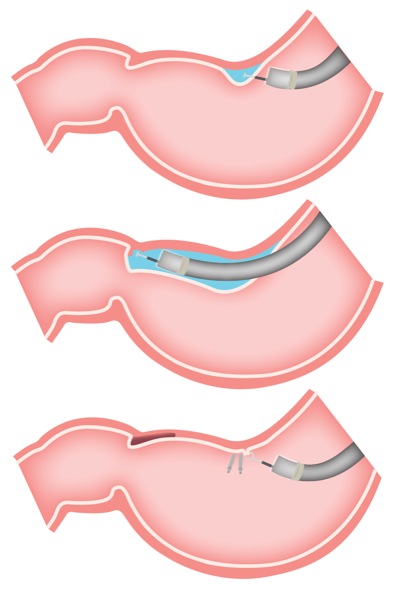
Image Source:HERE.Per-oral pyloromyotomy is a minimally invasive, lower-risk method of disrupting the pylorus that has been shown to improve gastroparesis symptoms.
The POP procedure was performed in the operating room under general anesthesia. Patients stayed in the hospital overnight after the POP procedure and an upper gastrointestinal (GI) series was performed to assess emptying through the pylorus and to check for unrecognized perforations. At discharge, patients were instructed to follow a liquid diet for two weeks and to take anti-acid therapies (sucralfate and a proton pump inhibitor) for four weeks. A repeat gastric-emptying study was performed at three months post-procedure.
The POP procedure produced statistically significant objective and subjective improvements in gastroparesis symptoms at 30 days and three months after treatment. Prior to the procedure, the average percentage of retained food at four hours was 37 percent and the average GCSI score was 4.6. After POP, the retained food percentage was reduced to 20 percent and the GCSI score to 3.3.
One patient died within 30 days of the POP procedure, but his death was unrelated to the surgery. “The procedure is very safe,” says Dr. Rodriguez, “and there were no procedure-related adverse events, including gastric or duodenal ulcer, intraluminal hemorrhage or gastric dumping syndrome.” There were also no repeat surgeries or hospitalizations related to the POP procedure.
A first-line treatment option
“This procedure has dramatically changed our practice at the Cleveland Clinic, and has become our first-line treatment option for medically refractive gastroparesis in well-selected patients,” Dr. Rodriguez says.
According to Matthew D. Kroh, MD, head of the research group and Chief of the Digestive Disease Institute at Cleveland Clinic Abu Dhabi, “POP is an attractive option for patients who in the past would have been offered surgical therapy because it is less invasive. This endoscopic procedure results that are similar to the best alternatives, without the morbidity associated with surgical access, and has a short recovery time.” Dr. Rodriguez adds that “because of its safety profile, we are able to apply POP more broadly than we could apply surgical interventions.”
Dr. Rodriguez reports that Cleveland Clinic has taken the lead in the U.S. with the POP procedure, but because GI motility is so complex and gastroparesis fairly common, he expects to see the technique become more widespread as more experience aggregates on its long-term safety and effectiveness."
"Early human experience with Per-Oral Endoscopic Pyloromyotomy (POP)
Eran Shlomovitz, MD, Radu Pescarus, MD, Ahmed Sharata, MD, Kevin M Reavis, MD, Christy M Dunst, MD, Lee L Swanstrom, MD. Providence Portland Medical Center, The Oregon Clinic..
Introduction:
Gastroparesis, a condition characterized by delayed gastric emptying, and a constellation of symptoms including nausea, vomiting, early satiety and bloating, is a debilitating condition. A variety of surgical options are available including pyloroplasty and pyloromyotomy. Although these have been shown to be effective they are associated with surgical trauma. We hypothesize that an endoscopic submucosal myotomy technique can be applied to endoscopically divide the pyloric sphincter, provide the benefits of a natural orifice procedure and improve gastric emptying in gastroparetic patients.
Methods and procedures:
Endoscopic per-oral pyloromyotomy (POP) was performed in four female patients ages 65, 59, 33 and 32 years old. All patient underwent a complete pre-operative work-up including upper endoscopy, gastric emptying study as well as a pH study and esophageal manometry if a concomitant fundoplication was performed. Three procedures were performed under laparoscopic guidance as patients required other concurrent laparoscopic procedures (see table). In one patient the procedure was fully endoscopic. The myotomy was performed by a technique similar to the one utilized in the POEM procedure. After the creation of a mucosotomy, a submucosal tunnel is established up to the duodenal bulb followed by a myotomy of the circular fibers of the pylorus. The mucosotomy is subsequently closed with clips.
Results:
Endoscopic per-oral pyloromyotomy was technically successful in all four cases and patients were discharged home on post operative day 2 or 3. There were no immediate procedural complications. One patient presented to the hospital 2 weeks post procedure with an upper GI bleed necessitating transfusions. On endoscopy a 1cm ulcer was found in the pyloric channel and an exposed vessel was clipped. The patient was subsequently discharged home on high dose proton pump inhibitors. Three month follow-up nuclear medicine gastric emptying studies (GES) are available for 3 of the 4 patients. Normalization of gastric emptying studies was demonstrated in 2 patients. Patient 3 showed improved gastric emptying half life, but unchanged residual activity at 4hrs.
Concomitant procedure
Operative time
Blood loss
Pre-op GES
Post-op GES
Patient 1
65 F
Cholecystectomy
102 min
Minimal
Half life: 150min
Residual at 4hrs: 29%
Half life: 36min
Residual at 4hrs: 0%
Patient 2
59 F
Redo- PEH repair and Nissen
295 min
100 cc
Half life: 90min
Residual at 4hrs: 14%
Half life: 18min
Residual at 4hrs: 0%
Patient 3
33 F
Nissen
231 min
Minimal
Half life: 160-170min
Residual at 4hrs: 15%
Half life: 70-90min
Residual at 4hrs: 14%
Conclusion:
Endoscopic pyloromyotomy is a technically feasible and potentially much less morbid endoscopic surgical procedure. Early follow-up suggests objective improvement in gastric emptying. Further long-term follow-up and additional clinical experience is required to establish the role of this technique in the management of gastroparesis."
Now, I want to discuss ERCP. I have had this procedure done to me, personally, and it helped me a great deal. I had my ERCP done in 2012, when I was first diagnosed with Gastroparesis. The doctors had to place a stent in my bile duct of my liver because it was not draining bile properly. You can read more about my personal experiences in my earlier blog articles:
I did develop pancreatitis after the procedure, which can be a side effect. That was a very painful experience. However, I want to research ERCP for those of you whose doctors may have suggested it, for those of you curious about it, and for those of you who might not know about the procedure itself.
There is a wonderful video with an explanation of the procedure made bySages,
This talk was presented at the 2018 SAGES Meeting/16th World Congress
of Endoscopic Surgery by Heidi J Miller during the When Bad Things
Happen to Good People – Endoscopy: Being FLEXible on April 14 2018
Endoscopic retrograde cholangiopancreatography (ERCP) is a procedure that combines upper gastrointestinal (GI) endoscopy and x-rays to treat problems of the bile and pancreatic ducts.
What are the bile and pancreatic ducts?
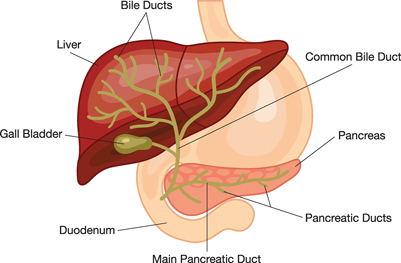
Your bile ducts are tubes that carry bile from your liver to your gallbladder and duodenum. Your pancreatic ducts are tubes that carry pancreatic juice from your pancreas to your duodenum. Small pancreatic ducts empty into the main pancreatic duct. Your common bile duct and main pancreatic duct join before emptying into your duodenum.
Why do doctors use ERCP?
Doctors use ERCP to treat problems of the bile and pancreatic ducts.
Doctors also use ERCP to diagnose problems of the bile and pancreatic
ducts if they expect to treat problems during the procedure. For
diagnosis alone, doctors may use noninvasive tests—tests that do not
physically enter the body—instead of ERCP. Noninvasive tests such as
magnetic resonance cholangiopancreatography (MRCP)—a type of magnetic resonance imaging (MRI) —are safer and can also diagnose many problems of the bile and pancreatic ducts.
Doctors perform ERCP when your bile or pancreatic ducts have become narrowed or blocked because of
gallstones that form in your gallbladder and become stuck in your common bile duct
To prepare for ERCP, talk with your doctor, arrange for a ride home, and follow your doctor’s instructions.
Talk with your doctor
You should talk with your doctor about any allergies and medical
conditions you have and all prescribed and over-the-counter medicines,
vitamins, and supplements you take, including
nonsteroidal anti-inflammatory drugs (NSAIDs) such as ibuprofen and naproxen
Your doctor may ask you to temporarily stop taking medicines that
affect blood clotting or interact with sedatives. You typically receive
sedatives during ERCP to help you relax and stay comfortable.
Tell your doctor if you are, or may be, pregnant. If you are pregnant
and need ERCP to treat a problem, the doctor performing the procedure
may make changes to protect the fetus from x-rays. Research has found
that ERCP is generally safe during pregnancy.1
Arrange for a ride home
For safety reasons, you can’t drive for 24 hours after ERCP, as the sedatives or anesthesia used during the procedure needs time to wear off. You will need to make plans for getting a ride home after ERCP.
Don’t eat, drink, smoke, or chew gum
To see your upper GI tract clearly, you doctor will most likely ask
you not to eat, drink, smoke, or chew gum during the 8 hours before
ERCP.
How do doctors perform ERCP?
Doctors who have specialized training in ERCP perform this procedure at a hospital or an outpatient center. An intravenous
(IV) needle will be placed in your arm to provide a sedative. Sedatives
help you stay relaxed and comfortable during the procedure. A health
care professional will give you a liquid anesthetic to gargle or will
spray anesthetic on the back of your throat. The anesthetic numbs your
throat and helps prevent gagging during the procedure. The health care
staff will monitor your vital signs and keep you as comfortable as
possible. In some cases, you may receive general anesthesia.
You’ll be asked to lie on an examination table. The doctor will carefully feed the endoscope down your esophagus, through your stomach,
and into your duodenum. A small camera mounted on the endoscope will
send a video image to a monitor. The endoscope pumps air into your
stomach and duodenum, making them easier to see.
During ERCP, the doctor
locates the opening where the bile and pancreatic ducts empty into the duodenum
slides a thin, flexible tube called a catheter through the endoscope and into the ducts
injects a special dye, also called contrast medium, into the ducts through the catheter to make the ducts more visible on x-rays
uses a type of x-ray imaging, called fluoroscopy, to examine the ducts and look for narrowed areas or blockages
The doctor may pass tiny tools through the endoscope to
insert stents—tiny tubes that a doctor leaves in narrowed ducts
to hold them open. A doctor may also insert temporary stents to stop
bile leaks that can occur after gallbladder surgery.
The procedure most often takes between 1 and 2 hours.
What should I expect after ERCP?
After ERCP, you can expect the following:
You will most often stay at the hospital or outpatient center
for 1 to 2 hours after the procedure so the sedation or anesthesia can
wear off. In some cases, you may need to stay overnight in the hospital
after ERCP.
You may have bloating or nausea for a short time after the procedure.
You may have a sore throat for 1 to 2 days.
You can go back to a normal diet once your swallowing has returned to normal.
You should rest at home for the remainder of the day.
Following the procedure, you—or a friend or family member who is with
you if you’re still groggy—will receive instructions on how to care for
yourself after the procedure. You should follow all instructions.
You will receive instructions on how to care for yourself after ERCP. You should follow all instructions.
Some results from ERCP are available right away after the procedure.
After the sedative has worn off, the doctor will share results with you
or, if you choose, with your friend or family member.
If the doctor performed a biopsy, a pathologist will examine the biopsy tissue. Biopsy results take a few days or longer to come back.
What are the risks of ERCP?
The risks of ERCP include complications such as the following:
pancreatitis
infection of the bile ducts or gallbladder
excessive bleeding, called hemorrhage
an abnormal reaction to the sedative, including respiratory or cardiac problems
perforation in the bile or pancreatic ducts, or in the duodenum near the opening where the bile and pancreatic ducts empty into it
tissue damage from x-ray exposure
death, although this complication is rare
Research has found that these complications occur in about 5 to 10 percent of ERCP procedures.2 People with complications often need treatment at a hospital.
As always, please discuss these procedures with your doctors. This is just research I have compiled but it does not take the place of a doctor's expertise or advice.
Endoscopic — Refers to a tool called an
endoscope, a long, thin (about the width of your little finger),
flexible tube with a camera on the end.
Retrograde — Refers to the direction (backward)
in which the endoscope injects a liquid for X-rays of parts of the GI
tract called the bile duct system and pancreas.
Cholangio — Refers to the bile duct system.
Pancreatography — Refers to the pancreas.
The process of taking these X-rays is known as cholangiopancreatography.
ERCP can help find the cause of jaundice (when your skin and/or the whites of your eyes turn yellow) or pancreatitis, which is inflammation (swelling and redness) of the pancreas that is often caused by gallstones or alcohol abuse. ERCP can also treat some of those issues.
Using tools passed through the endoscopic tube, your doctor can
inject dye to light up organs under X-rays. This provides a clear view
of your pancreas, pancreatic duct, bile duct system, gallbladder and
duodenum (the first portion of the small intestine).
ERCP is an endoscopic procedure used to inject dye into the bile and pancreas ducts. X-ray pictures are then taken.
ERCP can see if there is a blockage or narrowing in your biliary or pancreatic ducts caused by stones, tumors or scarring.
ERCP is frequently performed to find the cause of abnormal
liver-chemistry tests and to follow up on an abnormal ultrasound, CT
scan or MRI exam.
During an ERCP, if any blocks are found, tools can be passed through to relieve the block. Stones can be removed from the common bile duct or pancreatic duct and blocks can be dilated, biopsied and/or stented.
ERCP can relieve jaundice (when your skin and/or the whites of your eyes turn yellow) caused by blocked bile ducts.
ERCP can help find the cause of pancreatitis, inflammation (swelling and redness) of the pancreas, and prevent future attacks.
The doctor is going to do the surgery for the Boston Scientific Electrical Stimulator trial. They are going to put me under, put the leads in, wake me up and adjust the electrical pulses, and then put me back under to complete everything. I will know in a day or three if it works or not. If it works, the doctor is going to go ahead and schedule the permanent implant surgery.
My husband thinks that this will cut my vomiting in half. His reasoning is that vomiting is also my pain response, so it's hard to tell what's gastroparesis and what's my knee. After this, I should know.
I have an appointment with my doctor on Tuesday to talk and follow up. I still need anti-nausea medicine. It helps me function. Without it, I vomit about 8 times a day. It does help keep the vomiting down. I'm just frustrated and tired of vomiting. The doctor wants to figure out why I'm vomiting so much. He says that with gastroparesis that I shouldn't have stomach pain or vomiting. Since the ERCP surgery, I have had less pain. It's no longer sharp and stabbing. Now, it's more like intense stomach cramps.
I had a funeral to go to last Monday and they made me take communion. I was scared because I haven't been able to keep much down. The priest dipped the wafer in the red wine (my stomach can't handle alcohol) and gave me communion. I tried not to vomit up the Body of Christ because it would, in all honesty and jokes aside, make me feel awful. I kept it down for the funeral, so I did not vomit up the Body of Christ on anyone. My stomach behaved until I got home but I had horrid cramps and pain. I also started vomiting again. It's been a rough week with the death of my aunt and then the surgery today. I'm just grateful that I didn't get sick in the church.
I also have an appointment with the Nutritionist next week to go over a diet plan and the insurance doesn't cover it. So, it's going to be $100 a pop to receive advice about my diet and eating habits.
I'm really nervous about the surgery today. The last time I had surgery, I stopped breathing. Now, I'm scared that I won't wake up. I just want to feel better. I'm also worried about the IV placement. The nurses can never find veins. They had to put in a pick line in the hospital. I just don't want to get poked about 12 times.
Well, I will keep everyone updated. My surgery is scheduled for 2pm.
I had an appointment at 8:30am this morning with the Specialist but let me give you some background on the past two days. I was up all night, really, really nauseated. I took my pain medicine and my anti-nausea medication but it did nothing to get rid the knot in my stomach. To explain how my stomach feels - imagine you're nervous before a test and your stomach is in a huge knot. Then, add an intense burning, sharp pain like you've been sucker punched in the stomach with an ulcer. Then, imagine that you had food poisoning and you just felt like there was a giant greasy ball just hanging out in your stomach. If you combine all of those feelings, that's how I feel on a daily basis with the nausea. That's the best way I know how to describe it.
So, I was up all night getting sick. I thought maybe the vomiting would help but my stomach managed to spasm enough that I pulled a muscle.
I had an appointment scheduled for the Motility Specialist, which was lucky, and got to go in this morning to talk with her about my Smart Pill results. She said that the Smart Pill did show a delay in my gastric emptying, confirming what I already knew, I have gastroparesis. She told me I needed to follow up with my GI doctor now, so I'm wondering what was the point of seeing the Specialist if she's not going to treat me for this rare condition.
She did prescribe an antispasmodic, which should help with the pain after eating. That's leftover from the ERCP that my regular GI doctor did. However, both doctors cannot explain the vomiting. The best theory that I have gotten is from my regular GI doctor - the food that I eat sits in my stomach for days until I get food poisoning and vomit it up. So, essentially, I always have food poisoning. I have to make an appointment with the Nutritionist and come up with a diet plan.
Vomiting is also my pain response, so I hope that once I get this trial for my knee, the vomiting will be cut in half.
The Specialist then told me to see my psychiatrist because I'm already on an antidepressant and anxiety medication. The drug to help treat this is also classified as an antidepressant. You can read about Nortriptyline HERE.
I called his office and I'm waiting for him to give me a call and let me know if he will prescribe it. I just saw him two days ago, and he knows about my gastroparesis. I don't think he'll have a problem prescribing it but I would like to start it as soon as possible since it takes a while to work. This should help with the gastroparesis, some. I don't understand why the Specialist couldn't just prescribe it. It's not controlled. I get the drug interaction thing but she knows ALL of the medications I'm on. Oh well, I'll wait around and see what my other doctor says.
So, that's my news. Gastroparesis is confirmed, which I already knew it would be. I've had the ERCP and I'm going to try this medicine. I would really like to have my normal life back. I miss being a social butterfly and I miss leaving the house.
My friends and family have been a great support network. I cannot tell you how much it means to me for the encouraging words, funny pictures to cheer me up, coming over to hang out because you know I can't leave the house. It really does mean so much to me. And of course, for reading my blog. I wasn't expecting for it to be as popular as it is. I just wanted to say thank you to everyone for being there for me. It really does make me feel better knowing that I have such great friends and family, and of course, a wonderful husband. I honestly could not get through this without you guys.
It's also nice to feel validated that this isn't all in my head. I've gotten that from a few past "friends." I felt isolated for a while because people viewed me as negative and attention seeking, but I know my body better than anyone and I'm glad I stayed persistent. I try not to be negative but I have bad days just like everyone else.
If there is anyone out there who reads this blog and has medical issues, my advice is to find a doctor who will listen. I cannot tell you how many bad doctors I've gone through until I found someone who understood and helped. Keep trying. I know it can be discouraging but you have to be your own advocate.
My doctor was right about starting this blog, though. It has helped me to get everything out and to channel those negative feelings into something positive for someone who may have the same issues I do without a diagnosis. I think my friends understand me better now, too. You can tell someone you're sick all day long and they'll get annoyed at you for always being sick, but you have to help them to understand. This doctor is the best doctor I've had yet and I'm glad that I finally know what's going on.
It's hard living with a chronic illness and it can get you down ... but be strong and fight back. I am going to. I am determined to lead a normal life again, and I will; one day at a time.
They let me out today! The nurse woke me up around 11am and told me she was there to take out my Picc Line. I was half asleep and she took it out. The second nurse came in and gave me my paperwork and took me downstairs to the car. I didn't get a chance to see the doctor before I left but she told me to follow up with him as needed.
I'm still in a great amount of pain - especially when I eat but I guess that's to be expected since he cut into the muscle that controls bile release for digestion. I wonder how long that will take to heal.
So, I'm at home, trying to get comfortable and trying to rest. It's hard because my sleeping schedule is so off from the hospital. I didn't get enough sleep because I was poked every 15 minutes. Now, I can't seem to settle down to sleep but I'm tired and really anxious for some reason.
I feel like I'm about to have a panic attack and there's no reason for it. I'm tired of being ill. I get frustrated not being able to do things with my friends because my digestive system severely handicaps me. I just hate feeling left out of everything because I'm too tired or sick to participate. It's to the point where people don't even ask me to do anything anymore. That really sucks. =(
This marks the sixth day of my hospital visit. I'm waiting on the lab results to see if any of my enzymes have gone down. My side is still in some pretty bad pain from yesterday and my throat is sore. I hope they feed me today. I'm really REALLY hungry. Also, I have a fever but my blood pressure went down to 127/80. That's good news! Hopefully, it will stay down. It goes down with the pain medication. I don't think they'll send me home today but I'm not sure. They want to make sure that I don't develop pancreatitis.
I was able to catch a couple of cat naps last night but woke up to horrible pain. I'm really exhausted. I'm hoping that when I get my Dilaudid and my Phenergan in a hour that I'll go to sleep. I think I'm going to stay up for a bit and see if food comes.
I think I overheard them saying in the surgical room last night that I could resume a liquid diet this morning. I thought I also overheard them saying when they took the breathing tube out that I stopped breathing for a few seconds. They had to put a breathing tube in an sedate me completely for the procedure because I had been vomiting so much. The anesthesiologist said that he didn't want me to vomit during the procedure and then drown in my vomit.
I'm not sure if I really did hear that or if it was imagined. I imagine it was true because they put me on more oxygen and kept me on it. My oxygen levels did go down to 80 day before yesterday. I wonder why it keeps doing that? It's worrisome. So, I have to wear oxygen all of the time now.
Right now, I'm just anxious. I'm scared about classes, I'm scared about the future, I mean, what if this isn't the solution? What if I keep getting liver stones? I also don't know what to do about the gastroparesis. I'm going to ask my doctor today if he found any results from my Smart Pill test later.
I need to make a follow up appointment with my knee doctor. Next up, is the trial surgery. *sigh*
UPDATE: The doctor just came in to talk to me about my ERCP. She said that the sphincter they were worried about was almost closed shut. When the doctor made the ERCP incision, he released it which caused all of this "gunk" to flow out of it. That included blackish looking sludge along with gravel shaped stones. So, their theory of the sphincter was right on the money. My labs are slowly going down and the doctor is going to increase my pain medicine (since I just had surgery and it's wearing off quicker now) and advance my food this evening. If all goes well, they're going to send me home. Again, they want to make sure that I don't develop pancreatitis.
I should have asked her for something to help me sleep. I haven't slept almost the entire time I've been in the hospital. I'm exhausted and I hurt. I can't get comfy. So, I guess we'll wait. I'll keep you guys updated.
So, I had my ERCP done today. They found a sludge like material along with some gravel like material in my bile ducts. The doctor cleaned everything out and made an incision in the sphincter in my bile duct so that it will release bile for digestion easier.
The heart echo and EKG were both normal.
The doctor said that he was going to watch me overnight to see how I felt. And of course, I'm really annoyed now because I'm on pain medicine and my husband is trying to be super helpful. That's even more annoying when I'm on pain medicine. The kitchen just brought me food and he wouldn't let me eat it because I'm not supposed to have anything by mouth until tomorrow. I snuck a couple of carrots though ... and that lemon icing cake looked really tasty. =( I should have eaten it anyway, I'm starving. Now, I'm even grumpier. It's mean to put cake in front of me when I can't eat it.
My nurse is going to give me my antinausea medication and I'm going to try and sleep since there's nothing else to really do and I can't drink anything to ease the scratchiness in my throat.
But, everything's OK so far. I guess we'll wait and see if I develop inflammation of my pancreas.
The nurse came in and took another EKG today since my last one was a bit abnormal. The doctor yesterday said that the Zofran could have caused that too and took me off of it. He said for me to list it as an allergy from now on. Another nurse came in and took an ECHO of my heart as well, just to follow up on the abnormal EKG. If everything looks fine, I'm having my ERCP procedure done at 2:00pm today.
It was hard to sleep last night. My night nurse lectured me and told me that my pain medicine was as needed, I didn't have to have it every two hours. The problem is that when I go to lay on that side, it's startling and wakes me up with a jolt because it hurts so much. Plus, people kept waking me up to get my vital signs and to draw up lab work - it's hard to sleep in a hospital. She's the second night nurse I've had who has lectured me about pain medicine.
I hope after today, I'll need less of it. I kept trying to explain that I have liver stones and they're painful but I guess the night nurses don't care. They probably don't like that I make them work.
I'm laying here pretty nervous and tired. I want to get this procedure over and done with. My doctor was also going to find out the results of the smart pill and share it with me. I've been placed on blood pressure medication as needed while in the hospital because my blood pressure keeps going up.
I guess I'll let you know what they find as soon as I know! Wish me luck!
It started the night before last. I didn't sleep. I felt really nauseated and had this intense burning in my stomach that didn't quite feel like heartburn but I can't quite describe it. I couldn't even lay on my side, the pain was so intense. So, I decided to watch TV upstairs to not wake up my husband. While I was laying there, 5am rolled around. As it did, so did my stomach.
I ran to the bathroom and vomited. I noticed this dark black substance that almost looked like tar, in my stomach acid. It was blood. Now, I've vomited up blood before but it was usually a bright red color. This worried me because it was almost black. So, I called the GI practice and spoke with the doctor on call. He told me to try taking some pepto bismol and then wait until 9am to call the specialist I had been seeing for the Smart Pill.
And so, three stomach protests later, I called my regular GI doctor thinking that he could probably see me quicker. The nurse told me to go straight to the ER and that she would tell the doctor that I was on my way. So, I woke the husband up and headed for the ER.
... and because I had been vomited all morning without eating in the past few days, there was nothing left in my stomach so I couldn't vomit again for them to check for blood. I dry heaved like crazy, and still am. The ER doctor called my doctor and they decided to admit me. I really thought that they would give me fluids and send me home but my lab work had other plans.
My lipase is really high. My liver enzymes (the normal range is 30 to 40) are 300 to 400 and my blood pressure walking in was 180/117. I also had a slight fever 99.8 (it had been 101 the past two days). After telling my doctor about my lab work (which is the EXACT same issue I had in March - same numbers almost and everything), they decided it would be best if I could be monitored for a bit.
The doctor came in and told me about all of the lab results. He also explained to me about a procedure called an ERCP which would show him if I had stones or not. Even though I don't have a gallbladder anymore, I can still get liver stones. More information about ERCP HERE.
In addition to finding and removing stones, he also said that they are going to make a little incision into the sphincter that would relax the muscle so that the sphincter will release bile easily and help me with digestion. I am having the ERCP procedure on Monday. I will need to be monitored for 48 to 72 hours afterwards because many patients develop Pancreatitis.
Well, I hope this helps some. Today was interesting though. I asked for a Picc Line because I have such horrible veins. The only vein they were able to find for an IV site was the inside of my right wrist. The doctor in the ER was going to put it into my neck if the wrist didn't work.
When this hospital does a Picc Line, they use a tiny sonogram machine and insert the line. Then, a chest x-ray is taken and the Radiologist reads it to let them know that it's in the right place so that they can administer medication. Sounds simple, right?
Wrong!
My picc line went in at 11am (I had just taken my pain and anti-nausea medication at 10am). The chest x-ray was about 20 minutes after the picc line was placed. However, the nurse started to get REALLY upset because it was going on 5pm, and I hadn't had ANY medication. Thankfully, I have awesome friends who came to visit and kept me distracted from my stomach and vomiting the entire time. =)
Finally, the nurse came in and told me that the picc was a bit too far and was in the right atrium of my heart. So, the picc nurse had to come back in and pull it back into place. That was around 5:15pm. I finally got another chest x-ray and it was the same technician. He told me that he made the mistake and my x-ray fell through the cracks because he did about 20 chest x-rays in a row. He then proceeded to tell me how he likes to x-ray things in his spare time. He's x-rayed his iPhone, ipad, galaxy s, a campbell's soup can, and seashells. There are some really interesting people in this hospital.
The nurse last night, named Lora (yes, I am going to call her out on this blog because she was really horrible to me), really upset me and I will be writing a letter about her to the person in charge.
I guess she was mad that I made her work, I'm not sure. She treated me like I was a drug junkie last night because I couldn't sleep and wanted my pain medicine. The nurse just got angry with me. She asked what my pain level was on a scale of 1 to 10. I said 6. She snapped at me and asked if it ever went below a 6. I replied to her that if it did, I would answer with a number less than 6! My pain is intense, consistent, and makes me cry. Get off of my back and try to be a bit sympathetic.
This bothers me because I'm on the Oncology floor (it's the overflow floor for GI). If she treated ME this way, how does she treat cancer patients? That just really pissed me off. She wasn't a nice person. I hope I don't have to see her again while I'm here. Maybe I caught her while she was having a bad night, I don't know. I'm not a bad patient and I'm usually a good one but I wanted to take my IV line and strangle her with it. I was really angry. I hope that she's nicer to the other patients on this floor because if my grandfather had EVER been treated this way, I would have ripped that person a new asshole.
I had four friends come and see me today. I've gotten a lot of kind words on facebook and I know some really awesome people. Without their support, I would be extremely depressed. Thanks to all of you who read this blog and thanks to those of you who have responded to me and for the support. It really does mean a lot. I wasn't expecting this blog to be as popular as it is. I'm going to write another entry about Day 3 tomorrow. I hope to get some sleep tonight now that the picc line is in and the stupid IV pole won't yell at me every 5 minutes when I try to sleep. Having an IV in your wrist is horrible. >.<