The idea was suggested to me (by my MD) that a blog/diary might help me feel better by venting my frustrations and struggles with Gastroparesis. Also, I hope I can help others who may have the same thing through my own experiences.
For more information, please email: emilysstomach[at]gmail.com or follow on Twitter: http://twitter.com/emilysstomach or like us on Facebook: http://www.facebook.com/emilysstomach or Instagram: http://www.instagram.com/emilysstomach
Copyright
“You agree that you will not modify, copy, reproduce, sell, or distribute any content in any manner or medium without permission."
I have had this subject saved to write about since March of this year. Life has just gotten in the way, so I've been unable to complete the article like I wanted to. However, I wanted to do some research today on the subject, now that I have had friends who have had it done. I want to talk about the
Per oral endoscopic pyloromyotomy (hereto referred as the POP procedure and GPOEM) and ERCP. I will discuss and share my research about the POP procedure first, but I have written about it in the past. You can find the article I have written on POP/GPOEM here:https://www.emilysstomach.com/2017/06/gpoem-what-is-it-and-how-does-it-help.html
"Innovative Endoscopy Procedure for Gastroparesis Is Safe and Feasible
Gastroparesis, delayed gastric emptying in the absence of mechanical obstruction, is a debilitating and chronic digestive disease affecting 5 million people in the U.S. Typically, medical therapies, intrapyloric injections of botulinum toxin, gastric electrical stimulation therapy and surgical open or laparoscopic pyloroplasty are utilized to manage the disease.
Still, it is a frustrating condition for patients and physicians alike, and until recently these medical and surgical procedures have been largely unsuccessful in resolving the disease’s symptoms or have been associated with complications. According to Cleveland Clinic general surgeon John H. Rodriguez, MD, however, a new, minimally invasive endoscopy therapy, per oral endoscopic pyloromyotomy (POP), has recently shown great promise as an alternative to surgical pyloroplasty for these patients.
Dr. Rodriguez explains that POP has been described in small case reports since 2013 and was first performed at Cleveland Clinic in January 2016. Since that time, he and his colleagues have conducted a prospective study of the technique, and recently published results in Surgical Endoscopy on the first 47 subjects (although to date they have performed almost 100 cases).
The POP study design
From January 2016 to January 2017, prospective patients who were suspected of having gastroparesis were evaluated by a multidisciplinary team comprised of a psychiatrist, dietitian, gastroenterologist and four surgeons specializing in minimally invasive techniques. Prior to having the procedure, a four-hour, non-extrapolated gastric-emptyingscintigraphy study was performed on all subjects, who subjectively rated their symptoms on the Gastroparesis Cardinal Symptom Index (GCSI). Subjects repeated the GCSI at three months after POP.
Of the 47 patients, 27 (57.4 percent) were classified as having idiopathic gastroparesis, 12 (25.6 percent) as having diabetic gastroparesis and eight (17 percent) as having postsurgical gastroparesis. The majority of the patients (87.2 percent) had been treated with one or more previous interventions for their symptoms, such as placement of an enteral feeding tube or a gastric pacer or botulinum toxin injection.
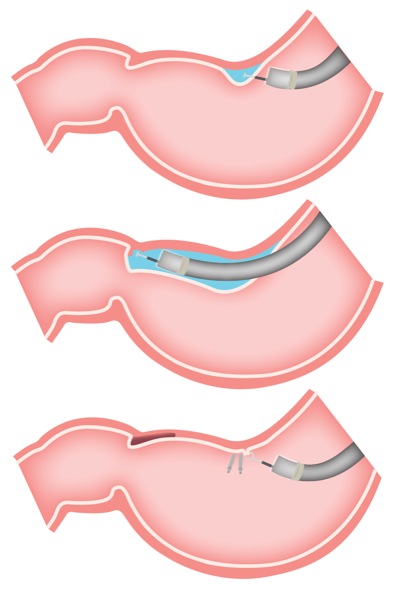
Image Source:HERE.Per-oral pyloromyotomy is a minimally invasive, lower-risk method of disrupting the pylorus that has been shown to improve gastroparesis symptoms.
The POP procedure was performed in the operating room under general anesthesia. Patients stayed in the hospital overnight after the POP procedure and an upper gastrointestinal (GI) series was performed to assess emptying through the pylorus and to check for unrecognized perforations. At discharge, patients were instructed to follow a liquid diet for two weeks and to take anti-acid therapies (sucralfate and a proton pump inhibitor) for four weeks. A repeat gastric-emptying study was performed at three months post-procedure.
The POP procedure produced statistically significant objective and subjective improvements in gastroparesis symptoms at 30 days and three months after treatment. Prior to the procedure, the average percentage of retained food at four hours was 37 percent and the average GCSI score was 4.6. After POP, the retained food percentage was reduced to 20 percent and the GCSI score to 3.3.
One patient died within 30 days of the POP procedure, but his death was unrelated to the surgery. “The procedure is very safe,” says Dr. Rodriguez, “and there were no procedure-related adverse events, including gastric or duodenal ulcer, intraluminal hemorrhage or gastric dumping syndrome.” There were also no repeat surgeries or hospitalizations related to the POP procedure.
A first-line treatment option
“This procedure has dramatically changed our practice at the Cleveland Clinic, and has become our first-line treatment option for medically refractive gastroparesis in well-selected patients,” Dr. Rodriguez says.
According to Matthew D. Kroh, MD, head of the research group and Chief of the Digestive Disease Institute at Cleveland Clinic Abu Dhabi, “POP is an attractive option for patients who in the past would have been offered surgical therapy because it is less invasive. This endoscopic procedure results that are similar to the best alternatives, without the morbidity associated with surgical access, and has a short recovery time.” Dr. Rodriguez adds that “because of its safety profile, we are able to apply POP more broadly than we could apply surgical interventions.”
Dr. Rodriguez reports that Cleveland Clinic has taken the lead in the U.S. with the POP procedure, but because GI motility is so complex and gastroparesis fairly common, he expects to see the technique become more widespread as more experience aggregates on its long-term safety and effectiveness."
"Early human experience with Per-Oral Endoscopic Pyloromyotomy (POP)
Eran Shlomovitz, MD, Radu Pescarus, MD, Ahmed Sharata, MD, Kevin M Reavis, MD, Christy M Dunst, MD, Lee L Swanstrom, MD. Providence Portland Medical Center, The Oregon Clinic..
Introduction:
Gastroparesis, a condition characterized by delayed gastric emptying, and a constellation of symptoms including nausea, vomiting, early satiety and bloating, is a debilitating condition. A variety of surgical options are available including pyloroplasty and pyloromyotomy. Although these have been shown to be effective they are associated with surgical trauma. We hypothesize that an endoscopic submucosal myotomy technique can be applied to endoscopically divide the pyloric sphincter, provide the benefits of a natural orifice procedure and improve gastric emptying in gastroparetic patients.
Methods and procedures:
Endoscopic per-oral pyloromyotomy (POP) was performed in four female patients ages 65, 59, 33 and 32 years old. All patient underwent a complete pre-operative work-up including upper endoscopy, gastric emptying study as well as a pH study and esophageal manometry if a concomitant fundoplication was performed. Three procedures were performed under laparoscopic guidance as patients required other concurrent laparoscopic procedures (see table). In one patient the procedure was fully endoscopic. The myotomy was performed by a technique similar to the one utilized in the POEM procedure. After the creation of a mucosotomy, a submucosal tunnel is established up to the duodenal bulb followed by a myotomy of the circular fibers of the pylorus. The mucosotomy is subsequently closed with clips.
Results:
Endoscopic per-oral pyloromyotomy was technically successful in all four cases and patients were discharged home on post operative day 2 or 3. There were no immediate procedural complications. One patient presented to the hospital 2 weeks post procedure with an upper GI bleed necessitating transfusions. On endoscopy a 1cm ulcer was found in the pyloric channel and an exposed vessel was clipped. The patient was subsequently discharged home on high dose proton pump inhibitors. Three month follow-up nuclear medicine gastric emptying studies (GES) are available for 3 of the 4 patients. Normalization of gastric emptying studies was demonstrated in 2 patients. Patient 3 showed improved gastric emptying half life, but unchanged residual activity at 4hrs.
Concomitant procedure
Operative time
Blood loss
Pre-op GES
Post-op GES
Patient 1
65 F
Cholecystectomy
102 min
Minimal
Half life: 150min
Residual at 4hrs: 29%
Half life: 36min
Residual at 4hrs: 0%
Patient 2
59 F
Redo- PEH repair and Nissen
295 min
100 cc
Half life: 90min
Residual at 4hrs: 14%
Half life: 18min
Residual at 4hrs: 0%
Patient 3
33 F
Nissen
231 min
Minimal
Half life: 160-170min
Residual at 4hrs: 15%
Half life: 70-90min
Residual at 4hrs: 14%
Conclusion:
Endoscopic pyloromyotomy is a technically feasible and potentially much less morbid endoscopic surgical procedure. Early follow-up suggests objective improvement in gastric emptying. Further long-term follow-up and additional clinical experience is required to establish the role of this technique in the management of gastroparesis."
Now, I want to discuss ERCP. I have had this procedure done to me, personally, and it helped me a great deal. I had my ERCP done in 2012, when I was first diagnosed with Gastroparesis. The doctors had to place a stent in my bile duct of my liver because it was not draining bile properly. You can read more about my personal experiences in my earlier blog articles:
I did develop pancreatitis after the procedure, which can be a side effect. That was a very painful experience. However, I want to research ERCP for those of you whose doctors may have suggested it, for those of you curious about it, and for those of you who might not know about the procedure itself.
There is a wonderful video with an explanation of the procedure made bySages,
This talk was presented at the 2018 SAGES Meeting/16th World Congress
of Endoscopic Surgery by Heidi J Miller during the When Bad Things
Happen to Good People – Endoscopy: Being FLEXible on April 14 2018
Endoscopic retrograde cholangiopancreatography (ERCP) is a procedure that combines upper gastrointestinal (GI) endoscopy and x-rays to treat problems of the bile and pancreatic ducts.
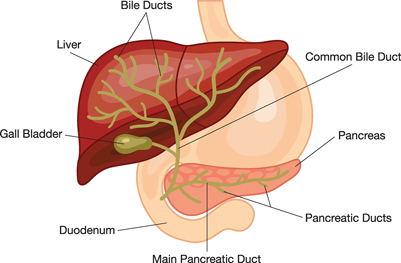
What are the bile and pancreatic ducts?
Your bile ducts are tubes that carry bile from your liver to your gallbladder and duodenum. Your pancreatic ducts are tubes that carry pancreatic juice from your pancreas to your duodenum. Small pancreatic ducts empty into the main pancreatic duct. Your common bile duct and main pancreatic duct join before emptying into your duodenum.
Why do doctors use ERCP?
Doctors use ERCP to treat problems of the bile and pancreatic ducts.
Doctors also use ERCP to diagnose problems of the bile and pancreatic
ducts if they expect to treat problems during the procedure. For
diagnosis alone, doctors may use noninvasive tests—tests that do not
physically enter the body—instead of ERCP. Noninvasive tests such as
magnetic resonance cholangiopancreatography (MRCP)—a type of magnetic resonance imaging (MRI) —are safer and can also diagnose many problems of the bile and pancreatic ducts.
Doctors perform ERCP when your bile or pancreatic ducts have become narrowed or blocked because of
gallstones that form in your gallbladder and become stuck in your common bile duct
To prepare for ERCP, talk with your doctor, arrange for a ride home, and follow your doctor’s instructions.
Talk with your doctor
You should talk with your doctor about any allergies and medical
conditions you have and all prescribed and over-the-counter medicines,
vitamins, and supplements you take, including
nonsteroidal anti-inflammatory drugs (NSAIDs) such as ibuprofen and naproxen
Your doctor may ask you to temporarily stop taking medicines that
affect blood clotting or interact with sedatives. You typically receive
sedatives during ERCP to help you relax and stay comfortable.
Tell your doctor if you are, or may be, pregnant. If you are pregnant
and need ERCP to treat a problem, the doctor performing the procedure
may make changes to protect the fetus from x-rays. Research has found
that ERCP is generally safe during pregnancy.1
Arrange for a ride home
For safety reasons, you can’t drive for 24 hours after ERCP, as the sedatives or anesthesia used during the procedure needs time to wear off. You will need to make plans for getting a ride home after ERCP.
Don’t eat, drink, smoke, or chew gum
To see your upper GI tract clearly, you doctor will most likely ask
you not to eat, drink, smoke, or chew gum during the 8 hours before
ERCP.
How do doctors perform ERCP?
Doctors who have specialized training in ERCP perform this procedure at a hospital or an outpatient center. An intravenous
(IV) needle will be placed in your arm to provide a sedative. Sedatives
help you stay relaxed and comfortable during the procedure. A health
care professional will give you a liquid anesthetic to gargle or will
spray anesthetic on the back of your throat. The anesthetic numbs your
throat and helps prevent gagging during the procedure. The health care
staff will monitor your vital signs and keep you as comfortable as
possible. In some cases, you may receive general anesthesia.
You’ll be asked to lie on an examination table. The doctor will carefully feed the endoscope down your esophagus, through your stomach,
and into your duodenum. A small camera mounted on the endoscope will
send a video image to a monitor. The endoscope pumps air into your
stomach and duodenum, making them easier to see.
During ERCP, the doctor
locates the opening where the bile and pancreatic ducts empty into the duodenum
slides a thin, flexible tube called a catheter through the endoscope and into the ducts
injects a special dye, also called contrast medium, into the ducts through the catheter to make the ducts more visible on x-rays
uses a type of x-ray imaging, called fluoroscopy, to examine the ducts and look for narrowed areas or blockages
The doctor may pass tiny tools through the endoscope to
insert stents—tiny tubes that a doctor leaves in narrowed ducts
to hold them open. A doctor may also insert temporary stents to stop
bile leaks that can occur after gallbladder surgery.
The procedure most often takes between 1 and 2 hours.
What should I expect after ERCP?
After ERCP, you can expect the following:
You will most often stay at the hospital or outpatient center
for 1 to 2 hours after the procedure so the sedation or anesthesia can
wear off. In some cases, you may need to stay overnight in the hospital
after ERCP.
You may have bloating or nausea for a short time after the procedure.
You may have a sore throat for 1 to 2 days.
You can go back to a normal diet once your swallowing has returned to normal.
You should rest at home for the remainder of the day.
Following the procedure, you—or a friend or family member who is with
you if you’re still groggy—will receive instructions on how to care for
yourself after the procedure. You should follow all instructions.
You will receive instructions on how to care for yourself after ERCP. You should follow all instructions.
Some results from ERCP are available right away after the procedure.
After the sedative has worn off, the doctor will share results with you
or, if you choose, with your friend or family member.
If the doctor performed a biopsy, a pathologist will examine the biopsy tissue. Biopsy results take a few days or longer to come back.
What are the risks of ERCP?
The risks of ERCP include complications such as the following:
pancreatitis
infection of the bile ducts or gallbladder
excessive bleeding, called hemorrhage
an abnormal reaction to the sedative, including respiratory or cardiac problems
perforation in the bile or pancreatic ducts, or in the duodenum near the opening where the bile and pancreatic ducts empty into it
tissue damage from x-ray exposure
death, although this complication is rare
Research has found that these complications occur in about 5 to 10 percent of ERCP procedures.2 People with complications often need treatment at a hospital.
As always, please discuss these procedures with your doctors. This is just research I have compiled but it does not take the place of a doctor's expertise or advice.
Endoscopic — Refers to a tool called an
endoscope, a long, thin (about the width of your little finger),
flexible tube with a camera on the end.
Retrograde — Refers to the direction (backward)
in which the endoscope injects a liquid for X-rays of parts of the GI
tract called the bile duct system and pancreas.
Cholangio — Refers to the bile duct system.
Pancreatography — Refers to the pancreas.
The process of taking these X-rays is known as cholangiopancreatography.
ERCP can help find the cause of jaundice (when your skin and/or the whites of your eyes turn yellow) or pancreatitis, which is inflammation (swelling and redness) of the pancreas that is often caused by gallstones or alcohol abuse. ERCP can also treat some of those issues.
Using tools passed through the endoscopic tube, your doctor can
inject dye to light up organs under X-rays. This provides a clear view
of your pancreas, pancreatic duct, bile duct system, gallbladder and
duodenum (the first portion of the small intestine).
ERCP is an endoscopic procedure used to inject dye into the bile and pancreas ducts. X-ray pictures are then taken.
ERCP can see if there is a blockage or narrowing in your biliary or pancreatic ducts caused by stones, tumors or scarring.
ERCP is frequently performed to find the cause of abnormal
liver-chemistry tests and to follow up on an abnormal ultrasound, CT
scan or MRI exam.
During an ERCP, if any blocks are found, tools can be passed through to relieve the block. Stones can be removed from the common bile duct or pancreatic duct and blocks can be dilated, biopsied and/or stented.
ERCP can relieve jaundice (when your skin and/or the whites of your eyes turn yellow) caused by blocked bile ducts.
ERCP can help find the cause of pancreatitis, inflammation (swelling and redness) of the pancreas, and prevent future attacks.
I am not diabetic, although, I do become hypoglycemic occasionally. A friend and I were talking and we came to the conclusion that we should shed light on their condition in addition to idiopathic gastroparesis (GP). My friend (I am protecting her identity, not trying to deny her credit or anything), inspired this article and I just wanted to thank her for bringing it to my attention. All of the links are in bold, capital letters. If you click on them, they take you to the site they are referencing.
I wanted to provide some insight into DIABETIC GASTROPARESIS for those of us who are idiopathic.
I have asked the Diabetic GP Warriors on Facebook Pages, the SUPPORT FOR DIABETIC GP WARRIORS, and the DIGESTION DISORDERS FORUM on Facebook. I have cited people to the best of my ability without giving away personal information.
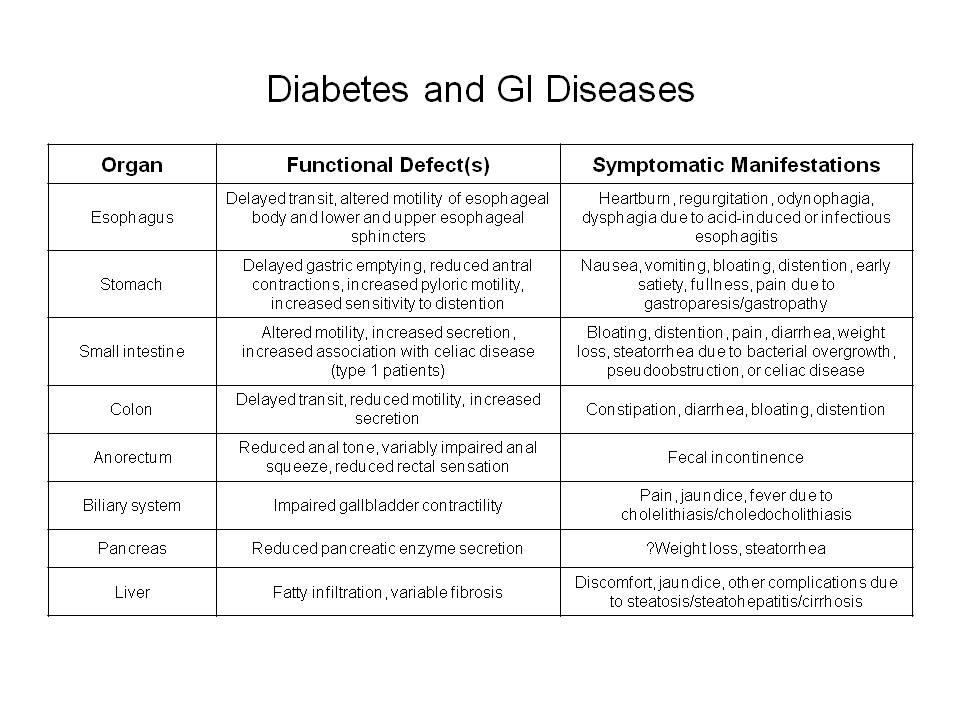
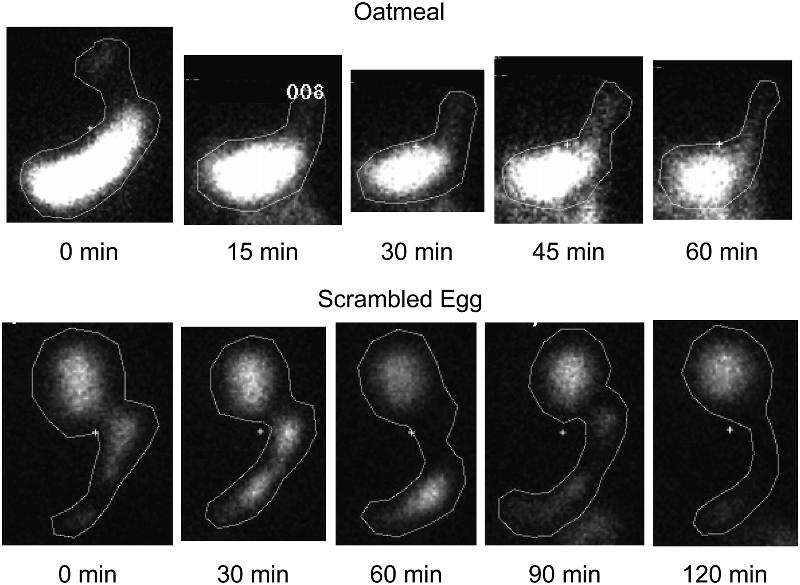
These are different procedures that can be test regions of the gastrointestinal tract (GI), functional GI tests that are available locally, and their clinical utilities. The charts can be found below:
"Gastroparesis is a type of neuropathy (nerve damage) in which food is delayed from leaving the stomach. This nerve damage can be caused by long periods of high blood sugar.Delayed digestion makes the management of diabetes more difficult. It can be treated with insulin management, drugs, diet, or in severe cases, a feeding tube.
Gastroparesis is a disorder affecting people with both type 1 and type 2 diabetes in which the stomach takes too long to empty its contents (delayed gastric emptying). The vagus nerve controls the movement of food through the digestive tract. If the vagus nerve is damaged or stops working, the muscles of the stomach and intestines do not work normally, and the movement of food is slowed or stopped.
Just as with other types of neuropathy, diabetes can damage the vagus nerve if blood glucose levels remain high over a long period of time. High blood glucose causes chemical changes in nerves and damages the blood vessels that carry oxygen and nutrients to the nerves.
What are the symptoms?
Signs and symptoms of gastroparesis include the following:
Heartburn
Nausea
Vomiting of undigested food
Early feeling of fullness when eating
Weight loss
Abdominal bloating
Erratic blood glucose (sugar) levels
Lack of appetite
Gastroesophageal reflux
Spasms of the stomach wall
These symptoms may be mild or severe, depending on the person. No two people have gastroparesis are alike. This is part of the reason that is hard to diagnose because it mimics so many other symptoms.
ALSO, IF YOU DO NOT STOP YOUR PAIN MEDICATIONS OR OTHER MEDICATIONS AT LEAST A MONTH BEFORE YOUR GASTRIC EMPTYING SCAN, OR OTHER TESTING, YOUR TESTS COULD BE SKEWED AND YOU WILL NEED TO START ALL OVER AGAIN.
I'm very sorry about using all caps but I wanted to be sure and get that point across because not many doctors tell you about that.
What are the Complications?
Gastroparesis can make diabetes worse by making it more difficult to manage blood glucose. When food that has been delayed in the stomach finally enters the small intestine and is absorbed, blood glucose levels rise.
If food stays too long in the stomach, it can cause problems like bacterial overgrowth because the food has fermented. Also, the food can harden into solid masses called bezoars that may cause nausea, vomiting, and obstruction in the stomach. Bezoars can be dangerous if they block the passage of food into the small intestine.
However, there are many ways to confirm a diagnosis of gastroparesis. The main issue is to find a good doctor who wil listen to you and try their best to help you and treat you with respect. The diagnosis of gastroparesis is confirmed through one or more of the following tests:
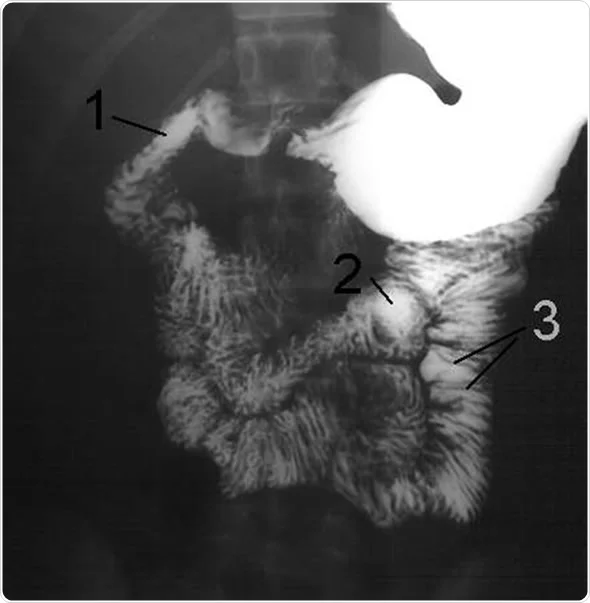
Barium X-ray
After fasting for 12 hours, you will drink a thick liquid containing barium, which covers the inside of the stomach, making it show up on the X-ray. Normally, the stomach will be empty of all food after 12 hours of fasting. If the X-ray shows food in the stomach, gastroparesis is likely. If the X-ray shows an empty stomach, but the doctor still suspects that you have delayed emptying, you may need to repeat the test another day. On any one day, a person with gastroparesis may digest a meal normally, giving a falsely normal test result. If you have diabetes, your doctor may have special instructions about fasting.
You will eat a meal that contains barium, which allows the doctor to watch your stomach as it digests the meal. The amount of time it takes for the barium meal to be digested and leave the stomach gives the doctor an idea of how well the stomach is working. This test can help find emptying problems that do not show up on the liquid barium X-ray. In fact, people who have diabetes-related gastroparesis often digest fluid normally, so the barium beefsteak meal can be more useful.
You will eat food that contains a radioisotope, a slightly radioactive substance that will show up on the scan. The dose of radiation from the radioisotope is small and not dangerous. After eating, you will lie under a machine that detects the radioisotope and shows an image of the food in the stomach and how quickly it leaves the stomach. Gastroparesis is diagnosed if more than half of the food remains in the stomach after two hours.
This test measures electrical and muscular activity in the stomach. The doctor passes a thin tube down the throat into the stomach. The tube contains a wire that takes measurements of the stomach's electrical and muscular activity as it digests liquids and solid food. The measurements show how the stomach is working and whether there is any delay in digestion.
To rule out causes of gastroparesis other than diabetes, the doctor may do an upper endoscopy or an ultrasound.
Upper Endoscopy
After giving you a sedative, the doctor passes a long, thin tube called an endoscope through the mouth and gently guides it down the esophagus into the stomach. Through the endoscope, the doctor can look at the lining of the stomach to check for any abnormalities.
To rule out gallbladder disease or pancreatitis as a source of the problem, you may have an ultrasound test, which uses harmless sound waves to outline and define the shape of the gallbladder and pancreas.
The most important treatment goal for diabetes-related gastroparesis is to manage your blood glucose levels as well as possible. Treatments include insulin, oral medications, changes in what and when you eat, and, in severe cases, feeding tubes and intravenous feeding.
If you have gastroparesis, your food is being absorbed more slowly and at unpredictable times. To better manage blood glucose, you may need to consult with your doctor before trying the following:
*Take insulin more often
*Take your insulin after you eat instead of before
*Check your blood glucose levels frequently after you eat and administer insulin whenever necessary
Your doctor will give you specific instructions based on your particular needs.
Medication(s)
Several drugs are used to treat gastroparesis. Your doctor may try different drugs or combinations of drugs to find the most effective treatment.
Changing your eating habits can help control gastroparesis. Your doctor or dietitian will give you specific instructions, but you may be asked to eat six small meals a day instead of three large ones. If less food enters the stomach each time you eat, it may not become overly full. Or the doctor or dietitian may suggest that you try several liquid meals a day until your blood glucose levels are stable and the gastroparesis has improved. Liquid meals provide all the nutrients found in solid foods, but can pass through the stomach more easily and quickly.
The doctor may also recommend that you avoid high-fat and high-fiber foods. Fat naturally slows digestion — something you don't need if you have gastroparesis — and fiber is difficult to digest. Some high-fiber foods like oranges and broccoli contain material that cannot be digested. Avoid these foods because the indigestible part will remain in the stomach too long and possibly form bezoars.
Feeding Tube
If other approaches do not work, you may need surgery to insert a feeding tube. The tube, called a jejunostomy tube, is inserted through the skin on your abdomen into the small intestine. The feeding tube allows you to put nutrients directly into the small intestine, bypassing the stomach altogether. You will receive special liquid food to use with the tube. A jejunostomy is particularly useful when gastroparesis prevents the nutrients and medication necessary to regulate blood glucose levels from reaching the bloodstream.
By avoiding the source of the problem (the stomach) and putting nutrients and medication directly into the small intestine, you ensure that these products are digested and delivered to your bloodstream quickly. A jejunostomy tube can be temporary and is used only if necessary when gastroparesis is severe.
It is important to note that in most cases treatment does not cure gastroparesis — it is usually a chronic condition. Treatment helps you manage gastroparesis, so that you can be as healthy and comfortable as possible."
I work with other admins in different groups on Pinterest Boards, and we like to publish things from all over the Internet, everywhere between recipes (including juicing, smoothies, and gp friendly foods), and additionally post inspirational and motivational images to keep people fighting their illness. We don't want you to give up, EVER! If you *ever* need to talk to someone, find me on Facebook and we will talk over all of our options. Your life matters.
I posed a series of questions to GP/DTP groups on Facebook and I received some amazing advice for those who are newly diagnosed with GP who may also have Diabetes. The questions I asked were:
Question 1: If you could give a tip to someone with diabetes who is newly diagnosed, what would it be?
Question 2: Please name one thing that you wish someone had told you about GP & Diabetes.
Question 3: Name things that help you cope through both conditions?
Question 4: What do you eat/do when you have low blood sugar with GP?
Question 5: What do you use as a source for Diabetic and GP safe recipes?
Question 6: Are you a Type 1 or a Type 2 Diabetic?
Here are the following answers that I have received. I hope they help those of you who have Diabetic Gastroparesis:
Kathleen writes,
"1. See endocrinologist asap after being diagnosed because you will most likely need to change how and when you dosage insulin to account for delay of food being digested.
2. Any diabetic can get GP. You can have a history of very well controlled diabetes, with A1C always under 7, as was the case with my daughter , and still get it. Her diagnosis was delayed because we were originally told that she couldn't possibly have GP because she hadn't had uncontrolled diabetes for a long time.
3. Humor and hope [check out the page I admin that has motivational pictures and humor. It's called LAUGHING THRU GP. *Emily*] You have to be able to laugh at some of the things we go through and always have hope that things will get better or that you can get through each obstacle that comes your way.
4. Apple juice works best for us. I am also a Type 1 Diabetic.”
Christine writes, “I walk every day.
2. Diet to combine the two.
3. Small and healthy meals combining 2 diseases and exercise.
4. Glucerna .
5. Difficult one but I use vegetables that I am allowed to enjoy along with chicken and fish.
6. I am also a type 2 diabetic.”
Diane writes,
“Question 1: If you could give a tip to someone with diabetes who is newly diagnosed, what would it be?
Read Labels. You would believe some of the stuff that has sugar in it.
Question 2: Please name one thing that you wish someone had told you about GP & Diabetes.
One thing is that you could get GP because of diabetes. Never heard of this kind of neuropathy until I got it.
Question 3: Name things that help you cope through both conditions?
Don't beat your self up for things you "used" could do.
Question 4: What do you eat/do when you have low blood sugar with GP?
Milk or Orange Juice [as a side note, OJ is very acidic and could lead to a GP attack - apple juice is safer *Emily*]
Question 5: What do you use as a source for Diabetic and GP safe recipes?
http://www.dlife.com.”
Claudia writes,
“#1 To believe in yourself, educate yourself, don't think the doctors are in control of your body, you are.
#2 I can't think of one thing for Type1, but I wish someone had explained to me that with GP it affects each person differently... same condition, different methods or treatments for each.
#3 Friends that are understanding and non-judging, hard to find, not many out there, but hold onto the TRUE ones.
#4 100% Juice saves me from lows when I am fighting with GP.
#5 I do not cook, I just steer clear of a lot of fiber and solid food... seems safer to me than to battle the moments afterwards."
Jason writes, “I do not have either diabetes nor GP but my father does and we have been through hell and back trying to get it under control. Through my experience I can recommend to people experiencing these ailments is to be proactive. I watch the doctors sit on there hands while my dad lost 50 lbs in 3 months on top of numerous sugar crashes and vomiting spells. Going to the er at least once a week with them just sending him home after his sugar leveled or he stopped the vomit/diarrhea spell. The doctors wrote my dad off basically and if it wasn't for us looking up stuff on our own and trying to convince the doctors to try things that they didn't think of, and believe me this is no small tasks when you have doctors that know everything, they told us "he's a very sick man" something we already knew and wanted to try and fix this to the best we could. Finally the doctor listened and they put him on tpn to help him get some weight back and also an anti depressant ( I can't remember the name) but its been known to help people with gp because it acts on the same neuroreceptors that anti nausea medicine does and also stimulates appetite. He then since has gotten a stimulator put in that is connected to his stomach and it seems to be helpful. I'm still learning myself on diabetics and gp. All I can recommend is to be proactive. Don't wait until it gets so bad like it did with my father. If you're not getting anywhere with your doctor find a new one. There is a lot of information online that we found helpful also.”
Janet writes, “Before I had my pancreas transplant, I had GP for about the last 5 years of my 26 year type 1 diabetes run. Type 1 diabetes and GP together is a bitch (excuse the language but it the mildest I can use to describe it). It is patly what put me in kidney failure. It makes it unbelievably hard to control your blood sugar, which of course causes further GP damage as well as damage to every other system in your body (nerves, blood vessels, eyes, heart, and on and on). As far as your questions:
1) Keep the best control of your blood sugars you can for exactly the reasons I stated above! I ended up in end stage kidney failure, on dialysis and getting a kidney and pancreas transplant by the time I was 33! The worse the GP gets, the harder the blood sugars get to control, even on an insulin pump. I could ho from 500s to 40s in less than half an hour.
2) When I was first diagnosed, I wish they had told me GP existed. Although at age 6, I'm sure they told my parents, bit not me as I would never comprehend it. Nor do I know if they were even aware of GP in the early 1980s.
3) To cope, I involved myself in the things I enjoy doing - spending time with my husband, playing with my dogs, sewing, crafting, gardening, etc. Of course, I was still working at the time (although that stopped when I went into kidney failure). I also saw (still do) a clinical psychologist (deals specifically with patients with chronic medical issues) and a psychiatrist, which helps tremendously.
4) When I had low blood sugar, I would treat with either juice (no oj though) or let chocolate melt in my mouth.
5) As gar as diet, no one ever suggested a special diet to me, so I no suggestions. All they ever did was try to treat me with meds.
Feel free to ask me more if you like. And I don't mind if you use my name. I am all about spreading awareness of diabetes, GP, kidney disease and organ donation. If my responses seem a little disconnected, please excuse me. I've been in the hospital almost nonstop since last Monday due to GP and the flu! And I'm still here!”
Arizona writes, " I use glucose tabs to bring my sugar up and if its really low I take a glucagon shot. I usually run super high during my period when my stomach freezes completely. Check your sugar as often as possible and take insulin more often. And after meals instead of before. Diabetes and GP can give you a run for your money. I wish my dx doctor would have told me to make a lifestyle change. He told me I could eat a cake for breakfast as long as I took insulin. What kind of doctor does that?"
Tina writes,
"#1-That gp & diabetes do exist. Start a diabetic diet. Learn to read labels & try to get as close to zero down the line in the fat, sugar, carbohydrates, & sodium categories. Cut out all fat, sugar, sodium, carbohydrates, gluten, etc. If one cooking oil says 50% fat & the other says 25% then purchase the 25% cooking oil. Cook w/cooking spray. Use spray butter. Although more expensive your systems will thank you later.
#2-It's okay to eat light soups, shakes, smoothies, or blender meals as your meal for management of diabetes & gastroparesis.
#3-Being able to say NO when others think you should be eating @ the all you can eat buffet! A good blender is probably the #1 thing needed for management of gastroparesis. A good heating pad, bed, pillows, loose fitting clothes, etc. Having understanding people in my life has been a really big help.
#4-I eat a yogurt smoothie, raisins, squash smoothie soup, broccoli smoothie soup, a half an apple w/a tablespoon of peanut butter & a tablespoon of marshmallow crème mixed together for a light dip, a cup of cantaloupe & strawberries blended into a smoothie, a few chips w/ranch yogurt dip, a watermelon smoothie, some raw fresh fruits & vegetables, guacamole & a few chips, beans (1/2 cup) & a few chips, a rice crispie treat, etc. I guess you really have to eat the minimum but several (6) times or more per day, not all @ once.
#5-Less is more. Replace all ingredients high in fat & sugar in recipes w/fat free & sugar free items. It’s more expensive but will be better on your systems in the long run. Eat foods easily digested & more fresh fruits & vegetables. Eat less or no meat because it's hard to digest. Don't eat anything white because it is high in sugar, bread, potatoes, rice, pasta, etc. Eat a small meal, wait 30 minutes, & you will feel full as your blood sugar rises. When you get hungry that is when your blood sugar has dropped. It's important to eat alittle something during this time as opposed to waiting 8 hours before eating. Dangerous! Another reason to always carry hard candy in your pockets. Anyway, I could probably write a book on these subjects, lol. Sorry for the brief synopsis. Hope it helps someone out there!"
Pauline writes, "I'm not a diabetic but would like to add something. I use ginger to treat my gastroparesis as it stimulates gastric motility. Ginger wouldn't be advised in the majority of diabetics since it speeds a meal hitting the bloodstream. When gastroparesis is a factor as well though, ginger can be of use to them. Crystalised ginger is a good thing to keep on hand for episodes of low blood sugar."
Audra writes,
"#1. Listen to your body. Learn how you feel during highs and lows. Your meter is your best friend in the beginning since you won't know what your new "normal" feels like.
#2. That GP IS a diabetic complication that must be managed, not ignored. Part of the management is working with a dietician to learn what foods you can tolerate that help keep your blood glucose in check. Also, that many oral medications that may be helpful for others don't work for GP because of the gastric emptying differences.
#3. It's not about coping, it's about managing. It takes time to grieve, just like when you are diagnosed with any major illness. Then you pick yourself up, make a plan and forge onwards. Learn your options, work with your providers and never stop educating yourself.
#4. I carry glucose liquid purchased at Walmart, a high protein snack bar that can withstand being "beaten up" in my bag, glucose gel tube and keep a Glucagon injection at home (since that's the most likely place I'll need it). I never know which form I'll tolerate best at any given time. If you use the injection, you will have to eat protein very shortly thereafter as it will completely destabilize your body.
#5. www.myrecipes.com to get ideas for food prep that I can tolerate. I eat primarily chicken and am always looking for ways to cook it differently. Since I have so many food allergies, I just adapt recipes to what I can tolerate at the time. Every GPer is different and even the individual's tolerance change. I feel it's best to go with what you can eat than to force yourself into eating things that make you feel worse.
Heather writes, "I have gp and hypoglycemia and for the first time since I was diagnosed, I had a drop for me. I'm not very low but low enough for me to notice symptoms. I just eat done crackers and it fixed."
The nurse told me today that I'm going to be on telemetry today. I guess they're still monitoring my heart. My blood pressure came down with the medicine from 180/117 to 123/82 today. So, that's a big improvement. I feel a little better already! The doctor came in to see me and said that they would do the procedure for the ERCP tomorrow. He said it could be around late afternoonish like 2pm or 3pm. I'm a bit nervous and scared. I hope this procedure works and that I'm feeling much better after. I have a feeling that once they go in, they won't find anything.
I'm meeting with a cardiologist today because my qrt wave is prolonged in my EKG. My nurse said that Zofran can cause this but they're keeping me on telemetry as a precaution. So, I guess I'll be able to update you more on that later.
The Cardiologist came in and told me that they were going to keep me on blood pressure medication as needed until I left the hospital. After that, I need to make an appointment with my regular doctor and talk to him about my pressure. I also am having an echo of my heart done in the morning to see if there are any concerning abnormalities. The Zofran has been stopped and I guess they're waiting for the Zofran to leave my system before they can test my heart.
The Cardiologist did say that my blood sugar was high yesterday but they reran the tests and I'm not diabetic, so that's good news. I wasn't aware that there was a possibility that I could be.
I'm still wearing the oxygen and now I have a telemetry unit hooked up to me. I'm starting to have more wires than Frankenstein! =) Oh! I also just became the mayor of my hospital on Foursquare. Sad, right?
GPACT - has wonderful information regarding diets, treatments, and awareness.
Medtronic - Home page of Medtronic. "Medtronic is the world's leading medical technology company, providing lifelong solutions for people with chronic disease". Medtronic is the manufacturer of the gastric pacemaker for GP now being implanted in medical centers nationwide.
Gastroparesis Group on Yahoo - Online support group for people of all ages, severities, and causes of gastroparesis. Friends and Family are welcome as well. Group managed by five, most of whom have GP personally. Founded Dec. 12, 2000 and has almost 3,000 members from all over the world.
GPACT for Teens - Online support group for teens with GP to interact with others their age and share stories. This group is run by two teens.
Government Info - Gastroparesis and Diabetes. Excellent site with good information even if you are not diabetic.
Oley - The Oley Foundation which provides information and resources on nutritional support needs
Medicine Net - This is a very extensive site for most medical conditions. In order to access info on gastroparesis choose diseases and conditions from the home page, then choose the letter G and scroll down until you find gastroparesis. The site is very extensive and clear.