The idea was suggested to me (by my MD) that a blog/diary might help me feel better by venting my frustrations and struggles with Gastroparesis. Also, I hope I can help others who may have the same thing through my own experiences.
For more information, please email: emilysstomach[at]gmail.com or follow on Twitter: http://twitter.com/emilysstomach or like us on Facebook: http://www.facebook.com/emilysstomach or Instagram: http://www.instagram.com/emilysstomach
Copyright
“You agree that you will not modify, copy, reproduce, sell, or distribute any content in any manner or medium without permission."
I have had this subject saved to write about since March of this year. Life has just gotten in the way, so I've been unable to complete the article like I wanted to. However, I wanted to do some research today on the subject, now that I have had friends who have had it done. I want to talk about the
Per oral endoscopic pyloromyotomy (hereto referred as the POP procedure and GPOEM) and ERCP. I will discuss and share my research about the POP procedure first, but I have written about it in the past. You can find the article I have written on POP/GPOEM here:https://www.emilysstomach.com/2017/06/gpoem-what-is-it-and-how-does-it-help.html
"Innovative Endoscopy Procedure for Gastroparesis Is Safe and Feasible
Gastroparesis, delayed gastric emptying in the absence of mechanical obstruction, is a debilitating and chronic digestive disease affecting 5 million people in the U.S. Typically, medical therapies, intrapyloric injections of botulinum toxin, gastric electrical stimulation therapy and surgical open or laparoscopic pyloroplasty are utilized to manage the disease.
Still, it is a frustrating condition for patients and physicians alike, and until recently these medical and surgical procedures have been largely unsuccessful in resolving the disease’s symptoms or have been associated with complications. According to Cleveland Clinic general surgeon John H. Rodriguez, MD, however, a new, minimally invasive endoscopy therapy, per oral endoscopic pyloromyotomy (POP), has recently shown great promise as an alternative to surgical pyloroplasty for these patients.
Dr. Rodriguez explains that POP has been described in small case reports since 2013 and was first performed at Cleveland Clinic in January 2016. Since that time, he and his colleagues have conducted a prospective study of the technique, and recently published results in Surgical Endoscopy on the first 47 subjects (although to date they have performed almost 100 cases).
The POP study design
From January 2016 to January 2017, prospective patients who were suspected of having gastroparesis were evaluated by a multidisciplinary team comprised of a psychiatrist, dietitian, gastroenterologist and four surgeons specializing in minimally invasive techniques. Prior to having the procedure, a four-hour, non-extrapolated gastric-emptyingscintigraphy study was performed on all subjects, who subjectively rated their symptoms on the Gastroparesis Cardinal Symptom Index (GCSI). Subjects repeated the GCSI at three months after POP.
Of the 47 patients, 27 (57.4 percent) were classified as having idiopathic gastroparesis, 12 (25.6 percent) as having diabetic gastroparesis and eight (17 percent) as having postsurgical gastroparesis. The majority of the patients (87.2 percent) had been treated with one or more previous interventions for their symptoms, such as placement of an enteral feeding tube or a gastric pacer or botulinum toxin injection.
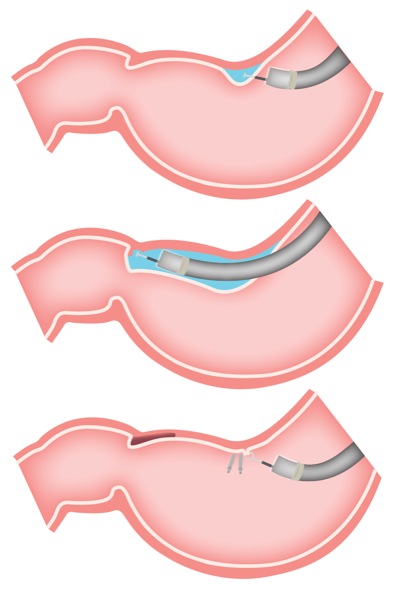
Image Source:HERE.Per-oral pyloromyotomy is a minimally invasive, lower-risk method of disrupting the pylorus that has been shown to improve gastroparesis symptoms.
The POP procedure was performed in the operating room under general anesthesia. Patients stayed in the hospital overnight after the POP procedure and an upper gastrointestinal (GI) series was performed to assess emptying through the pylorus and to check for unrecognized perforations. At discharge, patients were instructed to follow a liquid diet for two weeks and to take anti-acid therapies (sucralfate and a proton pump inhibitor) for four weeks. A repeat gastric-emptying study was performed at three months post-procedure.
The POP procedure produced statistically significant objective and subjective improvements in gastroparesis symptoms at 30 days and three months after treatment. Prior to the procedure, the average percentage of retained food at four hours was 37 percent and the average GCSI score was 4.6. After POP, the retained food percentage was reduced to 20 percent and the GCSI score to 3.3.
One patient died within 30 days of the POP procedure, but his death was unrelated to the surgery. “The procedure is very safe,” says Dr. Rodriguez, “and there were no procedure-related adverse events, including gastric or duodenal ulcer, intraluminal hemorrhage or gastric dumping syndrome.” There were also no repeat surgeries or hospitalizations related to the POP procedure.
A first-line treatment option
“This procedure has dramatically changed our practice at the Cleveland Clinic, and has become our first-line treatment option for medically refractive gastroparesis in well-selected patients,” Dr. Rodriguez says.
According to Matthew D. Kroh, MD, head of the research group and Chief of the Digestive Disease Institute at Cleveland Clinic Abu Dhabi, “POP is an attractive option for patients who in the past would have been offered surgical therapy because it is less invasive. This endoscopic procedure results that are similar to the best alternatives, without the morbidity associated with surgical access, and has a short recovery time.” Dr. Rodriguez adds that “because of its safety profile, we are able to apply POP more broadly than we could apply surgical interventions.”
Dr. Rodriguez reports that Cleveland Clinic has taken the lead in the U.S. with the POP procedure, but because GI motility is so complex and gastroparesis fairly common, he expects to see the technique become more widespread as more experience aggregates on its long-term safety and effectiveness."
"Early human experience with Per-Oral Endoscopic Pyloromyotomy (POP)
Eran Shlomovitz, MD, Radu Pescarus, MD, Ahmed Sharata, MD, Kevin M Reavis, MD, Christy M Dunst, MD, Lee L Swanstrom, MD. Providence Portland Medical Center, The Oregon Clinic..
Introduction:
Gastroparesis, a condition characterized by delayed gastric emptying, and a constellation of symptoms including nausea, vomiting, early satiety and bloating, is a debilitating condition. A variety of surgical options are available including pyloroplasty and pyloromyotomy. Although these have been shown to be effective they are associated with surgical trauma. We hypothesize that an endoscopic submucosal myotomy technique can be applied to endoscopically divide the pyloric sphincter, provide the benefits of a natural orifice procedure and improve gastric emptying in gastroparetic patients.
Methods and procedures:
Endoscopic per-oral pyloromyotomy (POP) was performed in four female patients ages 65, 59, 33 and 32 years old. All patient underwent a complete pre-operative work-up including upper endoscopy, gastric emptying study as well as a pH study and esophageal manometry if a concomitant fundoplication was performed. Three procedures were performed under laparoscopic guidance as patients required other concurrent laparoscopic procedures (see table). In one patient the procedure was fully endoscopic. The myotomy was performed by a technique similar to the one utilized in the POEM procedure. After the creation of a mucosotomy, a submucosal tunnel is established up to the duodenal bulb followed by a myotomy of the circular fibers of the pylorus. The mucosotomy is subsequently closed with clips.
Results:
Endoscopic per-oral pyloromyotomy was technically successful in all four cases and patients were discharged home on post operative day 2 or 3. There were no immediate procedural complications. One patient presented to the hospital 2 weeks post procedure with an upper GI bleed necessitating transfusions. On endoscopy a 1cm ulcer was found in the pyloric channel and an exposed vessel was clipped. The patient was subsequently discharged home on high dose proton pump inhibitors. Three month follow-up nuclear medicine gastric emptying studies (GES) are available for 3 of the 4 patients. Normalization of gastric emptying studies was demonstrated in 2 patients. Patient 3 showed improved gastric emptying half life, but unchanged residual activity at 4hrs.
Concomitant procedure
Operative time
Blood loss
Pre-op GES
Post-op GES
Patient 1
65 F
Cholecystectomy
102 min
Minimal
Half life: 150min
Residual at 4hrs: 29%
Half life: 36min
Residual at 4hrs: 0%
Patient 2
59 F
Redo- PEH repair and Nissen
295 min
100 cc
Half life: 90min
Residual at 4hrs: 14%
Half life: 18min
Residual at 4hrs: 0%
Patient 3
33 F
Nissen
231 min
Minimal
Half life: 160-170min
Residual at 4hrs: 15%
Half life: 70-90min
Residual at 4hrs: 14%
Conclusion:
Endoscopic pyloromyotomy is a technically feasible and potentially much less morbid endoscopic surgical procedure. Early follow-up suggests objective improvement in gastric emptying. Further long-term follow-up and additional clinical experience is required to establish the role of this technique in the management of gastroparesis."
Now, I want to discuss ERCP. I have had this procedure done to me, personally, and it helped me a great deal. I had my ERCP done in 2012, when I was first diagnosed with Gastroparesis. The doctors had to place a stent in my bile duct of my liver because it was not draining bile properly. You can read more about my personal experiences in my earlier blog articles:
I did develop pancreatitis after the procedure, which can be a side effect. That was a very painful experience. However, I want to research ERCP for those of you whose doctors may have suggested it, for those of you curious about it, and for those of you who might not know about the procedure itself.
There is a wonderful video with an explanation of the procedure made bySages,
This talk was presented at the 2018 SAGES Meeting/16th World Congress
of Endoscopic Surgery by Heidi J Miller during the When Bad Things
Happen to Good People – Endoscopy: Being FLEXible on April 14 2018
Endoscopic retrograde cholangiopancreatography (ERCP) is a procedure that combines upper gastrointestinal (GI) endoscopy and x-rays to treat problems of the bile and pancreatic ducts.
What are the bile and pancreatic ducts?
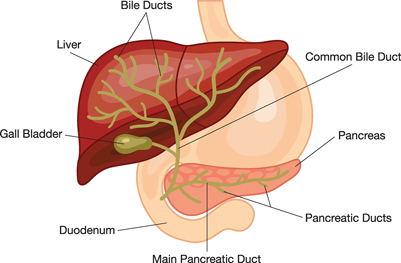
Your bile ducts are tubes that carry bile from your liver to your gallbladder and duodenum. Your pancreatic ducts are tubes that carry pancreatic juice from your pancreas to your duodenum. Small pancreatic ducts empty into the main pancreatic duct. Your common bile duct and main pancreatic duct join before emptying into your duodenum.
Why do doctors use ERCP?
Doctors use ERCP to treat problems of the bile and pancreatic ducts.
Doctors also use ERCP to diagnose problems of the bile and pancreatic
ducts if they expect to treat problems during the procedure. For
diagnosis alone, doctors may use noninvasive tests—tests that do not
physically enter the body—instead of ERCP. Noninvasive tests such as
magnetic resonance cholangiopancreatography (MRCP)—a type of magnetic resonance imaging (MRI) —are safer and can also diagnose many problems of the bile and pancreatic ducts.
Doctors perform ERCP when your bile or pancreatic ducts have become narrowed or blocked because of
gallstones that form in your gallbladder and become stuck in your common bile duct
To prepare for ERCP, talk with your doctor, arrange for a ride home, and follow your doctor’s instructions.
Talk with your doctor
You should talk with your doctor about any allergies and medical
conditions you have and all prescribed and over-the-counter medicines,
vitamins, and supplements you take, including
nonsteroidal anti-inflammatory drugs (NSAIDs) such as ibuprofen and naproxen
Your doctor may ask you to temporarily stop taking medicines that
affect blood clotting or interact with sedatives. You typically receive
sedatives during ERCP to help you relax and stay comfortable.
Tell your doctor if you are, or may be, pregnant. If you are pregnant
and need ERCP to treat a problem, the doctor performing the procedure
may make changes to protect the fetus from x-rays. Research has found
that ERCP is generally safe during pregnancy.1
Arrange for a ride home
For safety reasons, you can’t drive for 24 hours after ERCP, as the sedatives or anesthesia used during the procedure needs time to wear off. You will need to make plans for getting a ride home after ERCP.
Don’t eat, drink, smoke, or chew gum
To see your upper GI tract clearly, you doctor will most likely ask
you not to eat, drink, smoke, or chew gum during the 8 hours before
ERCP.
How do doctors perform ERCP?
Doctors who have specialized training in ERCP perform this procedure at a hospital or an outpatient center. An intravenous
(IV) needle will be placed in your arm to provide a sedative. Sedatives
help you stay relaxed and comfortable during the procedure. A health
care professional will give you a liquid anesthetic to gargle or will
spray anesthetic on the back of your throat. The anesthetic numbs your
throat and helps prevent gagging during the procedure. The health care
staff will monitor your vital signs and keep you as comfortable as
possible. In some cases, you may receive general anesthesia.
You’ll be asked to lie on an examination table. The doctor will carefully feed the endoscope down your esophagus, through your stomach,
and into your duodenum. A small camera mounted on the endoscope will
send a video image to a monitor. The endoscope pumps air into your
stomach and duodenum, making them easier to see.
During ERCP, the doctor
locates the opening where the bile and pancreatic ducts empty into the duodenum
slides a thin, flexible tube called a catheter through the endoscope and into the ducts
injects a special dye, also called contrast medium, into the ducts through the catheter to make the ducts more visible on x-rays
uses a type of x-ray imaging, called fluoroscopy, to examine the ducts and look for narrowed areas or blockages
The doctor may pass tiny tools through the endoscope to
insert stents—tiny tubes that a doctor leaves in narrowed ducts
to hold them open. A doctor may also insert temporary stents to stop
bile leaks that can occur after gallbladder surgery.
The procedure most often takes between 1 and 2 hours.
What should I expect after ERCP?
After ERCP, you can expect the following:
You will most often stay at the hospital or outpatient center
for 1 to 2 hours after the procedure so the sedation or anesthesia can
wear off. In some cases, you may need to stay overnight in the hospital
after ERCP.
You may have bloating or nausea for a short time after the procedure.
You may have a sore throat for 1 to 2 days.
You can go back to a normal diet once your swallowing has returned to normal.
You should rest at home for the remainder of the day.
Following the procedure, you—or a friend or family member who is with
you if you’re still groggy—will receive instructions on how to care for
yourself after the procedure. You should follow all instructions.
You will receive instructions on how to care for yourself after ERCP. You should follow all instructions.
Some results from ERCP are available right away after the procedure.
After the sedative has worn off, the doctor will share results with you
or, if you choose, with your friend or family member.
If the doctor performed a biopsy, a pathologist will examine the biopsy tissue. Biopsy results take a few days or longer to come back.
What are the risks of ERCP?
The risks of ERCP include complications such as the following:
pancreatitis
infection of the bile ducts or gallbladder
excessive bleeding, called hemorrhage
an abnormal reaction to the sedative, including respiratory or cardiac problems
perforation in the bile or pancreatic ducts, or in the duodenum near the opening where the bile and pancreatic ducts empty into it
tissue damage from x-ray exposure
death, although this complication is rare
Research has found that these complications occur in about 5 to 10 percent of ERCP procedures.2 People with complications often need treatment at a hospital.
As always, please discuss these procedures with your doctors. This is just research I have compiled but it does not take the place of a doctor's expertise or advice.
Endoscopic — Refers to a tool called an
endoscope, a long, thin (about the width of your little finger),
flexible tube with a camera on the end.
Retrograde — Refers to the direction (backward)
in which the endoscope injects a liquid for X-rays of parts of the GI
tract called the bile duct system and pancreas.
Cholangio — Refers to the bile duct system.
Pancreatography — Refers to the pancreas.
The process of taking these X-rays is known as cholangiopancreatography.
ERCP can help find the cause of jaundice (when your skin and/or the whites of your eyes turn yellow) or pancreatitis, which is inflammation (swelling and redness) of the pancreas that is often caused by gallstones or alcohol abuse. ERCP can also treat some of those issues.
Using tools passed through the endoscopic tube, your doctor can
inject dye to light up organs under X-rays. This provides a clear view
of your pancreas, pancreatic duct, bile duct system, gallbladder and
duodenum (the first portion of the small intestine).
ERCP is an endoscopic procedure used to inject dye into the bile and pancreas ducts. X-ray pictures are then taken.
ERCP can see if there is a blockage or narrowing in your biliary or pancreatic ducts caused by stones, tumors or scarring.
ERCP is frequently performed to find the cause of abnormal
liver-chemistry tests and to follow up on an abnormal ultrasound, CT
scan or MRI exam.
During an ERCP, if any blocks are found, tools can be passed through to relieve the block. Stones can be removed from the common bile duct or pancreatic duct and blocks can be dilated, biopsied and/or stented.
ERCP can relieve jaundice (when your skin and/or the whites of your eyes turn yellow) caused by blocked bile ducts.
ERCP can help find the cause of pancreatitis, inflammation (swelling and redness) of the pancreas, and prevent future attacks.
This is an article copied from: http://www.medscape.com/viewarticle/863847#vp_1. I like to go back and read interesting breakthroughs when it comes back to gastroparesis treatment. Also, if you have had this procedure done, please email me your story: emilysstomach[at[gmail.com and I will include your story in this article, and whether it did or didn't work for you to let other GPers know. So far, the only clinic I know that does this procedure is Emory in Atlanta, GA.
Gastric Endoscopic Myotomy Showing Promise for Gastroparesis
By: Caroline Helwick
May 25, 2016
FDA Approves Gastroparesis Test for Any Clinical Setting
Nortriptyline Minimal Benefit in Gastroparesis
Ghrelin Receptor Agonist Improves Diabetic Gastroparesis
RELATED DRUGS & DISEASES
Kidney-Pancreas Transplantation
All nine of the study patients were refractory to conventional treatment — including gastric electrical stimulation in two patients — for at least 6 months, had severe symptoms, had been hospitalized at least twice in the previous 6 months, and had disturbed gastric emptying.
Mean procedural time was 48 minutes. There were no peri- or postoperative complications, and all patients could eat 2 days after surgery and were discharged by day 5.
Clinical efficacy was very high; 85% of the patients had improved significantly after 1 month. One of the failures was a recurrence at 2 months in a diabetic patient with renal insufficiency.
Gastroparesis Cardinal Symptom Index (CGSI) score decreased from 3.5 before the procedure to 0.9 at 1 month (P < .001) and 1.1 at 3 months (P < .001). Improvements were also significant for nausea, vomiting, abdominal pain, gastric fullness, and early satiety at 3 months (P <.001 for all), but not for anorexia.
Time to half gastric emptying was significantly better after the procedure than before (133 vs 222 minutes; P < .001). Improved quality of life was reported by 63% of patients.
Table. Gastric Emptying
Mean Residual Percentage Before G-POEM, % After G-POEM, % P Value
At 2 hours 76 40 <.001
At 4 hours 44 19 NS
Dr Gonzalez acknowledged that long-term follow-up is needed for these patients, as are prospective studies, which his group has initiated.
Dr Khashab said G-POEM can be considered not only for patients with recurrent hospitalizations, but also "for any patient with nausea and vomiting that significantly affects their quality of life, even without hospitalization."
Although some patients respond to simple medical therapy, metoclopramide carries a black-box warning for tardive dyskinesia "and is only marginally effective," and antiemetics provide only symptomatic relief, Dr Khashab pointed out. Before attempting G-POEM, endoscopists should be skilled at esophageal POEM, he added.
Dr Gonzalez offered a few procedural tips: "Start at the 5 o'clock position from the pylorus, keep checking your direction, and stop at the pyloric arch."
Dr John Vargo
These results come from small case series, but they show "intriguingly positive results" in terms of symptomatic response and gastric emptying tests, said John Vargo, MD, from the Cleveland Clinic's Digestive Disease and Surgery Institute.
"G-POEM is definitely something we have to look at," Dr Vargo Medscape Medical News. "For these patients, pharmacologic treatments are imperfect; medications have many different side effects. We do have another avenue with gastric pacing, but again, this approach is in its infancy."
"I'm hopeful G-POEM will help these very sick people who have a very challenged quality of life," he said. "It's good to see these results, and I look forward to longer follow-up and a larger series of patients."
Dr Khashab, Dr Gonzalez, and Dr Vargo have disclosed no relevant financial relationships.
Digestive Disease Week (DDW) 2016: Abstracts Mo2015 and 715. Presented May 23, 2016.
As most of you probably already know, one of the experimental treatments for Gastroparesis is a Botox injection into the stomach through endoscopy.
According to the Mayo Clinic, Botulinum toxin A (BOTOX) is a powerful inhibitor of muscle contraction. Botox is a nerve toxin most commonly known for its use in treating skin wrinkles but is experimental for Gastroparesis. Botox can be injected through an endoscope to relax muscles in the GI tract, including the lower esophageal sphincter (end of the esophagus) in achalasia, and the pylorus (end of the stomach) in patients with Gastroparesis. Researchers have found that Botox injections relax the pyloric muscle in some people, thereby allowing the stomach to release more food into the small intestine. The benefits are temporary, however, and more studies are needed to determine the overall usefulness of this treatment.
I've read about it, did research on it, and asked people I knew who had it done questions about the procedure and if they would recommend it. Everyone I talked to had a great experience with it, so I decided that it couldn't hurt. Besides that, I was miserable and desperate.
So, I'm going to walk you through the botox injection procedure, step by step in what I went through today.
I have to admit I was nervous when I arrived at the hospital because I didn't know what to expect since I've never done this before. As soon as I walked in, I checked into the GI department. After I registered, I sat in the waiting room for a while.
The nurse called me back and put my fancy ID bracelet on. She gave me a gown and told me to put all of my stuff in a plastic bag. I had to strip down to my underwear for the hospital gown. After I was ready, she came back in and placed my plastic bag under my stretcher so that it could ride with me. She also logged all of my valuables.
She went ahead and applied the electrodes to monitor my heart rhythm, applied a blood pressure, and an oxygen sensor to take my vital signs. She tried to stick me for an IV, but missed the vein. So, they had to call in the IV team. Thankfully, the nurse on the IV team got me on the first try but had to use a really tiny needle for the IV because of my tiny veins. I was actually impressed because it usually takes them about six tries before they get it right.
The nurse gave me Zofran through the IV because I was extremely nauseated (since I couldn't eat or drink after midnight nor take my medications) while I was waiting.
I had a visit from the anesthesiologist and the doctor to make sure I didn't have any allergies, adverse reactions, etc.
Then, it was time to take me back for the endoscopy. If you've never had an endoscopy, the doctor uses an instrument to examine the interior of a hollow organ or cavity of the body. Unlike most other medical imaging devices, endoscopes are inserted directly into the organ and in this case, my stomach.
Below is an endoscope, image from Wikipedia:
Once I was in the room, the nurse had me lay on my side, facing away from the screen that the camera projects on to. She put oxygen in my nose and told me to open my mouth and bite down on a solid green circle, which would hold my mouth open for the camera to pass through.
The top picture is the bite block for an endoscope and the bottom picture is where the bite block goes. Source HERE.
The anesthesiologist then began to push the medications to put me to sleep for the endoscope. The first medication he pushed into my IV made my ears ring like crazy and made me a bit dizzy. The second one he told me would burn, and it did! It burned all of the way up my arm, so much so that I had tears in my eyes. It didn't hurt for very long because I woke up in recovery after that.
In recovery, the doctor visited my husband and myself. He said that if this doesn't help me, he would refer me to Augusta to a motility specialist there. After he left the room, the nurse came in, took my vital signs, and readied my discharge papers. She disconnected my IV, I got dressed, and she wheeled me out to my husband in our waiting car. That's all there was to it!
I was still groggy when I got home so I slept most of the day. I will tell you that I'm having stomach spasms because of the injection today. I was told it would take a few days to subside. So, I will keep you updated on my progress. In the meantime, check out some pictures my husband took of me in recovery. I look so thrilled!
I reported for my 10:35am appointment this morning for my EKG. The appointment was in Davis Building 2 East.
I didn't have very long to wait. As soon as I sat down, the nurse appeared and called about four of us back. The nurse led me to a dressing room in the back and gave me a gown to change into to. She told me to leave my stuff in my dressing room and to take the key with me. Then, I went around the corner and laid on the table in the room while my EKG was done. The tech doing my EKG talked to me about the Falcons and how disappointed he was that the Ravens won the super bowl. We started talking about UGA games, since I have to deal with the drunk people after the games. He was telling me how horrible the UGA and Florida games were. The other tech behind the curtain working on someone else was also commenting on our conversation and chiming in on what he felt strongly about. They told me that I was their favorite patient for the day. That made me smile. I think they were amused that I love football.
So, the EKG was normal and I was released. My next appointment is at 1:30pm today for my endoscope and my Bravo test. I'm going to take a nap until then.
I started a new page last night based on humor. When I went to sleep last night, it only have fifteen likes. Now, it has over 100. The page is LAUGHTER THROUGH GP. I figured that Gastroparesis needed a little humor to cheer members up and it was a niche that hasn't been carved out yet. =)
At 1:30pm I reported to the patient registration desk in the Mayo building to register for my endoscope.
The receptionist sent me up to Mayo 5 North to check in for my procedure.
Before I did anything else, I stopped and looked at the views from the fifth floor. They were amazing, so I took some pictures of that as well.
I sat down and went over my medication list. I crossed a bunch out that the doctor took me off of and answered a questionaire about past surgeries and medical issues. I sat with papers in hand waiting for the nurse to call me back.
The nurse called me back and had me put on a gown. The attached me to a blood pressure cuff (my BP was high, no changes there), and got my IV in my right hand on the first try. She asked me a lot of questions and then I met the doctor. He was nice. Then, I met the anesthesiologist who was nice as well. They didn't waste any time and they wheeled me back in my bed for the endoscope. They had me lay on my side and bite down on a green plastic ring. The anesthesiologist pushed the drugs to make me sleep. I remember looking at the screen and then waking up in recovery. I cracked jokes with the nurse after I woke up.
The nurse told me that I would feel like there's something stuck in my throat because of the BRAVO TEST. The capsule attached to my esophagus will fall away by Friday. I came back to the hotel, ate a bit, and then went to sleep. I'm about to go back to sleep now because I still feel exhausted.
I have to say that the Mayo Clinic is very efficient. I went and registered at the registration desk and then was called back by a nurse. She input my information into the computer and put in all of my medical history. Then, she sent me upstairs to the floor where the doctor was and they asked me more questions and gave me more forms. I was able to get back to the doctor's room quite quickly.
As a side note, I need to make sure to get my other records sent there. I've had problems with nausea and vomiting since I was a teenager.
The doctor wasn't happy about my GI doctor's medications that he put me on but did commend my doctor for sending me to the Mayo Clinic. He told me that Bentyl and Levsin are basically the same things and they can cause paralysis of the stomach. I was also told to stop Nortriptyline, Dexilant, and Zoloft. The Doctor said that he wanted to see how my stomach reacted without all of the drugs masking symptoms and that the drugs could be making the nausea/vomiting worse. He told me that 30% of people that take Zoloft have nausea and vomiting.
He wanted me all of all of these medications before I take any tests. He doesn't want the medications to skew the results. So, I have to go back down to Jacksonville the first week of February.
He also said that me not being able to keep down water was very strange and not a symptom of GP. He mentioned this many times.
The doctor said that if the gastroparesis was caused by a virus in March, then the good news is that it is temporary - the stomach will heal itself in a year or two.
The tests that I will be doing the first week of February at Mayo are:
Gastric Emptying Test - to retake again because he said that they shouldn't have taken it the first time around while I was hospitalized and on pain medication. I will have this test done for four hours and I'm nervous because I had such a hard time keeping the radioactive sandwich down the first time. I remember crying because I was in so much pain from the test. Going from eating nothing to eating an entire sandwich is rough.
Endoscopic Ultrasound (they can't do an MRI with my spinal cord stimulator) - they want to go in to see if there are any stones or anything in my liver that could be causing my upper right pain. They are also going to stretch out my esophagus if they feel it's too constricted while they're in there. The doctor wants to take a look at my biliary system.
Bravo pH Test - this will test for acid reflux to see if that's contributing to my problems.
Blood tests - he's going to check my liver enzymes, since they've been elevated lately. He wants to know why. He's also testing my TSH (thyroid), Cortisol levels, and doing a complete panel.
The doctor has low confidence in my GP diagnosis and GERD. He thinks that if I do have gastroparesis that something else is going on because I shouldn't be this ill. This doctor helped to make the first gastric pacemaker, so I'm in good hands. He was also wearing a bow tie and I was wearing a Doctor Who shirt, with a TARDIS on it.
I have a test on each day starting February 4th. I'm going to be extremely tired but at least they're going to do it out patient. I'm hoping that I can get some answers. I really want to feel better and not carry a bucket or bags when I go anywhere.