Find us on Google+ Gastroparesis

Copyright

“You agree that you will not modify, copy, reproduce, sell, or distribute any content in any manner or medium without permission."

Thursday, October 30, 2014

Pregnancy and Gastroparesis

I am featuring a series of guest bloggers to blog about things that I don't have personal experience with, who can better answer your questions. A lot of questions that I've received recently have to do with GP and Pregnancy. I don't have any experience with this but thankfully, I had two women offer to share their different stories with you and try to alleviate any questions that you have about pregnancy regarding GP. There is a group on Facebook, Pregnancy and GP, that might be able to help you and answer your questions there as well. It can be found here: https://www.facebook.com/groups/GPSexandPregnancy.


These two, brave ladies are willing to share their experiences with you. If you have any further questions, please leave it in the comments so that they can answer them for you. I am grateful for all of my guest bloggers, for tackling the issues that I feel are important. I'm very grateful for their stories and I hope that you have a good read!


Image taken from http://pregnancycmwa.files.wordpress.com/2013/05/pregnancy-happy-face.jpg


My Pregnacy with GP
by: Julienne Floetke


I have had Gastroparesis for 6 years now. I was able to get pregnant very easily (which is such a blessing, I know it's not easy for everyone). I had a miscarriage with my first pregnancy last year and am 25 weeks pregnant right now. I was incredibly scared to get pregnant because of the GP. With my first pregnancy, I stopped taking the medicine I was on (Nortriptyline) due to the risks. It was extremely difficult coming off the medicine, but I didn't really have a choice. I chose not to go back on the medicine so that when I got pregnant again, I wouldn't have to worry about it. (I had surgery and had to wait 8 months to try again).

The first 17 weeks of this pregnancy were extremely challenging. I have never felt so sick in my life. I did not understand how there were so many people in this world and why people would continue to have babies if it was like that for everyone. It has definitely improved and my thoughts have also changed.

Seeing my little baby and feeling her move around is so worth the pain and struggles that go along with being pregnant and having GP. I've heard of many people getting better while they are pregnant though, so my story isn't the only way it could go!

Every pregnancy is different. I am still taking Zofran every night to prevent vomiting from morning sickness. I was scared about getting pregnant, but my want of being a mom overruled those feelings. Every day is different with pregnancy, just as it sometimes is with GP.

I've never thought about giving GP to her because no one else in my family has it. I never really thought of it as genetic, which it could be, I don't know. If she does get it though, I've learned so much through my journey I would hope to be able to help her. I pray that she is perfect and healthy though, of course.
I have mentioned on the forum before that I struggle really bad with vitamins. I've always gotten sick with vitamins so trying the prenatal, the prenatals without iron, the gummy prenatals, and Flintstones have taken a toll on my stomach.

I feel EXTREMELY guilty that I haven't taken vitamins (even a little consistently) since I was 8 weeks pregnant. I was trying to eat better to get more nutrients, but that went down the drain when I had a flare and then got kidney stones.

I have researched online about people not taking vitamins and everything pretty much seems negative. I hate not being strong enough to take them every day or even once a week. I feel like I'm failing and that is not a good feeling. I feel like I would do a better job of taking care of her outside of my body at this point. I'm praying she comes out healthy and well nourished. That's all I can do sometimes.

Kidney stones with bowel issues aren't very fun either, but because I deal with pain every day with my stomach, I just use my tactics to get through it. I try not to take Tylenol because I feel like that is something I do have control of and I just work through it. I get very down about having Gastroparesis and feel like it's extremely unfair to have to work so hard at things people can do without a problem. But I cry and get it out and focus on the things I can control.

Being chronically ill makes everything a challenge, and pregnancy is no different. However, those of us with GP are a rare breed. We are strong. Our bodies were made to have babies and I have trust in my body that it will do what it needs to in order to get her earth side healthy and whole. Thanks for listening!


My Pregnancy Story
By: Melinda Horne


I had two kids with GP (gastroparesis) but I did not know that I had GP at the time. During my first pregnancy, the most difficult part was getting pregnant. We tried for nine years before finally succeeding, and we had two early miscarriages before that and both were before eight weeks along.

We spent years having test and seeing fertility doctors with no real explanation as to why we could not get pregnant. I did know that I had PCOS (Poly-cystic Ovarian Syndrome) but found that I was ovulating every month with no luck.

The month we found out we were pregnant, the doctor was just as confused as us, as the test showed we did not ovulate that month. Clearly, it was wrong.

My pregnancy was pretty normal aside from the fact that I vomited twenty-four seven, and at two months pregnant, I left work because I couldn't work newspaper hours on no sleep/no energy. I couldn't even answer the phone at work as I was always in the bathroom.

One day I fell asleep at work at my desk and after that day I did not go back. I knew when the baby came that I would have to stop working at the newspaper, as both parents can't work 12 hour days anyway. I did better at home with the vomiting because I could lay down when nausea hit hard.

The last month was bad so the doctor put me on Phenergan and it worked but it also made me sleep for long periods of time, like twelve to eighteen hours. I only woke up to drink protein/meal shakes. I was obese and gained only eight pounds with her during the pregnancy.

I delivered vaginally in only eight hours (lucky for me since the epidural didn't work even after being stuck 5 times we never found the right spot), record time for a first pregnancy. She was an ounce shy of being 7 lbs and completely healthy.

About two years later we decided to try again and it only took us six months to get pregnant. I was still sick this time but learned from the first pregnancy not to eat certain heavy foods that did not stay down, and to supplement this with a lot of meal replacement shakes and soft foods.

I didn't have any complications until 29 weeks when we discovered that I had a slow amnio leak and was forced to drink 72 ounces of water a day. I lived in the bathroom. At about 32 weeks, my water level was low. So from that point on, we went to hospital twice a week to check fluid levels, and to have a bpp (bio-pyschical profile) and non stress test. My doctor kept a close eye on us. We got a lot of looks at the baby and everyone said that the baby would be a girl.

At 34 weeks, while having a bpp (bio-psychical profile), while we looked at baby's breathing and took measurements, the tech and I discovered that it's actually a boy!

A week later at my bpp and stress test didn't score well. They did a more in depth ultrasound and the baby was not growing much. My fluid level was low, 10 is a good fluid level and 5 is danger zone, mine was 1.2. The doctor said they would have to treat me like my water broke and deliver me.

My body wasn't really ready and induction is long and painful. I delivered him the next day vaginally, without any major problems. He was born and weighed 5 lbs 7 ounces, and was small but healthy. We found out his lungs and everything was developed. He stayed with me and then went home with me after a few days.

I would highly recommend a good doctor that deals with high risk patients and babies. I am convinced that the doctor is why my son did so well. Being diagnosed with GP, I would want a doctor that at least was willing to listen to concerns and make sure you get the medical care you need while pregnant with GP, even if that means dealing with your GI doctor to manage you.

Tuesday, October 28, 2014

Suicide and Chronic Illness

I am involved with a lot of gastroparesis groups on Facebook. A few weeks ago, we lost one of our members to suicide. I wanted to address this, so that her death had some meaning, and to reach out to anyone else who is feeling lost and lonely. Please know that you aren't alone. Many people with chronic illnesses have a higher chance of suicide, according to medical studies.

***THESE HELPLINES ARE NOT EXCLUSIVELY TO GPERs, SO IF YOU NEED THEM FOR ANOTHER FRIEND, PLEASE USE THEM! PRINT THEM AND PUT THEM ON YOUR FRIDGE!***


According to The Guardian (http://www.theguardian.com/society/2011/aug/23/suicide-chronic-illness-study,


"At least one person takes their life every day while suffering from a chronic or terminal illness, and the government is neglecting this hidden trend, the think tank Demos has said.

In a study, The Truth About Suicide, researchers found at least 10% of suicides in Britain are linked to terminal or chronic illness, accounting for more than 400 deaths a year. The think tank, which said the study marked the first attempt to estimate the scale of suicides related to illness, wanted to challenge the notion that taking one's own life is largely about a patient's mental health rather than physical state. Researchers also found some people were killing themselves at a "younger age in order to avoid severe symptoms and greater pain later in life".

The figures come from a mixture of sources, including data from freedom of information requests to 147 primary care trusts, which are supposed to conduct annual suicide audits.

Researchers also conducted a series of interviews with serving and recently retired coroners. Demos also had access to suicide inquest files in Norwich from May 2006 to December 2010 to identify the proportion of suicides that involved people with terminal or chronic health conditions. It said that of the 4,390 individual suicide cases last year, 10% concerned people "experiencing some form of serious physical illness as an influencing factor".

The researchers said patients with such conditions "should be considered a high- risk group for suicide within national policy, and much greater attention should be given to providing better medical, practical and psychological support". The issue has become a fixture in public debate as growing numbers of UK citizens with chronic or terminal conditions have traveled to the assisted-death organization Dignitas in Switzerland to be helped to end their lives. Last year, a coroner recorded a verdict of suicide over the death of Michelle Broad, wife of the former England cricketer and international referee Chris Broad, who had motor neurone disease.

Louise Bazalgette, author of the report, said the 'lack of attention paid to people with terminal or chronic illness committing suicide is a gross dereliction of duty on the part of the government and health services. The difficulty we experienced in tracking down evidence of the relationship between physical illness and suicide suggests a willful avoidance of what is an extremely important public health issue.

'The results are devastating: at least 400 people with terminal or chronic illness commit suicide every year and this cannot continue to be ignored.'

She said a government consultation on suicide prevention, issued last month, focused on the same 'at risk' groups identified by Labor in 2002: those using mental health services, prisoners and people with a history of self-harm.


Source: https://nacchocommunique.com/2016/08/23/naccho-aboriginal-health-racgp-calls-for-urgent-action-to-support-the-health-and-wellbeing-of-our-youth/</a>


'Eighty prisoners committed suicide last year. That is only a fifth of suicides of patients with chronic or terminal conditions. There's an urgent need for support,' she said.

Experts agreed hospital doctors and GPs could do more to identify patients at risk from suicide but warned that the issue was 'more complicated.'

Linda Gask, professor of primary care psychiatry at the University of Manchester, said it was wrong to think 'being depressed enough to commit suicide is either because of your mental health or your physical health: one is linked to another. We know that 30% of diabetes patients are depressed. Not all of them commit suicide.

'On the other hand, those traveling to Dignitas would say they are not depressed. They argue they are making a rational decision because they do not want to live like this.'

Charities were also wary of clearly ascribing the cause of a suicide to either physical or mental health problems.

Jo Ferns, director of research for the Samaritans, said the issue was one of 'risk' and what factors increased the chance of suicide.

'People with chronic conditions could be not suicidal but perhaps apathetic about living or dying. They are not saying they will kill themselves but taking decisions that do increase the risks. I think that's what we have to watch for.'

A Department of Health spokesman said its mental health strategy recognized 'that physical illness increases the risk of mental health problems and vice versa. We are consulting with bereaved families and experts in general practice, local government, and other organizations on a new strategy to prevent suicides.

"]'The consultation calls upon healthcare professionals to be alert to mental health issues, especially depression, in the patients that they see for known physical health problems, and to take the right steps to help people with long-term conditions have a better quality of life.'"


According to WebMD (http://www.webmd.com/depression/guide/chronic-illnesses-depression
,

"Dealing With Chronic Illnesses and Depression:

For millions of people, chronic illnesses and depression are facts of life. A chronic illness is a condition that lasts for a very long time and usually cannot be cured completely, although some illnesses can be controlled or managed through lifestyle (diet and exercise) and certain medications. Examples of chronic illnesses include diabetes, heart disease, arthritis, kidney disease, HIV/AIDS, lupus, and multiple sclerosis (I'm going to go ahead and say GP since I believe it's a chronic illness and just as debilitating, even though it's not in the article).

Many people with these illnesses become depressed. In fact, depression is one of the most common complications of chronic illness. It's estimated that up to one-third of people with a serious medical condition have symptoms of depression.

It's not hard to see the cause and effect relationship between chronic illness and depression. Serious illness can cause tremendous life changes and limit your mobility and independence. A chronic illness can make it impossible to do the things you enjoy, and it can eat away at your self-confidence and a sense of hope in the future. No surprise, then, that people with chronic illness often feel despair and sadness. In some cases, the physical effects of the condition itself or the side effects of medication lead to depression, too.

What Chronic Conditions Trigger Depression?

Although any illness can trigger depressed feelings, the risk of chronic illness and depression gets higher with the severity of the illness and the level of life disruption it causes. The risk of depression is generally 10-25% for women and 5-12% for men. However, people with a chronic illness face a much higher risk -- between 25-33%. Risk is especially high in someone who has a history of depression.
Continue reading below...


Depression caused by chronic disease often makes the condition worse, especially if the illness causes pain and fatigue or it limits a person's ability to interact with others. Depression can intensify pain, as well as fatigue and sluggishness. The combination of chronic illness and depression might lead you to isolate yourself, which is likely to make the depression even worse.

Research on chronic illnesses and depression indicates that depression rates are high among patients with chronic conditions:

Heart attack: 40%-65% experience depression
Coronary artery disease (without heart attack): 18%-20% experience depression
Parkinson's disease: 40% experience depression
Multiple sclerosis: 40% experience depression
Stroke: 10%-27% experience depression
Cancer: 25% experience depression
Diabetes: 25% experience depression
Chronic pain syndrome: 30%-54% experience depression

Symptoms of Depression

People with a chronic illness as well as their family members often overlook the symptoms of depression. They assume that feeling sad is normal for someone struggling with disease. Symptoms of depression are also often masked by other medical problems. The symptoms get treated, but not the underlying depression. When you have both a chronic illness and depression, you need to treat both at the same time.


Source: https://williamsonsource.com/save-lives-learning-warning-signs-suicide/


Treatment Options

Depression is treated much the same way for someone who is chronically ill as someone who isn't. Early diagnosis and treatment can ease distress along with the risk of complications and suicide. Many times, depression treatment can improve your overall medical condition, a better quality of life, and a greater likelihood of sticking to a long-term treatment plan.

When depressive symptoms are related to the physical illness or the side effects of medication, your doctor may need to adjust or change your treatment. When the depression is a separate problem, it can be treated on its own. More than 80% of people with depression can be treated successfully with medicine, psychotherapy, or a combination of both. Antidepressant drugs usually take effect within a matter of weeks. You should work closely with your doctor or psychiatrist to find the most effective medication.


My friend Melissa wrote this and I wanted to share it because it's true.


Tips for Living With a Chronic Illness

Depression, disability, and chronic illness form a vicious cycle. Chronic medical conditions can bring on bouts of depression, which, in turn get in the way of successful treatment of the disease.

Living with a chronic illness is a challenge, and it's normal to feel grief and sadness as you come to grips with your condition and its implications. But if these feelings don't go away, or you are having trouble sleeping or eating, or you've lost interest in the activities you normally enjoy, seek help.

To avoid depression:

Try not to isolate yourself. Reach out to family and friends. If you don't have a solid support system, take steps to build one. Ask your doctor or therapist about support groups and other community resources.

Learn as much as you can about your condition. Knowledge is power when it comes to getting the best treatment available and keeping your sense of independence and control.

Make sure that you have medical support from experts you trust and can talk to openly about your ongoing questions and concerns.

If you suspect that your medication is bringing you down, talk to your doctor about other possible treatments.

Talk with your doctor about pain management.

As much as is possible, keep doing the things you like to do. You'll stay connected as well as boost your self-confidence and sense of community.

If you think you're depressed, don't wait to get help. Find a therapist or counselor you trust."


If you ARE feeling suicidal, please reach out to someone for help - a friend, a family member, priest, counselor, or click on the links below for help. We don't want to lose you, you're too valuable and your life is not meaningless.


Suicide Prevention:

If you are feeling suicidal and you want help then I have some websites for you to look into:

The Suicide Prevention Hotline: 1-800-273-TALK (8255)

http://www.suicidepreventionlifeline.org/gethelp/online.aspx

http://www.helpguide.org/articles/suicide-prevention/suicide-prevention-helping-someone-who-
is-suicidal.htm


http://www.afsp.org/

http://suicide.org/

http://dbhdd.georgia.gov/suicide-prevention

Here is a link to determine whether someone is really suicidal or not:

http://www.onhealth.com/suicide/article.htm


I received a Crisis Management document when I was starting my fraternity chapter. I wanted to share it on this article because it might help someone else, and would definitely help someone dealing with something like this in college or in school:


Image Source: Psi Upsilon


According to Healthcare.org,

"Are You Feeling Suicidal?

How to Deal with Suicidal Thoughts and Feelings and Overcome the Pain

You're not alone; many of us have had suicidal thoughts at some point in our lives. Feeling suicidal is not a character defect, and it doesn't mean that you are crazy, or weak, or flawed. It only means that you have more pain than you can cope with right now. This pain seems overwhelming and permanent at the moment. But with time and support, you can overcome your problems and the pain and suicidal feelings will pass.


I'm having suicidal thoughts, what do I need to know?

No matter how much pain you’re experiencing right now, you’re not alone. Some of the finest, most admired, needed, and talented people have been where you are now. Many of us have thought about taking our own lives when we’ve felt overwhelmed by depression and devoid of all hope. But the pain of depression can be treated and hope can be renewed. No matter what your situation, there are people who need you, places where you can make a difference, and experiences that can remind you that life is worth living. It takes real courage to face death and step back from the brink. You can use that courage to face life, to learn coping skills for overcoming depression, and for finding the strength to keep going.


Remember:

Your emotions are not fixed - they are constantly changing. How you feel today may not be the same as how you felt yesterday or how you'll feel tomorrow or next week.
Your absence would create grief and anguish in the lives of friends and loved ones.
There are many things you can still accomplish in your life.
There are sights, sounds, and experiences in life that have the ability to delight and lift you - and that you would miss.
Your ability to experience pleasurable emotions is equal to your ability to experience distressing emotions.


Source: https://sicklervillesun.com/this-life-counts-suicide-awareness-and-prevention-program-set-for-oct-3-65b2f3134b51


Why do I feel suicidal?

Many kinds of emotional pain can lead to thoughts of suicide. The reasons for this pain are unique to each one of us, and the ability to cope with the pain differs from person to person. We are all different. There are, however, some common causes that may lead us to experience suicidal thoughts and feelings.


Why suicide can seem like the only option

If you are unable to think of solutions other than suicide, it is not that other solutions don’t exist, but rather that you are currently unable to see them. The intense emotional pain that you’re experiencing right now can distort your thinking so it becomes harder to see possible solutions to problems, or to connect with those who can offer support. Therapists, counselors, friends or loved ones can help you to see solutions that otherwise may not be apparent to you. Give them a chance to help.


Source: https://www.nimh.nih.gov/health/publications/suicide-faq/index.shtml


A suicidal crisis is almost always temporary

Although it might seem as if your pain and unhappiness will never end, it is important to realize that crises are usually temporary. Solutions are often found, feelings change, unexpected positive events occur. Remember: suicide is a permanent solution to a temporary problem. Give yourself the time necessary for things to change and the pain to subside.


Even problems that seem hopeless have solutions

Mental health conditions such as depression, schizophrenia, and bipolar disorder are all treatable with changes in lifestyle, therapy, and medication. Most people who seek help can improve their situation and recover. Even if you have received treatment for a disorder before, or if you’ve already made attempts to solve your problems, know that it’s often necessary to try different approaches before finding the right solution or combination of solutions. When medication is prescribed, for example, finding the right dosage often requires an ongoing process of adjustment. Don’t give up before you’ve found the solution that works for you. Virtually all problems can be treated or resolved.


Take these immediate actions

Step #1: Promise not to do anything right now
Even though you’re in a lot of pain right now, give yourself some distance between thoughts and action. Make a promise to yourself: 'I will wait 24 hours and won't do anything drastic during that time.' Or, wait a week.

Thoughts and actions are two different things—your suicidal thoughts do not have to become a reality. There is no deadline, no one's pushing you to act on these thoughts immediately. Wait. Wait and put some distance between your suicidal thoughts and suicidal action.

Step #2: Avoid drugs and alcohol
Suicidal thoughts can become even stronger if you have taken drugs or alcohol. It is important to not use nonprescription drugs or alcohol when you feel hopeless or are thinking about suicide.

Step #3: Make your home safe.
Remove things you could use to hurt yourself, such as pills, knives, razors, or firearms. If you are unable to do so, go to a place where you can feel safe. If you are thinking of taking an overdose, give your medicines to someone who can return them to you one day at a time as you need them.

Step #4: Don’t keep these suicidal feelings to yourself
Many of us have found that the first step to coping with suicidal thoughts and feelings is to share them with someone we trust. It may be a family member, friend, therapist, member of the clergy, teacher, family doctor, coach, or an experienced counselor at the end of a helpline. Find someone you trust and let them know how bad things are. Don’t let fear, shame, or embarrassment prevent you from seeking help. And if the first person you reach out to doesn’t seem to understand, try someone else. Just talking about how you got to this point in your life can release a lot of the pressure that’s building up and help you find a way to cope.

Step #5: Take hope - people DO get through this
Even people who feel as badly as you are feeling now manage to survive these feelings. Take hope in this. There is a very good chance that you are going to live through these feelings, no matter how much self-loathing, hopelessness, or isolation you are currently experiencing. Just give yourself the time needed and don’t try to go it alone.


Reaching out for help

Even if it doesn't feel like it right now, there are many people who want to support you during this difficult time. Reach out to someone. Do it now. If you promised yourself 24 hours or a week in step #1 above, use that time to tell someone what's going on with you. Talk to someone who won't try to argue about how you feel, judge you, or tell you to just 'snap out of it.' Find someone who will simply listen and be there for you.

It doesn’t matter who it is, as long as it’s someone you trust and who is likely to listen with compassion and acceptance.


Source: https://nicoa.org/national-suicide-prevention-week/


How to talk to someone about your suicidal thoughts

Even when you’ve decided who you can trust to talk to, admitting your suicidal thoughts to another person can be difficult.

Tell the person exactly what you are telling yourself. If you have a suicide plan, explain it to them.
Phrases such as, ‘I can't take it anymore’ or ‘I’m done’ are vague and do not illustrate how serious things really are. Tell the person you trust that you are thinking about suicide.

If it is too difficult for you to talk about, try writing it down and handing a note to the person you trust. Or send them an email or text and sit with them while they read it.


What if you don't feel understood?

If the first person you reached out to doesn’t seem to understand, tell someone else or call a suicide crisis helpline. Don’t let a bad experience stop you from finding someone who can help.


If you don’t know who to turn to:

In the U.S. - Call the National Suicide Prevention Lifeline at 1-800-273-TALK (8255) or the National Hopeline Network at 1-800-SUICIDE (1-800-784-2433).

In the UK and Ireland - Call the Samaritans at 116 123

In Australia - Call Lifeline Australia at 13 11 14

In other countries - Visit IASP or Suicide.org to find a helpline in your country.


How to cope with suicidal thoughts

Remember that while it may seem as if these suicidal thoughts and feelings will never end, this is never a permanent condition. You WILL feel better again. In the meantime, there are some ways to help cope with your suicidal thoughts and feelings.


Source: https://www.youthchg.com/product/adolescent-suicide-prevention-poster/


If You Have Suicidal Thoughts and Feelings Things to do:

Talk with someone every day, preferably face to face. Though you feel like withdrawing, ask trusted friends and acquaintances to spend time with you. Or continue to call a crisis helpline and talk about your feelings.

Make a safety plan. Develop a set of steps that you can follow during a suicidal crisis. It should include contact numbers for your doctor or therapist, as well as friends and family members who will help in an emergency.

Make a written schedule for yourself every day and stick to it, no matter what. Keep a regular routine as much as possible, even when your feelings seem out of control.

Get out in the sun or into nature for at least 30 minutes a day.

Exercise as vigorously as is safe for you. To get the most benefit, aim for 30 minutes of exercise per day. But you can start small. Three 10-minute bursts of activity can have a positive effect on mood.

Make time for things that bring you joy. Even if very few things bring you pleasure at the moment, force yourself to do the things you used to enjoy.

Remember your personal goals. You may have always wanted to travel to a particular place, read a specific book, own a pet, move to another place, learn a new hobby, volunteer, go back to school, or start a family. Write your personal goals down.


Source: http://www.laloyolan.com/news/lmu-raising-awareness-on-suicide-prevention/article_58e6305a-7345-520c-9de5-60fd6783da79.html


Things to avoid:

Being alone. Solitude can make suicidal thoughts even worse. Visit a friend, or family member, or pick up the phone and call a crisis helpline.

Alcohol and drugs. Drugs and alcohol can increase depression, hamper your problem-solving ability, and can make you act impulsively.

Doing things that make you feel worse. Listening to sad music, looking at certain photographs, reading old letters, or visiting a loved one’s grave can all increase negative feelings.

Thinking about suicide and other negative thoughts. Try not to become preoccupied with suicidal thoughts as this can make them even stronger. Don’t think and rethink negative thoughts. Find a distraction. Giving yourself a break from suicidal thoughts can help, even if it’s for a short time.


Recovering from suicidal thoughts

Even if your suicidal thoughts and feelings have subsided, get help for yourself. Experiencing that sort of emotional pain is itself a traumatizing experience. Finding a support group or therapist can be very helpful in decreasing the chances that you will feel suicidal again in the future. You can get help and referrals from your doctor or from the organizations listed in our Recommended reading section.


5 steps to recovery

Identify triggers or situations that lead to feelings of despair or generate suicidal thoughts, such as an anniversary of a loss, alcohol, or stress from relationships. Find ways to avoid these places, people, or situations.

Take care of yourself. Eat right, don’t skip meals, and get plenty of sleep. Exercise is also key: it releases endorphins, relieves stress, and promotes emotional well-being.

Build your support network. Surround yourself with positive influences and people who make you feel good about yourself. The more you’re invested in other people and your community, the more you have to lose—which will help you stay positive and on the recovery track.

Develop new activities and interests. Find new hobbies, volunteer activities, or work that gives you a sense of meaning and purpose. When you’re doing things you find fulfilling, you’ll feel better about yourself and feelings of despair are less likely to return.

Learn to deal with stress in a healthy way. Find healthy ways to keep your stress levels in check, including exercising, meditating, using sensory strategies to relax, practicing simple breathing exercises, and challenging self-defeating thoughts.


Where to turn for help

Suicide crisis lines in the U.S.:
National Suicide Prevention Lifeline at 1-800-273-8255 or IMAlive at 1-800-784-2433.

The Trevor Project offers suicide prevention services for LGBTQ youth at 1-866-488-7386.

SAMHSA's National Helpline offers referrals for substance abuse and mental health treatment at 1-800-662-4357.


Suicide crisis lines worldwide:

In the UK and Ireland: Call Samaritans UK at 116 123.

In Australia: Call Lifeline Australia at 13 11 14.

In Canada: Call Crisis Services Canada at 1-833-456-4566.

In other countries: Find a helpline near you at Befrienders Worldwide, IASP, or International Suicide Hotlines.


Sources: https://twitter.com/afspnational


Recommended reading

If you are thinking about suicide, read this first – Tips for getting you through when you’re feeling suicidal. (Metanoia.org)

About Suicide – Information for those considering suicide or have attempted suicide in the past. (NHS)

Coping with Suicidal Thoughts (PDF) – How to understand your suicidal feelings and how to develop a safety plan. (Consortium for Organizational Mental Health)


Authors: Jaelline Jaffe, Ph.D., Lawrence Robinson, and Jeanne Segal, Ph.D. Last updated: October 2018."


Source: https://en.wikipedia.org/wiki/Suicide

Monday, October 27, 2014

Why Gastroparesis Colors are Green and Yellow

People have asked me a lot over the years about why gastroparesis' colors are green and yellow. My friend, Melissa explains why in her blog. I'm going to share the link with you so that you can check out her blog and read about why the colors were chosen.

http://melissagpfight.wordpress.com/2014/02/17/why-is-green-the-color-to-represent-gastroparesis-dtp/

An exert says:

"BELOW IS A COPY FROM A FACEBOOK POST FROM G-PACT. WE WOULD HAVE SIMPLY PUT UP A LINK, BUT SOME OF YOU DO NOT HAVE FACEBOOK ACCOUNTS. THIS QUESTION IS ASKED A LOT AND WE FELT IT WAS BEST TO COPY THE ENTIRE POST.

Green indicates growth. We are growing towards a cure and awareness and research is growing. It’s a color of hope. When things start turning green outside it indicates the end of the cold, long, dark days of winter. The first sign of green plants and grass indicates we are coming out of a time if [sic] darkness and coldness and entering a phase of growth and brightness. It is a color that shows brighter and beautiful days are ahead. There is something really encouraging when you see that first blade of green grass or green leaf peaking through after months of brown fields, trees, and no growth.

Yellow was also an important color for us. Our logo is a sun to indicate hope and a brighter future ahead. The sun is a crucial factor that helps the plants grow. It brightens the days and brings with it the nutrients, strength, and oxygen needed to supply the plants with what they need to be able to grow and thrive."

To read more about it, please visit the link above to my friend Melissa's Blog. She also has a lot of other useful information as well. She also has a store that you should visit at:

www.gpfight.com


Tuesday, May 13, 2014

My Personal Health Update - Anxiety & Edema

Last week, I went to my primary care physician (PCP). I had blood work done and a physical because I have been feeling really exhausted from everything during this Gastroparesis Attack. Some people call them flares, but it honestly feels like an attack on my body, so I stick with GP Attack. I also wanted to address my anxiety issues because they've gotten worse. That's to be expected with gastroparesis, especially since you don't know what could happen with your stomach, whether or not you'll be in the hospital next week, or whether you'll need emergency surgery and/or a feeding tube. There are just too many unknowns because there isn't a lot of research or awareness about gastroparesis. That's part of the reason that I started this blog.

Anyway, the doctor said that my vitamin levels were all low - vitamins A, B, C, and D. This is normal with me because I vomit daily. If I try not to eat anything for a day or two at a time, I'll still vomit up stomach acid. I've tried during multiple things to see if I'd vomit less. However, I think my anxiety is making my vomiting and GP worse, so I needed to get that taken care of.

The doctor put me on Buspar, and here is a description from Drugs dot Com, "BuSpar (buspirone) is an anti-anxiety medicine that affects chemicals in your brain that may become unbalanced and cause anxiety. BuSpar is used to treat symptoms of anxiety, such as fear, tension, irritability, dizziness, pounding heartbeat, and other physical symptoms." She also put me on Xanax to help with break through panic attacks. It's been a few years since I've gotten panic attacks, but I've had a lot of them lately. I'm not sure what's trigging them but I'm keeping them written down in my gastroparesis journal - when I have them, what time, how long they last, and what else happened that day. I hope I can discover a pattern. If you have anxiety, I recommend doing the same thing. I went in for medication because yoga, writing, and deep breathing were not helping anymore and I needed medicinal help at this point.

My blood pressure was also up again to 156/106, and the normal blood pressure for a person is 120/80. My blood pressure has been running high for a few months now. I'm not sure if it's due to stress, my pain in my back from surgery still, and/or my pain with gastroparesis. I guess it could be all of the above. Additionally, I had a bit of swelling in my arms and the bottom of my legs. This was new to me because I had never had swelling in my arms. I've had swelling in my legs due to injuries, but that was about it. So, the doctor put me on Hydrochlorothiazide, which, according to Drugs dot Com, "Hydrochlorothiazide is a thiazide diuretic (water pill) that helps prevent your body from absorbing too much salt, which can cause fluid retention. Hydrochlorothiazide treats fluid retention (edema) in people with congestive heart failure, cirrhosis of the liver, or kidney disorders, or edema caused by taking steroids or estrogen. This medication is also used to treat high blood pressure (hypertension)."

After my visit with the doctor, I left for Florida with my husband to go on a five day vacation to Universal Studios and to Disney's Magic Kingdom. I had never been to either theme park but I spent four days walking around. I really needed the vacation and was looking forward to spending time with my husband, and I wasn't going to let Gastroparesis stop me (and I did get sick but I pushed through it).


The hubs and I standing in front of Cinderella's Castle in Magic Kingdom, Disney.


I have taken my water pill daily, but on my last day at Disney, I noticed that my left foot had swollen so badly that the only shoes that would fit me were my flip flops. My tennis shoes and my flats I brought didn't fit at all. My knee was becoming the size of a softball and it was getting harder to bear weight on it. I, thankfully, had an ace bandage and some lidocaine patches that I brought with me, so I put some of the patches on my knee and wrapped it up to prevent swelling even more. I also iced it and kept it elevated the last day we were there. As soon as I got home, I did the same. I changed the patches, wrapped it back up, iced, and elevated it. I called my PCP who advised me to keep doing what I was doing. She said for me to use crutches if I had to walk long distances but to stay off of my left leg.

Do you know how hard it is to stay off of your leg? It's driving me crazy. My leg feels like it's on fire. And of course, I'm still vomiting and I'm almost out of emesis bags. I can't run to the bathroom right now, because I'd injure myself more and I wouldn't make it to vomit there anyway. So, I have a bucket beside the bed, just in case.


Shown, are a picture of my legs, side by side, so that you can see the difference in swelling.


Shown, are both of my feet so you can see the swelling in my left foot.


Shown, is my left foot swelling.


The good news is that the water pill has helped with my arms. They are still a little less swollen but I look less like I have "cabbage patch doll arms" as my husband so aptly described them.


So, what could be causing this?

Edema is the retention of fluid. I decided to look it up to see what could be causing this to happen to my left leg. According to WebMD, this is what I found out,

"Edema is the medical term for swelling. It is a general response of the body to injury or inflammation. Edema can be isolated to a small area or affect the entire body. Medications, infections, pregnancy, and many medical problems can cause edema.

Edema results whenever small blood vessels become "leaky" and release fluid into nearby tissues. The extra fluid accumulates, causing the tissue to swell.


Causes of Edema

Edema is a normal response of the body to inflammation or injury. For example, a twisted ankle, a bee sting, or a skin infection will all result in edema in the involved area. In some cases, such as in an infection, this may be beneficial. Increased fluid from the blood vessels allows more infection-fighting white blood cells to enter the affected area.

Edema can also result from medical conditions or problems in the balance of substances normally present in blood. Some of the causes of edema include:

Low albumin (hypoalbuminemia): Albumin and other proteins in the blood act like sponges to keep fluid in the blood vessels. Low albumin may contribute to edema, but isn't usually the sole cause.

Allergic reactions: Edema is a usual component of most allergic reactions. In response to the allergic exposure, the body allows nearby blood vessels to leak fluid into the affected area.

Obstruction of flow: If the drainage of fluid from a body part is blocked, fluid can back up. A blood clot in the deep veins of the leg can result in leg edema. A tumor blocking lymph or blood flow will cause edema in the affected area.

Critical illness: Burns, life-threatening infections, or other critical illnesses can cause a whole-body reaction that allows fluid to leak into tissues almost everywhere. Widespread edema throughout the body can result.

Edema and heart disease (congestive heart failure): When the heart weakens and pumps blood less effectively, fluid can slowly build up, creating leg edema. If fluid buildup occurs rapidly, fluid in the lungs (pulmonary edema) can develop.

Edema and liver disease: Severe liver disease (cirrhosis) results in an increase in fluid retention. Cirrhosis also leads to low levels of albumin and other proteins in the blood. Fluid leaks into the abdomen (called ascites), and can also produce leg edema.

Edema and kidney disease: A kidney condition called nephrotic syndrome can result in severe leg edema, and sometimes whole-body edema (anasarca).

Edema and pregnancy: Due to an increase in blood volume during pregnancy and pressure from the growing womb, mild leg edema is common during pregnancy. However, serious complications of pregnancy such as deep vein thrombosis and preeclampsia can also cause edema.

Cerebral edema (brain edema): Swelling in the brain can be caused by head trauma, low blood sodium (hyponatremia), high altitude, brain tumors, or an obstruction to fluid drainage (hydrocephalus). Headaches, confusion, and unconsciousness or coma can be symptoms of cerebral edema.

Medications and edema: Numerous medications can cause edema, including:

NSAIDs (ibuprofen, naproxen)
Calcium channel blockers
Corticosteroids (prednisone, methylprednisolone)
Pioglitazone and rosiglitazone
Pramiprexole

Most commonly, these medications produce no edema, or mild leg edema.


Symptoms of Edema

Edema symptoms depend on the amount of edema and the body part affected.

Edema in a small area from an infection or inflammation (such as a mosquito bite) may cause no symptoms at all. On the other hand, a large local allergic reaction (such as from a bee sting) may cause edema affecting the entire arm. Here, tense skin, pain, and limited movement can be symptoms of edema.

Food allergies may cause tongue or throat edema, which can be life-threatening if it interferes with breathing.

Leg edema of any cause can cause the legs to feel heavy and interfere with walking. In edema and heart disease, for example, the legs may easily weigh an extra 5 or 10 pounds each. Severe leg edema can interfere with blood flow, leading to ulcers on the skin.

Pulmonary edema causes shortness of breath, which can be accompanied by low oxygen levels in the blood. Some people with pulmonary edema may experience a cough with frothy sputum.
Treatment of Edema


Treatment of edema often means treating the underlying cause of edema. For example, allergic reactions causing edema may be treated with antihistamines and corticosteroids.

Edema resulting from a blockage in fluid drainage can sometimes be treated by eliminating the obstruction:

A blood clot in the leg is treated with blood thinners, and the clot slowly breaks down; leg edema then resolves as fluid drainage improves.

A tumor obstructing a blood vessel or lymph flow can sometimes be reduced in size or removed with surgery, chemotherapy, or radiation.

Leg edema related to congestive heart failure or liver disease can be treated with a diuretic (''water pill'') like furosemide (Lasix). When urine output increases, more fluid drains from the legs back into the blood. Maintaining a sodium-restricted diet will also help limit fluid retention associated with heart failure or liver disease.


I have an appointment with my orthopedist in the morning. He's the one who treated me for my left knee last time and was the doctor who referred me to get a spinal cord stimulator. My knee cap is not tracking properly and it pulled to far towards the left of my knee. I am scared I have a meniscus tear. I am hoping that whatever is causing the swelling has to do with an injury to my knee that will take a few weeks to fix with a brace, physical therapy, and no surgery. I'll update more tomorrow. Please, let's hope it's not something really serious. I'm really scared because I've never had my body swell up this much and in so many places at once.


EDIT: So, I went to the orthopedist this morning and had my swelling in my knee and foot looked at. The doctor thinks that I overdid it walking around the theme parks this past week. He took some x-rays and determined that my knee cap was floating around because of all of the fluid in my knee, and that was causing irritation, leg instability, and pain/pressure. He decided to drain the fluid from my knee and to give me a cortisone injection. I was scared about the cortisone injection, because the last time I had one, a different doctor did it and I ended up with sepsis in my knee and had to have emergency surgery. This is the fluid he removed from my knee joint this morning:

This is the fluid that the doctor removed from my knee before the cortisone injection.

I have to stay off of my leg for at least two days to help the swelling go down but the cortisone injection should help. My foot is still swollen but he says that should also go down in a few days if I baby my leg and try not to overdo it. He said that if he would have another barrel for the syringe (in the picture above) to remove fluid from my knee, he would have kept going because there's still more. However, my knee cap should stop floating around now and stop irritating everything. Let's hope so!

Tuesday, May 6, 2014

Information about Bezoars and a Personal Update

So the PCP and GI diagnosed me with a bezoar last week. According to the Mayo Clinic,

A bezoar (BE-zor) is a solid mass of indigestible material that accumulates in your digestive tract, sometimes causing a blockage. Bezoars usually form in the stomach, sometimes in the small intestine or, rarely, the large intestine. They can occur in children and adults.

Bezoars occur most often in people with certain risk factors, including if you:

Had gastric surgery that results in delayed stomach emptying
Have decreased stomach size or reduced stomach acid production
Have diabetes or end-stage kidney disease
Receive breathing help with mechanical ventilation

One type of bezoar (trichobezoar) may occur in people with psychiatric illness or developmental disabilities.


Bezoars are classified according to the material that forms them:

Phytobezoars are composed of indigestible food fibers, such as cellulose. These fibers occur in fruits and vegetables, including celery, pumpkin, prunes, raisins, leeks, beets, persimmons and sunflower-seed shells.

Phytobezoars are the most common type of bezoar.

Trichobezoars are composed of hair or hair-like fibers, such as carpet or clothing fibers. In severe cases, known as "Rapunzel's syndrome," the compacted fibers can fill the stomach with a tail extending into the small intestine. Rapunzel's syndrome is most common in adolescent girls.

Pharmacobezoars are composed of medications that don't properly dissolve in your digestive tract.

Bezoars can cause lack of appetite, nausea, vomiting, weight loss and a feeling of fullness after eating only a little food. Bezoars can also cause gastric ulcers, intestinal bleeding and obstruction, leading to tissue death (gangrene) in a portion of the digestive tract.

Small bezoars may pass through the digestive tract on their own or after you take medication to help dissolve the mass. Severe cases, especially large trichobezoars, often require surgery.

If you don't have one of the risk factors for bezoars, you're not likely to develop them. If you are at risk, reducing your intake of foods with high amounts of indigestible cellulose may reduce your risk.

A bezoar in someone's hand. Image courtesy of: http://www.bezoarmustikapearls.com/images/dewa1thumb.JPG


History of the Bezoar, according to Wikipedia:

Bezoars were sought because they were believed to have the power of a universal antidote against any poison. It was believed that a drinking glass which contained a bezoar would neutralize any poison poured into it. The word "bezoar" comes from the Persian pād-zahr (پادزهر), which literally means "antidote".

The Andalusian physician Ibn Zuhr (d. 1161), known in the West as Avenzoar, is thought to have made the earliest description of bezoar stones as medicinal items. Extensive reference to it is also to be found in the Picatrix, which may be earlier.

In 1575, the surgeon Ambroise Paré described an experiment to test the properties of the bezoar stone. At the time, the bezoar stone was deemed to be able to cure the effects of any poison, but Paré believed this was impossible. It happened that a cook at King's court was caught stealing fine silver cutlery and was sentenced to death by hanging. The cook agreed to be poisoned instead. Ambroise Paré then used the bezoar stone to no great avail, as the cook died in agony seven hours later. Paré had proved that the bezoar stone could not cure all poisons as was commonly believed at the time.

Modern examinations of the properties of bezoars by Gustaf Arrhenius and Andrew A. Benson of the Scripps Institution of Oceanography have shown that they could, when immersed in an arsenic-laced solution, remove the poison. The toxic compounds in arsenic are arsenate and arsenite. Each is acted upon differently, but effectively, by bezoar stones. Arsenate is removed by being exchanged for phosphate in the mineral brushite, a crystalline structure found in the stones. Arsenite is found to bond to sulfur compounds in the protein of degraded hair, which is a key component in bezoars.

A famous case in the common law of England (Chandelor v Lopus, 79 Eng Rep. 3, Cro. Jac. 4, Eng. Ct. Exch. 1603) announced the rule of caveat emptor, "let the buyer beware", if the goods they purchased are not in fact genuine and effective. The case concerned a purchaser who sued for the return of the purchase price of an allegedly fraudulent bezoar. (How the plaintiff discovered the bezoar did not work is not discussed in the report.)

The Merck Manual of Diagnosis and Therapy notes that consumption of unripened persimmons has been identified as causing epidemics of intestinal bezoars, and that up to 90% of bezoars that occur from eating too much of the fruit require surgery for removal.

A 2013 review of 3 databases identified 24 publications presenting 46 patients treated with Coca-Cola for phytobezoars. The cola was administered in doses of 500 mL to up to 3000 mL over 24 hours, orally or by gastric lavage. A total of 91.3% of patients had complete resolution after treatment with Coca-Cola: 50% after a single treatment, others requiring the cola plus endoscopic removal. Surgical removal was resorted to in four patients.

People used to make potions with bezoars as they were thought to ward off evil and used as antidotes. Image courtesy of: http://upload.wikimedia.org/wikipedia/commons/thumb/b/b6/Bezoare.jpg/250px-Bezoare.jpg


Gastric Surgery and Bezoars:

To read more on this amazing published paper, please visit: http://link.springer.com/article/10.1007%2FBF01299861#page-1.


My Struggle:


My doctor told me that medications will dissolve it but has yet to call them in. I've been drinking soda because I've read that it will help dissolve the bezoar. My PCP noticed something sketchy on my x-ray, and then the GI confirmed it once he looked at it. My vitamin D is really low, according to my blood work, so they're going to call in injections for me since I'm not handling anything by mouth hardly at all right now. I've been laying outside, trying to soak up some sun. I have really intense stomach pain and I keep vomiting. No food is staying down and now I'm having issues with liquids, too. I think I'm going to make an appointment with my GI. I can't go on living like this, something has to be done. He mentioned a version of the gastric bypass that he wants to do on me. He thinks it will help but I'm still weighing the pros and cons of having the surgery.

To pass the time tonight, and to keep my mind off of the pain, I started making a website. I wanted to have all of my GP things in once place - my resources/links, events, pictures, my Facebook Page (Emily's Stomach, which I want to get more likes for), a donation button to help me and my friends with medical bills), and the latest GP news. I've been thinking of making a website for a long time, but I haven't had time to do it. So, I sat down tonight, and in between bouts of vomiting, I've created it! I also made a logo that I might put on t-shirts with a gastroparesis design to fund raise money.


My Website is: https://emily-scherer.squarespace.com/

My blog entries will now be posted on my website. I also linked, at the bottom of the pages, to my tumblr account, my pinterest board, my personal Facebook, etc if you would like to follow me and/or read things on there as well.

Here is my logo that I designed:


I think I might do what my friend Melissa has done and make business cards with my logo, website, and blog on it. That way, I can help spread awareness. My goal is to have my own GP store so that I can help others with the proceeds in the future. It's been an idea that I've been thinking about for a long time. I'm just not artistic though, which means, I would have to depend on the designs of my friends.

Speaking of friends, I have so many friends who are struggling with medical bills that I really want to help. I also wouldn't mind having some extra money to put towards my own medical bills. GP is expensive. I need to find a charity to link the donate button on my website to, I guess. I'll have to remember to do that in the morning, pending I actually get some sleep. I've been vomiting so much tonight that I pulled a muscle in my back and in my abdomen. I have been violently projectile vomiting but I haven't eaten anything! So, it's just bile... and that is making my throat swell like I have strep.

I'm on a new anxiety medication, so I hope that helps. I'm really anxious and nervous about my website. I want people to use it as a resource. I want to put great information on there so that people will find it useful. All I have ever wanted was to help others. I hope I can do that by putting the latest news and resources on the site. I have also put pictures up that I've gathered over the past two years with various projects. I want people to see us and to understand GP. Sometimes, it's not real to someone unless they see a picture. I want all of my gp family to know that I think they're beautiful and brave for sharing their pictures.

That reminds me, I need to do another picture request on Emily's Stomach on Facebook (www.facebook.com/emilysstomach). I want family members, co-workers, and others to post pictures of themselves supporting those with GP. I don't have a photo album like that that I'm allowed to use, even though I've worked on that project in the past. I want to post those on my website to show others that people do care, even if they may not know you. It means a lot to us who suffer daily. Sometimes, we desperately need that smile, you know?

Monday, May 5, 2014

Dumping Syndrome

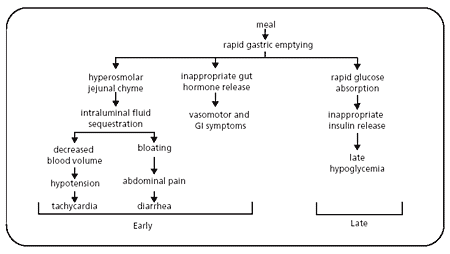
If you have Gastroparesis, then you have probably dealt with dumping syndrome at some point during your illness. Frequently, my friends get it when their stomachs decide to empty all at once, myself included. I thought I would write an article about it because it's not something I've already addressed and I wanted to bring awareness to the fact that it exists. I know a lot of people are scared or nervous to ask questions about pooping, so I'm going to try and do my best to explain dumping syndrome and how to get past it, especially when it's already hard for you to maintain fluids due to GP (gastroparesis).


So, what is dumping syndrome?


Image, courtesy of: http://www.nursestip.com/files/Dumping%20Syndrome.jpg


Here are some Youtube videos that you can watch below, to explain what Dumping Syndrome is. They are not the most interesting videos, but contain great information and facts on dumping syndrome.


According to the Mayo Clinic,

"Dumping syndrome is a group of symptoms that are most likely to develop if you've had surgery to remove all or part of your stomach, or if your stomach has been surgically bypassed to help lose weight. Also called rapid gastric emptying, dumping syndrome occurs when the undigested contents of your stomach move too rapidly into your small bowel. Common symptoms include abdominal cramps, nausea and diarrhea.

Most people with dumping syndrome experience symptoms soon after eating. In others, symptoms may occur one to three hours after eating. Some people experience both early and late symptoms.

Dumping syndrome is managed by adjusting your diet. In more-serious cases of dumping syndrome, you may need medications or surgery.


Symptoms of Dumping Syndrome:

Symptoms of dumping syndrome are most common during a meal or within 15 to 30 minutes following a meal. They include:

Gastrointestinal

Nausea
Vomiting
Abdominal cramps
Diarrhea
Feeling of fullness

Cardiovascular

Flushing
Dizziness, lightheadedness
Heart palpitations, rapid heart rate

Signs and symptoms also can develop later, usually one to three hours after eating. This is due to the dumping of large amount of sugars into the small intestine (hyperglycemia). In response, the body releases large amounts of insulin to absorb the sugars, leading to low levels of sugar in the body (hypoglycemia). Symptoms of late dumping can include:

Sweating
Hunger
Fatigue
Dizziness, lightheadedness
Confusion
Heart palpitations, rapid heart rate
Fainting

A study of more than 1,100 people who had their stomachs surgically removed found that about two-thirds experienced early symptoms and about a third experienced late symptoms of dumping syndrome. Some people experience both early and late signs and symptoms.

No matter when problems develop, however, they may be worse following a high-sugar meal, especially one that's rich in table sugar (sucrose) or fruit sugar (fructose).


Causes of Dumping Syndrome:

In dumping syndrome, food and gastric juices from your stomach move to your small intestine in an uncontrolled, abnormally fast manner. This is most often related to changes in your stomach associated with surgery, such as when the opening (pylorus) between your stomach and the small intestine (duodenum) has been removed during an operation.

The pylorus acts as a brake so that stomach emptying is gradual. When it's removed, stomach material dumps rapidly into the small intestine. The ill effects of this are thought to be caused by the release of gastrointestinal hormones in the small intestine, as well as insulin secreted to process the sugar (glucose).

Dumping syndrome can occur after any operation on the stomach as well as after removal of the esophagus (esophagectomy). Gastric bypass surgery for weight loss is the most common cause today. It develops most commonly within weeks after surgery, or as soon as you return to your normal diet. The more stomach removed or bypassed, the more likely that the condition will be severe. It sometimes becomes a chronic disorder.


Tests and Diagnosis:

Your doctor may use some of the following methods to determine if you have dumping syndrome.

Medical history and evaluation. Your doctor can often diagnose dumping syndrome by taking a careful medical history and then evaluating your signs and symptoms. If you have undergone stomach surgery, that may help lead your doctor to a diagnosis of dumping syndrome.

Blood sugar test. Because low blood sugar is sometimes associated with dumping syndrome, your doctor may order a test (oral glucose tolerance test) to measure your blood sugar level at the peak time of your symptoms to help confirm the diagnosis.

Gastric emptying test. A radioactive material is added to food to measure how quickly food moves through your stomach.


Treatments and Medications:

Most cases of dumping syndrome improve as people learn to eat better for the condition and as the digestive system adjusts. There's a good chance that changing your diet will resolve your symptoms. (See recommendations under Lifestyle and home remedies.) If it doesn't, your doctor may advise medications or surgery to address the problem.
Medications

Your doctor may prescribe certain medications to slow the passage of food out of your stomach, and relieve the signs and symptoms associated with dumping syndrome. These drugs are most appropriate for people with severe signs and symptoms, and they don't work for everyone.

The medications that doctors most frequently prescribe are:

Acarbose (Precose). This medication delays the digestion of carbohydrates. Doctors prescribe it most often for the management of type 2 diabetes, and it has also been found to be effective in people with late-onset dumping syndrome. Side effects may include sweating, headaches, sudden hunger and weakness.

Octreotide (Sandostatin). This anti-diarrheal drug can slow down the emptying of food into the intestine. You take this drug by injecting it under your skin (subcutaneously). Be sure to talk with your doctor about the proper way to self-administer the drug, including optimal choices for injection sites. Long-acting formulations of this medication are available.

Because octreotide carries the risk of side effects (diarrhea, bulky stools, gallstones, flatulence, bloating) in some people, doctors recommend it only for people who haven't responded to other treatments and who are not candidates for surgery.
Surgery

Doctors use a number of surgical procedures to treat difficult cases of dumping syndrome that are resistant to more conservative approaches. Most of these operations are reconstructive techniques, such as reconstructing the pylorus, or they're intended to reverse gastric bypass surgery.


Feeding tube

A last resort for people who are not helped by any other treatment is to insert a tube into the small intestine through which nutrients can be delivered."


Image, courtesy of: http://img.medscape.com/slide/migrated/editorial/cmecircle/2002/1989/nehra/nehra_figure_02.gif


According to WebMD,

After gastric surgery, it can be more difficult to regulate movement of food, which dumps too quickly into the small intestine. Eating certain foods makes dumping syndrome more likely. For example, refined sugars rapidly absorb water from the body, causing symptoms. Symptoms may also happen after eating dairy products and certain fats or fried foods.


Dumping Syndrome: Symptoms of the Early Phase

An early dumping phase may happen about 30 to 60 minutes after you eat. Symptoms can last about an hour and may include:

A feeling of fullness, even after eating just a small amount
Abdominal cramping or pain
Nausea or vomiting
Severe diarrhea
Sweating, flushing, or light-headedness
Rapid heartbeat


Dumping Syndrome: Causes of the Early Phase

Symptoms of an early phase happen because food is rapidly "dumping" into the small intestine. This may be due to factors such as these:

The small intestine stretches.
Water pulled out of the bloodstream moves into the small intestine.
Hormones released from the small intestine into the bloodstream affect blood pressure.


Dumping Syndrome: Symptoms of the Late Phase

A late dumping phase may happen about 1 to 3 hours after eating. Symptoms may include:

Fatigue or weakness
Flushing or sweating
Shakiness, dizziness, fainting, or passing out
Loss of concentration or mental confusion
Feelings of hunger
Rapid heartbeat


Dumping Syndrome: Causes of the Late Phase

The symptoms of this late phase may happen due to a rapid rise and fall in blood sugar levels. The cause of this rapid swing in blood sugar may be worse when eating sweets or other simple carbohydrates.


Dumping Syndrome Treatment

Many people find that taking steps like these greatly reduces symptoms of dumping syndrome.

Foods to avoid. Avoid eating sugar and other sweets such as:

Candy
Sweet drinks
Cakes
Cookies
Pastries
Sweetened breads

Also avoid dairy products and alcohol. And avoid eating solids and drinking liquids during the same meal. In fact, don't drink 30 minutes before and 30 minutes after meals.

Foods to eat. To help with symptoms, also try these tips:

Use fiber supplements, such as psyllium (Metamucil or Konsyl), methylcellulose (Citrucel), or guar gum (Benefiber). **NOTE: If you have Gastroparesis as well, please consult your doctor as high fiber content can make our condition worse.

Use sugar replacements, such as Splenda, Equal, or Sweet'N Low, instead of sugar.

Go for complex carbohydrates, such as vegetables and whole-wheat bread, instead of simple carbohydrates, such as sweet rolls and ice cream.

To prevent dehydration, drink more than 4 cups of water or other sugar-free, decaffeinated, noncarbonated beverages throughout the day


If you have any questions or comments about the article, feel free to email me. I'm currently working on an article about pregnancy and GP. I'm gathering research and will hopefully, have it out in the next two weeks. Please email me if you have an idea for an article that you'd like to see and/or questions/comments: emilysstomach[at]gmail.com.